
A GE Monogram refrigerator is more than an appliance — it’s a carefully engineered centerpiece built to disappear into custom cabinetry while delivering flawless temperature control and quiet operation. So when you spot water pooling on the floor, dripping inside the compartments, or seeping from the front, it’s more than an inconvenience. It’s a clear signal that something has interrupted the sealed, balanced system you invested in.
Here in Atlanta, with our humid summers and occasional temperature swings, we’ve seen these leaks catch homeowners off guard. Our Appliance Repair Master team responds to them regularly: a small drip can quickly become a bigger concern if ignored. The good news is that GE Monogram leaking water is almost always a fixable symptom — usually tied to one of a few common points in the system.
In the sections ahead, we’ll walk through why these leaks happen, how they appear in different models, what you can safely check yourself, and when it’s smartest to bring in a technician who knows these built-ins inside out. The goal is simple: get your floors dry and your fridge running reliably again.
Engineered Against Leaks: The Monogram’s Built-in Safeguards
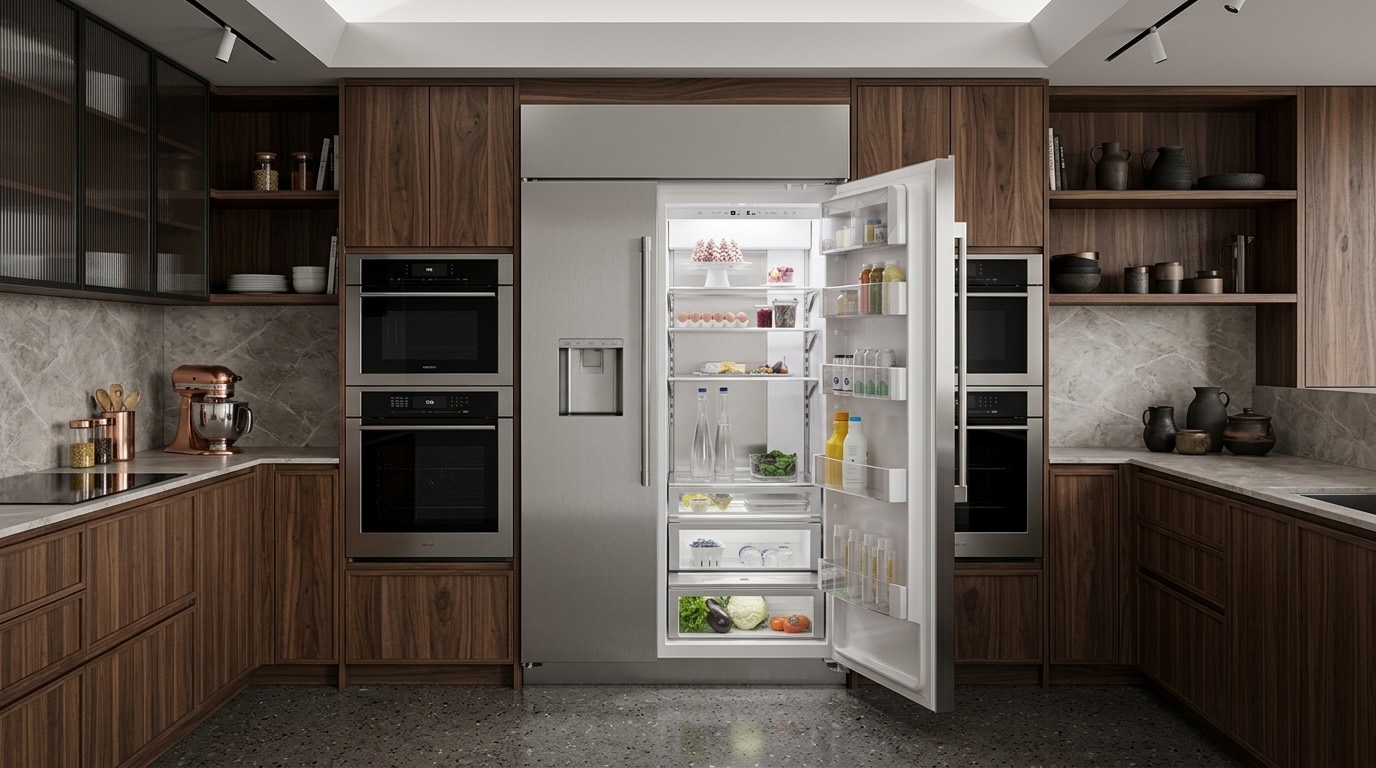
GE Monogram refrigerators are designed with premium materials and thoughtful engineering to keep everything sealed and contained. The stainless or panel-ready exteriors, heavy insulation, and precise flush-mount construction help minimize external condensation. Inside, key safeguards include:
- A dedicated condenser pan (also called the drip or evaporation pan) positioned under the unit or at the back to collect normal condensation from coils and let it evaporate with help from the compressor’s heat.
- Insulated, routed water lines for models with dispensers or ice makers, reducing the chance of bursts or cracks from temperature changes.
- A defrost drain system that channels meltwater from the evaporator coils directly to the condenser pan, preventing buildup inside the compartments.
These features work reliably in most cases, which is why Monogram owners often go years without issues. However, built-ins are sensitive to installation quirks (like floor tilt), heavy use, and age-related wear. In Atlanta’s humid climate, small oversights — dust on coils, minor clogs, or slight shifts — can overwhelm even the best safeguards and lead to leaking water. Our technicians see this pattern repeatedly: the system is strong, but not invincible.
Tracing the Source: Top Reasons Your Monogram Fridge is Leaking
Over thousands of service calls in Atlanta homes, we’ve narrowed Monogram leaking water issues down to a consistent set of culprits. Each has its own “why” tied to how these built-ins operate:
- Clogged defrost drain— The number-one cause we encounter. During the automatic defrost cycle, meltwater flows through a small drain tube at the back of the freezer compartment. Food particles, ice crystals, or algae build up over time and block it. Water backs up and overflows inside, usually pooling at the bottom or dripping onto the floor.
- Cracked dispenser tubing— In models with external ice or water dispensers, the flexible plastic lines inside the door or along the back can develop hairline cracks from repeated flexing, temperature swings, or age. Even a tiny split causes steady dripping near the front or under the unit.
- Damaged evaporator— Rare but serious. If the evaporator coil inside the freezer gets frost-cracked (from extreme icing or manufacturing defect), refrigerant and oil can leak out — often appearing as an oily, slippery residue rather than clear water. Cooling usually suffers too.
- Faulty condenser pan— The pan under or behind the fridge collects normal condensation and evaporates it. Cracks from age, rust, or poor initial install let water escape directly to the floor instead of vaporizing.
- Uneven leveling — Built-ins sit flush to cabinets, so even a slight tilt (from settling floors or improper setup) can make doors hang unevenly or cause internal water to flow the wrong way — bypassing the drain path and spilling out.
Scenario Guide: What Your GE Monogram Fridge Leak is Telling You
Leaks in Monogram built-ins rarely appear the same way twice, but the pattern usually gives a strong clue about the source. Here are the most common ways we’ve seen GE Monogram leaking water show up in Atlanta kitchens.
Puddle or pooling inside the bottom of the freezer or fresh-food compartment
Water collects on the crisper drawer or floor panel, sometimes with ice crystals nearby. This is almost always a clogged defrost drain: meltwater from the defrost cycle has nowhere to go and backs up inside instead of draining to the pan.
Water dripping from the front near the dispenser, or small puddles right in front of the door
Especially after using the ice or water dispenser. This points straight to cracked dispenser tubing or a loose connection in the door’s water line — pressure from use pushes water through the weak spot.
Steady or intermittent wetness under the fridge, often at the back or one side
You might notice dampness on the floor mat or smell musty odors. Check the condenser pan first: if it’s cracked, rusted through, or shifted, collected condensation spills directly instead of evaporating. Uneven leveling can make it worse by tilting the pan so water doesn’t stay contained.
Oily or greasy residue (not clear water) with a chemical smell, plus poor cooling
Rare but urgent. This signals a damaged evaporator — a refrigerant leak mixed with compressor oil. The unit usually stops cooling properly soon after.
These scenarios help narrow things down quickly. If your leak matches one, note the details (location, frequency, color/consistency) before calling — it speeds up diagnosis considerably.
Normal vs. Problem: When to Sound the Alarm
Not every drop of water around a refrigerator means trouble — Monogram units handle humidity and normal operation better than most. Here’s a quick way to separate what’s expected from what needs attention:
What's usually normal (no action required)
- A thin layer of condensation (sweat) on the exterior doors or sides during Atlanta’s muggy summer days or after a big grocery load — the fridge is simply working against high ambient humidity.
- A single small drip from the dispenser right after first use or after the unit has been off for a while — residual water in the lines.
- Minor moisture in the condenser pan area if you pull the fridge out for cleaning; the pan is designed to hold and evaporate that.
What's definitely not normal (act quickly)
Any persistent puddle on the floor, even if small — especially if it reappears daily or grows.
- Water actively dripping or pooling inside the compartments (freezer bottom, crisper drawers, or fresh-food floor).
- Oily, discolored, or foul-smelling liquid (not clear water) — this almost always points to damaged evaporator and refrigerant involvement.
- Steady dripping from the front near the dispenser, or wetness under the unit that doesn’t dry up between cycles.
The risks of ignoring a real leak go beyond a wet floor:
- hardwood or laminate can warp and stain,
- mold can grow in hidden spots under the cabinetry,
- electrical components near the base can short if water reaches them,
- and prolonged internal pooling can lead to rust or bacterial issues inside the fridge.
In our experience, what starts as “just a little water” often escalates to floor repairs or full cabinet refinishing if left unchecked for weeks.
Models We See Most Often

In our Atlanta service calls, certain Monogram configurations show up more often with leaking water issues because of their size, door design, or water-delivery systems:
- Side-by-side built-ins like ZIS420NM and ZISS420NN — These wide, heavy doors and external dispensers make them prone to cracked dispenser tubing and clogged defrost drain blockages. The larger freezer compartment also means more defrost water to manage.
- Column-style units such as ZIR360NNRH (36″ all-refrigerator or freezer columns) — Leaks here are usually subtler, often from uneven leveling after years of house settling or from a faulty condenser pan that wasn’t perfectly positioned during install.
- Undercounter beverage centers like ZWE23ESH — Compact and often tucked under counters, these can develop small interior drips or pan overflows if the drain gets partially blocked or the unit isn’t perfectly level.
Newer Monogram models follow the same engineering principles and face the same vulnerabilities as they age. The good news is that the repair approach is nearly identical across the lineup — we carry tubing, drain kits, and replacement pans for all of them, so we can usually resolve the issue in one visit without damaging custom panels or cabinetry.
First Response: Safe DIY Checks You Can Perform
Before calling for service, there are a few low-risk steps you can take to potentially stop or identify the source of GE Monogram leaking water. These are safe for most homeowners and don’t require tools beyond a flashlight, level, and perhaps a towel:
- Shut off the water supply (if your model has a dispenser or ice maker) — Locate the shut-off valve behind the fridge or under the sink and turn it clockwise to stop flow. This prevents any ongoing leak from cracked dispenser tubing from getting worse while you investigate.
- Pull the unit out carefully (if accessible) — Built-ins are tight, so move slowly to avoid scratching cabinets. Look underneath for the condenser pan — check if it’s cracked, rusted, overflowing with standing water, or shifted out of position.
- Check and correct leveling — Place a bubble level on a flat shelf inside the fridge (both side-to-side and front-to-back). If it’s off, adjust the front leveling legs (usually by turning them clockwise to raise). Even a small tilt can cause water to miss the drain path or spill from the pan — uneven leveling is a surprisingly common fix we see.
- Inspect and gently clear the defrost drain (visible part only) — In the freezer compartment, look for a small drain hole at the back bottom (often behind a panel or under the evaporator cover). If accessible and you see standing water or gunk, flush it carefully with warm water using a turkey baster or flexible pipe cleaner. Avoid forcing anything hard — don’t poke deep.
Critical stop sign: Do not remove rear panels, disassemble the door for tubing access, or attempt to pry apart the evaporator area. These steps risk refrigerant release, electrical hazards, or damage to custom panels. If the leak continues after these checks, or if you spot oil, strange smells, or can’t reach the source safely, it’s time for professional help.
Time to Call Appliance Repair Master: The Professional Edge
The DIY checks above can handle simple causes like a tilted unit or minor pan overflow, but many Monogram leaks require going deeper — often into areas homeowners can’t safely reach. From our experience, these are the clearest signs it’s time to bring in a technician:
- The leaking water continues or returns after you’ve tried leveling, pan inspection, and basic drain flushing — meaning the issue is likely inside the sealed compartment.
- You suspect cracked dispenser tubing (dripping only from the door area, especially after dispenser use) or see signs of damaged evaporator (oily residue, poor cooling, unusual smells).
- Water has an odd color, odor, or oily texture — almost always a red flag for refrigerant involvement.
- You can’t locate the exact source (no obvious pan crack, no visible drain clog, but puddles keep appearing).
- The unit is a flush built-in like ZISS420NN with custom panels — any disassembly risks scratching finishes or misaligning doors if not done precisely.
What sets us apart for these premium repairs:
- We use specific diagnostic tools to trace leaks without unnecessary disassembly.
- We stock genuine GE tubing kits, drain heaters, evaporator patches (when feasible), and replacement condenser pans — no generic parts that might not fit perfectly.
- Our technicians are trained on built-in handling: protecting cabinetry, preserving panel alignment, and restoring factory-level performance.
- Most fixes are completed in one visit, minimizing downtime for your kitchen.
We understand these are high-end investments — our goal is to restore dry, reliable operation without compromising the seamless look.
Conclusion: Dry Floors and Peace of Mind Restored
A GE Monogram leaking water issue is rarely a random occurrence — it’s almost always a clear symptom of one specific point in the system failing to contain or direct moisture properly. Whether it’s a clogged defrost drain backing up inside, cracked dispenser tubing under pressure, or a simple uneven leveling letting water escape the pan, these are fixable problems when addressed promptly.
From our perspective at Appliance Repair Master, the pattern in Atlanta homes is consistent: homeowners who catch the drip early — through basic checks or a quick call — end up with a straightforward repair, preserved flooring, and no hidden mold or cabinet damage. Waiting until the puddle grows or the leak turns oily often means dealing with bigger consequences, from warped hardwood to refrigerant loss.
Your Monogram is built to perform beautifully for years. Treating a leak as an early warning rather than an annoyance protects that investment, keeps your kitchen intact, and restores the quiet, reliable operation you expect. If you’ve run the safe checks and the issue persists, we’re here to help get things dry and sealed again.
FAQ
1. A small amount of water pools in the bottom of my Monogram fridge interior every few weeks. Is this an emergency?
This is a classic symptom of a slowly forming clogged defrost drain or defrost system failure. It’s not an immediate crisis, but it should be addressed soon to prevent overflow onto the floor or mold growth inside.
2. My fridge is leaking clear water only when I use the dispenser. What’s wrong?
This almost always points to a problem in the water supply line. The most common culprits are cracked dispenser tubing or a loose connection — often tied to needing ice maker repair if the issue affects ice production too.
3. Can dirty condenser coils cause my Monogram refrigerator to leak water?
Yes. Dust buildup on the condenser coils makes the system run hotter, increases condensation, and can overwhelm the condenser pan or drain, leading to leaking water on the floor. Regular condenser coils cleaning usually prevents this type of issue.
4. Water is dripping inside the fresh food section, but the freezer seems fine. Is this normal?
No, this is often caused by a damper control stuck open or closed improperly, which disrupts airflow between compartments and creates excess condensation or pooling inside the refrigerator section.
5. The technician mentioned a thermistor sensor during a previous visit. Could that cause leaking water now?
A faulty thermistor sensor can lead to incorrect temperature readings, causing excessive frost buildup, improper defrost cycles, and eventual leaking water from overflow or poor drainage.
6. Do you handle water leak repairs on integrated/panel-ready Monogram units?
Absolutely. Our technicians are trained to work carefully around custom panels on models like the ZIS420NM or ZIR360NNRH, so we can fix leaks without damaging your kitchen’s built-in appearance.