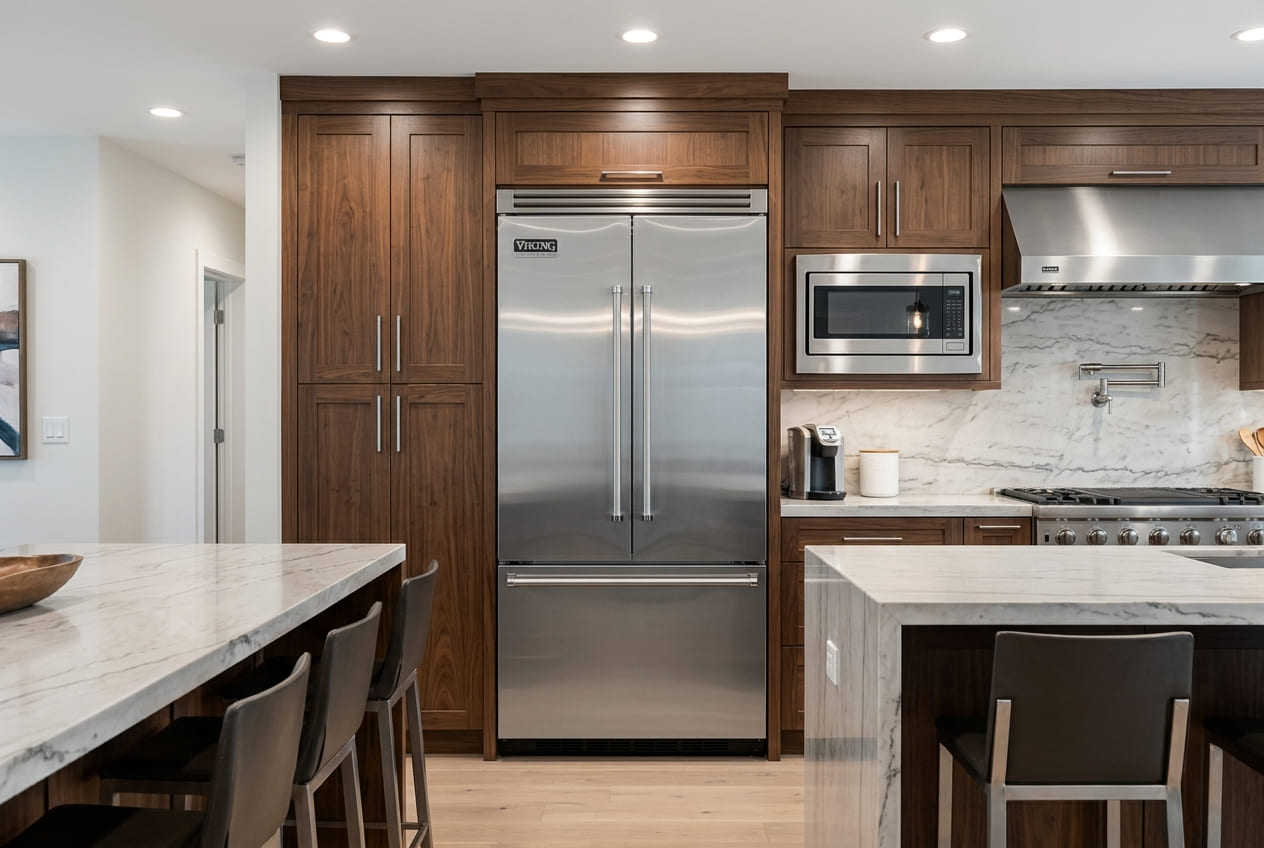
The landscape of high-end residential refrigeration is defined by a commitment to commercial-grade performance, aesthetic integration, and advanced thermal management. Among the most prominent names in this sector is Viking Range Corporation, whose refrigeration units — spanning the VCRB, VCFF, and VCSB series — are engineered to meet the rigorous demands of professional-level food preservation.
However, the very complexity that allows these machines to maintain a precise temperature within one degree of the set point also makes them susceptible to a variety of mechanical and environmental stressors. In the unique climatic conditions of Atlanta and the broader Georgia region, where high humidity and substantial ambient heat are common, the occurrence of a Viking refrigerator not cooling properly is an issue that requires immediate, expert intervention.
Addressing a warm fridge in a luxury kitchen is not merely a matter of convenience; it is a technical challenge involving sophisticated electronic control boards, variable-speed compressors, and complex airflow dynamics. For homeowners in the Metro Atlanta area — from the historic estates of Buckhead to the modern developments of Alpharetta and Sandy Springs — the preservation of an appliance investment exceeding $10,000 necessitates a repair service that combines technical mastery with local environmental insight.
Appliance Repair Master provides this specialized service, leveraging over 15 years of experience in high-end appliance restoration.
Technical Architecture of Viking Cooling Systems and Thermal Performance Standards
To understand why a Viking unit is not cold, it is necessary to examine the intricate thermodynamics of the ProChill™ Temperature Management System. Unlike standard residential units that utilize single-speed compressors that simply cycle on and off, Viking professional units often employ variable-speed DC Overdrive™ compressors. This technology allows the refrigerator to modulate its cooling capacity based on real-time sensor data, ensuring that internal temperatures remain exceptionally stable.
ProChill™ and Airflow Dynamics
The ProChill™ system works in conjunction with multi-channel airflow and an Odor Eliminator Evaporator to remove excess moisture and prevent the transfer of scents between compartments. This system is highly dependent on the integrity of its electronic controls. The variable-speed compressor operates at higher performance thresholds than entry-level models, making it more sensitive to “component drift” or contamination in the sealed system. In models like the VCFF and VCSB, the single-compressor/dual-evaporator are designed to separate the climates of the refrigerator and freezer, ensuring that the dry air required for the freezer does not dehydrate the fresh food in the refrigerator.
Industry and Manufacturer Temperature Standards
Viking units are factory-set to maintain a specific thermal corridor. The refrigerator compartment is typically set to 38°F, while the freezer is set to 0°F. Maintaining these exact values is critical for food safety and the longevity of the machine’s mechanical parts.
Compartment | Recommended Setting | Safe Operating Range | Performance Target |
Refrigerator | 37°F – 38°F | 34°F – 40°F | Within ±1°F of Set Point |
Freezer | 0°F | -10°F – 5°F | Optimal Ice Production at 0°F |
When a Viking unit is first installed or restarted after a repair, it requires a full 24 hours to stabilize. This “pull-down” period is a result of the massive thermal mass of these units, which often weigh nearly 600 pounds. Any diagnostic assessment performed before this 24-hour stabilization period is likely to be inaccurate, as the multi-channel airflow system must equilibrium throughout the various drawers and shelves, such as the adjustable ColdZone™ and Humidity Zone™ drawers.
Performance Deviations: Identifying the Failure State
When a Viking cooling system begins to fail, the symptoms rarely manifest as a total, immediate shutdown. Instead, the unit typically enters one of several recognizable failure states. Correctly identifying these states is the first step in a professional diagnostic protocol.
Isolated Refrigerator Warming
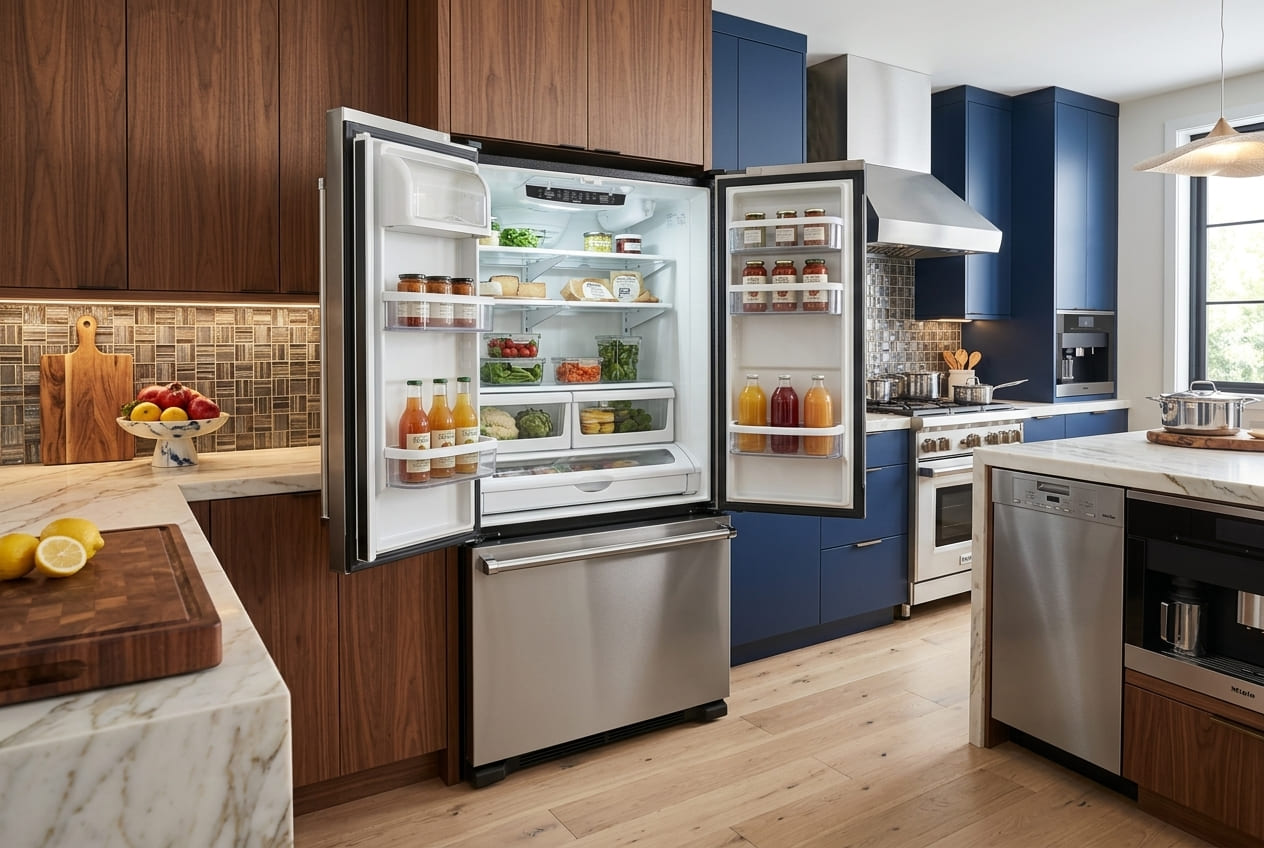
A common scenario involves a freezer that remains at 0°F while the refrigerator compartment becomes a warm fridge. This symptom strongly suggests an airflow or distribution failure rather than a primary cooling failure. In single-compressor units, all cooling originates in the freezer. Cold air must be moved to the refrigerator section via an evaporator fan and a motorized damper. If the fan motor fails or the damper control assembly becomes stuck, the refrigerator will eventually equalize with the room temperature even while the freezer remains functional.
Total System Stagnation
If both sections are warm, the diagnostic focus shifts to the “heart” and “brain” of the unit. A total failure to cool usually indicates that the compressor is not engaging or that there is a complete loss of refrigerant. This state is often accompanied by a silence from the unit (indicating a control board failure) or a rhythmic clicking sound (indicating a compressor start relay attempting and failing to engage).
Intermittent Cooling and Sensor Inconsistency
In some cases, the unit may be not cooling properly on an inconsistent basis. The fridge might be cold in the morning but warm by the evening. This behavior often points to a temperature sensor malfunction or “drift”. If the thermistor provides inaccurate data to the electronic control board, the unit may cycle off prematurely or enter a long defrost cycle that it never exits.
Detailed Analysis of Mechanical and Electronic Failure Causes
The complexity of Viking appliances means that a single symptom — such as a fridge warm condition — can stem from a wide array of underlying issues. A thorough repair must address the root cause, whether it is a matter of maintenance or component failure.
The Impact of Dirty Condenser Coils
The most frequent cause of gradual cooling loss in professional-grade built-in refrigerators is the accumulation of dust and debris on the condenser coils. These coils are the heat-rejection component of the refrigeration cycle. As the refrigerant gas is compressed, it generates heat that must be dissipated into the room air.
Viking units, which pull in large volumes of air to maintain high-performance cooling, act as powerful magnets for pet hair, dust, and kitchen grease. When these coils become dirty, the heat cannot be released efficiently. This forces the compressor to run longer and hotter, eventually leading to a thermal overload or a complete compressor failure. In the specific environment of Atlanta, where pollen and humidity can make dust “sticky,” these coils should be cleaned every six months to ensure the system can “breathe”.
Evaporator Fan and Air Circulation Failures
The evaporator fan is the engine of air circulation within the cabinet. If this fan fails, the chilled air produced at the evaporator coils remains trapped in the freezer compartment.
Failure Sign | Diagnostic Indicator | Recommended Action |
Strange Whirring/Squealing | Worn motor bearings or ice interference | Inspect fan blades and motor grommets |
No Airflow from Vents | Motor not receiving power or seized | Test motor continuity with multimeter |
Fan Stops when Door Opens | Normal behavior in most models | Test fan with door switch depressed |
A failed evaporator fan motor is a common cause of a fridge warm/freezer cold imbalance. In many instances, the fan itself is functional, but it has become encased in ice due to a failure in the defrost system, which brings us to the next common cause.
Defrost System and Terminator Failures
Viking units utilize an adaptive defrost system to clear frost from the evaporator coils. This system relies on a defrost heater, a defrost timer (or control board), and a defrost terminator (thermostat). If any of these fail, frost will accumulate until it blocks all airflow across the coils.
Anecdotal evidence from professional technicians and user forums suggests that the defrost terminator is a particularly common failure point in the Viking 5 series. When this part fails, the heater may never turn on, leading to a massive ice buildup that can only be resolved by a manual 24-hour thaw and component replacement.
Thermistor Malfunction and Electronic Control Drift
The temperature sensor, or thermistor, is a small resistor that changes its electrical resistance based on the surrounding temperature. The control board uses these resistance values to decide when to run the compressor and fans.
Temp (°F) | Target Resistance (Ohms) | Consequence of Failure |
0°F | ~256,200 | Incorrect freezer temp / no ice |
38°F | ~82,740 | Refrigerator warming or food freezing |
70°F | ~34,000 [Approx] | System fails to initiate cooling cycle |
A thermistor that has “drifted” — meaning it is still functional but providing inaccurate data — can cause the refrigerator to remain not cold enough to preserve food safely while never displaying an error code.
Compressor and Sealed System Integrity
The most complex and expensive failure is a refrigerant leak or a mechanical failure of the compressor itself. Because Viking units often use high-performance, variable-speed compressors, they are more sensitive to voltage spikes and internal blockages. A refrigerant leak is often identified by a compressor that runs constantly but produces no cooling, or by the presence of oily spots on the copper tubing. Because of the environmental regulations surrounding these substances, only an EPA 608 certified technician can legally perform these repairs.
Model-Specific Vulnerabilities: VCRB, VCFF, and VCSB
Viking’s professional lineup consists of several distinct designs, each with its own characteristic complaints and mechanical predispositions.
Viking VCRB (All-Refrigerator) Series
The VCRB series, such as the VCRB5363, focuses exclusively on fresh food storage. While simpler than a side-by-side, it is highly dependent on the “ProChill” logic. A common complaint in this series involves the unit beeping and displaying a “HI” or “oPn” code. This typically points to a failure of the temperature sensor or the electronic control board, which can cause the compressor to cycle incorrectly or not at all.
Viking VCFF (French Door) Series
The French door units are appreciated for their width and capacity but are prone to airflow imbalances. In the VCFF models, air is circulated from a single evaporator located in the freezer. If the refrigerator is overpacked, food items can block the rear vent panel, preventing the fresh food section from reaching the 38°F target. Additionally, the complex door seals on these units are more susceptible to the Georgia humidity, which can lead to moisture around the edges and excessive frost buildup if the gaskets are not perfectly aligned.
Viking VCSB (Side-by-Side) Series
The larger VCSB models (42” and 48”) often use a dual-compressor system to provide independent cooling for the fridge and freezer. While this increases reliability, it also doubles the potential for a dirty condenser coils issue to manifest. In these units, the failure of the air damper or baffle between the sections is a frequent cause of the refrigerator not cooling properly while the freezer remains at sub-zero temperatures.
The Impact of Atlanta’s Climate on Viking Performance
Georgia’s climate provides a unique stress test for high-end refrigeration. The high ambient humidity from June through September means that every time the door is opened, a significant amount of moisture enters the cabinet.
- Humidity and Latent Heat: The refrigerator must not only cool the air but also remove this moisture. This places an increased workload on the defrost system and the evaporator fan.
- Condensation and Mold: In humid coastal or southern environments, moisture can build up around the door gaskets, leading to mold growth or the deterioration of the silicone seals.
- Ambient Temperature Spikes: If a kitchen is not perfectly climate-controlled, the compressor must run significantly longer to maintain internal norms, leading to faster wear on the start relay and inverter board.
Diagnostic Threshold: DIY Maintenance vs. Professional Intervention
Viking owners can resolve a surprising number of cooling issues through basic maintenance, but knowing when to stop is critical to avoiding accidental damage to the unit’s sensitive electronics.
Safe DIY Troubleshooting
- Condenser Cleaning: If the display shows “CL” or the unit is running loudly, the homeowner should unplug the unit and vacuum the coils behind the toe grille or top panel.
- Gasket Maintenance: Cleaning the door seals with warm, soapy water and ensuring no food debris is blocking the magnetic pull can often resolve a minor temperature sensor alarm.
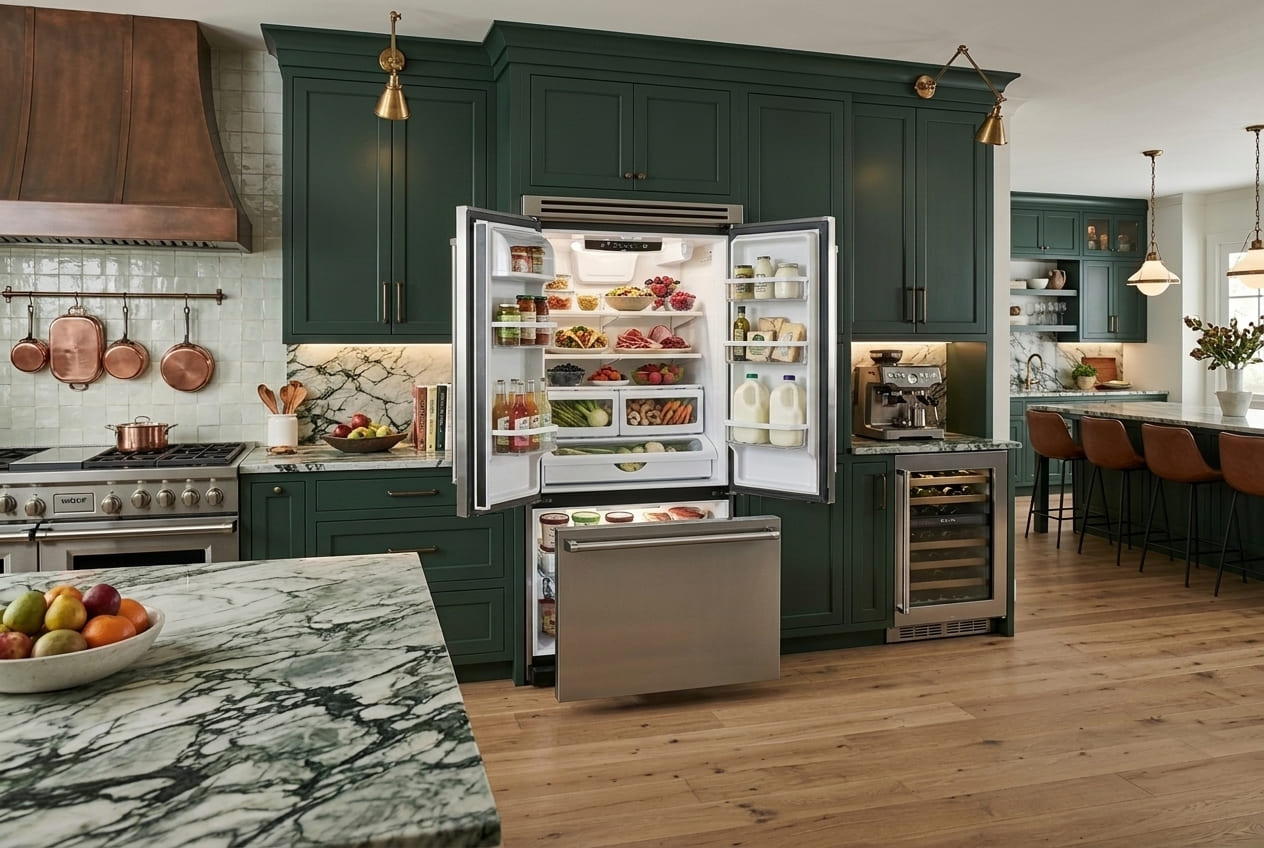
- Vent Clearance: Simply moving large containers away from the back wall of the refrigerator can restore proper airflow and fix a warm fridge symptom.
- The “Texan Reset”: Flipping the circuit breaker for ten minutes can clear “ghost” error codes and reset the control board logic, which is often recommended as a first step by service technicians.
Why You Must Call a Professional for Viking Systems
When maintenance fails to restore cooling, the issue typically involves the electrical or refrigerant systems. These are not DIY territories for several reasons:
- The EPA 608 Requirement: Any repair that involves the refrigerant circuit — such as a refrigerant leak or a compressor replacement — is strictly governed by federal law. Technicians must be certified to ensure that these potent greenhouse gases are not vented into the atmosphere.
- Electronic Sensitivity: Viking control boards are expensive (often $400-$700) and can be easily destroyed by static electricity or incorrect voltage testing.
- Diagnostic Tools: Identifying a failed variable-speed inverter board or a drifting thermistor requires specialized equipment and a knowledge of the unit’s specific resistance tables.
The Advantage of the Master Technician: Expertise and Compliance
When your Viking refrigerator is not cooling, the goal is not just a “fix” but a restoration of factory performance. A master technician understands the nuances of Viking engineering that are often overlooked by generalist repairers.
Precision Diagnostics and Fault Codes
Viking units have sophisticated self-diagnostic capabilities. A professional technician knows how to enter the service mode — often by holding specific button combinations like “Alarm Off” + “Power” — to read the history of the machine’s performance.
Fault Code | Meaning | Technical Implication |
HI | High Temperature | Usually coils, fan, or door seal |
oPn | Open Sensor | Broken connection to thermistor |
Shr | Short Sensor | Thermistor has failed internally |
E1 | Compressor Fault | High/Low amperage on the inverter board |
E2 | Condenser Fan Fault | Obstruction or motor failure |
E3/E4 | Thermistor Out of Range | Sensor drift requiring replacement |
Legal and Environmental Protection
In Atlanta and throughout the United States, the legal standard for refrigeration repair is the EPA 608 certification. This certification ensures that the technician is trained in the “Three R’s”: Recover, Recycle, and Reclaim. Because Viking units are built to last 15-20 years, they may contain refrigerants like R-134a that must be handled with extreme care. Our technicians at Appliance Repair Master are fully certified, ensuring that your home and the environment are protected during a refrigerant leak repair.
Preserving Your Investment
A Viking refrigerator is a centerpiece of the home. Using incorrect parts or improper diagnostic techniques can lead to a “cascade failure,” where a small problem like a bad start relay eventually kills an expensive compressor. A master technician uses only manufacturer-approved parts and verifies the repair with a post-service performance test, ensuring that the unit returns to its quiet, efficient operation.
Conclusion: Strategic Maintenance and Professional Restoration
A Viking refrigerator not cooling properly is a significant disruption, but in the hands of a qualified professional, it is a solvable problem. Whether the culprit is the notoriously humid Atlanta air causing a defrost failure or a simple case of dirty condenser coils, the key to a successful repair is a combination of owner vigilance and technical expertise.
By adhering to a regular maintenance schedule — cleaning coils every six months and inspecting door gaskets — homeowners can prevent the majority of Viking cooling issues. When mechanical or electronic components do fail, the specialized nature of the ProChill™ system demands a technician who understands the specific resistance of Viking thermistors and the complexities of variable-speed compressors. Appliance Repair Master provides this high-level service across the Georgia landscape, offering the peace of mind that comes with EPA 608 certification and 15+ years of dedicated luxury appliance experience.
FAQ
1. Why is my Viking refrigerator beeping and showing 'HI'?
The ‘HI’ code is a high-temperature alarm that activates when the internal cabinet temperature rises above 60°F. This can be caused by a door left ajar, an overloaded shelf blocking the air vents, or dirty condenser coils that are preventing the unit from shedding heat. If the alarm persists after cleaning the coils and checking the door, it may indicate a more serious component failure.
2. My freezer is cold, but my fridge is warm. What should I check first?
In models like the VCFF and VCSB, this is often a sign of an evaporator fan failure or a blocked air damper. Check if you can hear the fan spinning in the freezer. If you hear a grinding or squealing noise, the motor likely needs replacement. Also, ensure that no food items are blocking the rear vents in the refrigerator section.
3. How often do I really need to clean the condenser coils?
In a city like Atlanta, the answer is every six months. The high humidity and the presence of pets can lead to a rapid buildup of debris that forces the compressor to work twice as hard, significantly shortening its lifespan.
4. What is an EPA 608 certification, and why do I need it?
An EPA 608 certification is a federal requirement for any technician who services systems containing regulated refrigerants. If your Viking refrigerator has a refrigerant leak or needs a new compressor, it is illegal for an uncertified person to perform the work. This certification ensures the technician knows how to safely handle and recover chemicals that can be harmful to the environment.
5. Can a power surge cause my Viking to stop cooling?
Yes. Viking refrigerators use sophisticated electronic control boards and inverter boards that are highly sensitive to voltage fluctuations. A surge from an Atlanta thunderstorm can damage these components, leading to erratic cooling or a total system failure.
6. Why does my Viking refrigerator run constantly?
If the unit is running 24/7 but not getting cold, it often points to a refrigerant leak or a failing compressor. Alternatively, if the unit is reaching its target temperature but still running, it may be due to dirty condenser coils or a failing door gasket that is allowing cold air to escape.