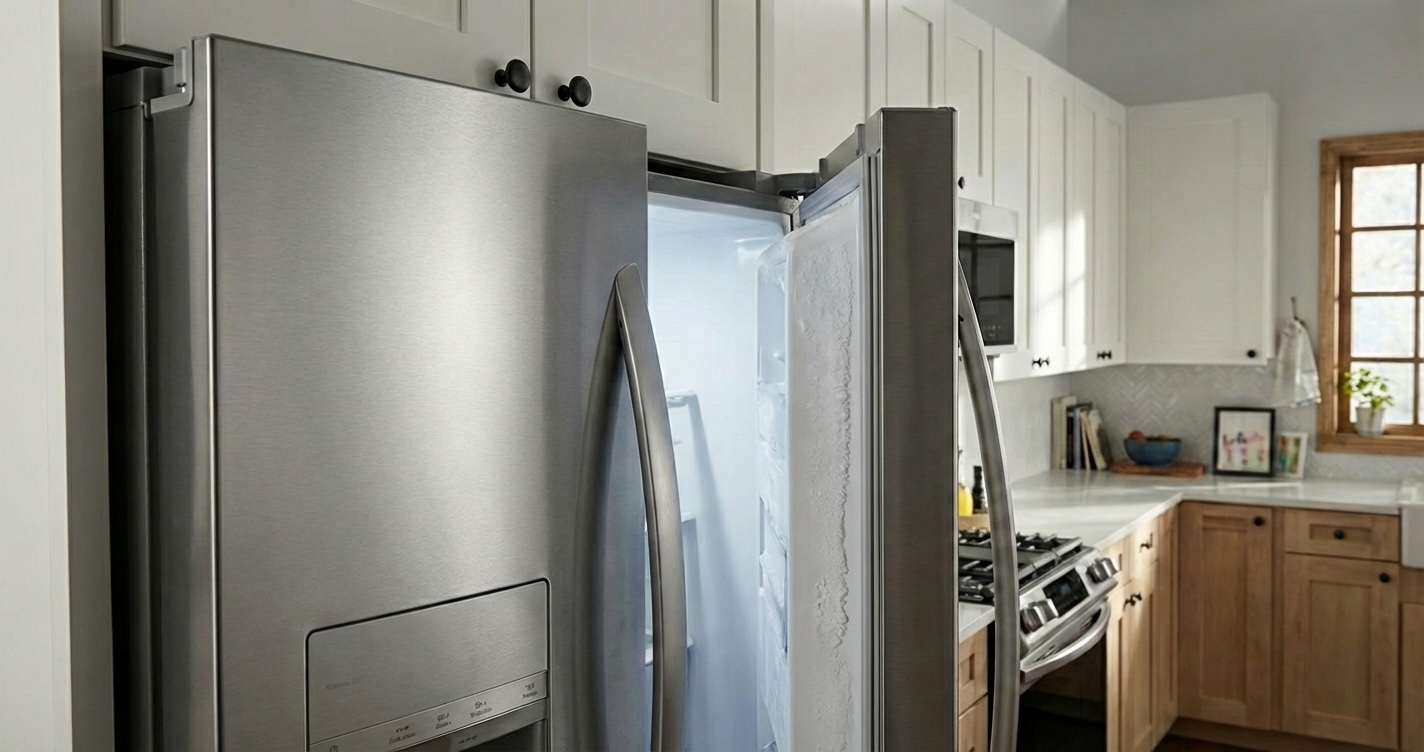
A Frigidaire freezer door not sealing properly can quietly turn into an expensive problem. We see it all the time across Atlanta and Georgia: the freezer “still works,” but frost begins creeping around the edges, the door starts popping open, and the temperature slowly becomes less reliable. The root cause is almost always the same. Air is getting past the door gasket (also called the door seal), and once that happens, the freezer pulls in humidity, builds frost buildup, and loses efficiency.
The good news is that most sealing problems can be corrected without replacing the entire appliance. The key is diagnosing the real reason the door won’t seal: a worn gasket, a cabinet that isn’t leveling correctly, a door that needs hinge adjustment, ice blocking contact, or a weakened vacuum seal.
In Atlanta homes, we typically see a “Frigidaire door not sealing” problem in two repetitive situations:
- A standalone freezer isn’t sealing
This is the classic garage or basement freezer issue. You have a dedicated Frigidaire freezer and the door (or lid) is letting warm air in, causing frost buildup and temperature swings. - The freezer section inside a refrigerator isn’t sealing
Many Frigidaire fridges include a freezer compartment. When that freezer door or drawer seal fails, homeowners still experience the same symptoms: frost buildup, a door that won’t close cleanly, and a weak vacuum seal.
To make this article easy to follow, we’ll devide it into those two sections:
- Standalone Frigidaire freezers, including upright, chest, and single-door freezer columns
- Frigidaire refrigerators with freezer compartments, including side-by-side freezer doors and bottom freezer drawers such as FGHS2631PF, FFHS2622MS, FRFS2823AS, FGHB2868TF, plus the Gallery series and Professional series.
We’ll keep it practical, clear, and useful, with the same approach we use in daily service calls.
What “Door Not Sealing” Really Means
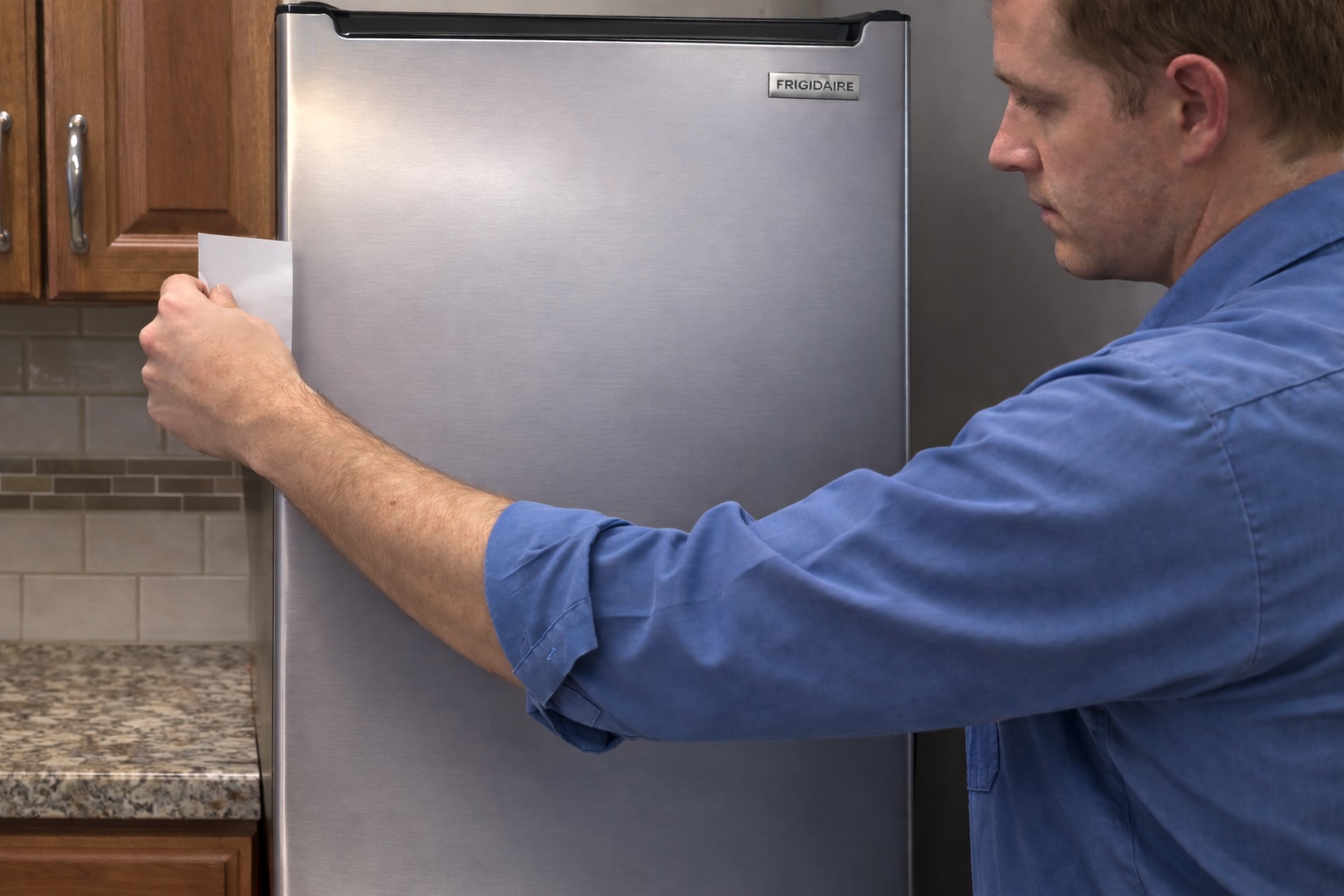
When the freezer door closes, the door seal should compress evenly along the frame and create a firm “hold.” That’s the vacuum seal effect. If the gasket can’t compress or the door is slightly misaligned, warm air sneaks in. Moisture follows. Moisture freezes.
That’s why a door that won’t seal typically leads to:
- Frost buildup around the door edge or corners
- Ice forming near the gasket line
- Freezer running longer and louder
- Food softening near the front
- Condensation or puddles near the unit
If you catch it early, it’s often a straightforward fix. If you ignore it, the frost cycle becomes self-reinforcing: ice prevents the gasket from sealing, which creates more air leaks, which creates more ice.
Standalone Frigidaire Freezers
Standalone freezers are where “door not sealing” is most obvious, especially in garages and basements around Georgia. The door gets opened frequently, and the environment tends to be humid, which makes sealing issues show up faster.
Upright Freezers: The Most Common Door Gasket Problem We Repair
A Frigidaire upright freezer uses a swinging door, and it depends heavily on the gasket. When the door gasket fails on an upright, homeowners usually notice it as:
- Frost along the hinge side or top corner
- A door that won’t close without pushing
- A door that seems closed but does not feel tight
In our experience, upright freezers develop sealing problems for five main reasons.
1) The gasket is dirty or stiff
Grease, dust, and dried food residue prevent full contact. A gasket can look fine but still leak.
2) The gasket is dry and dragging
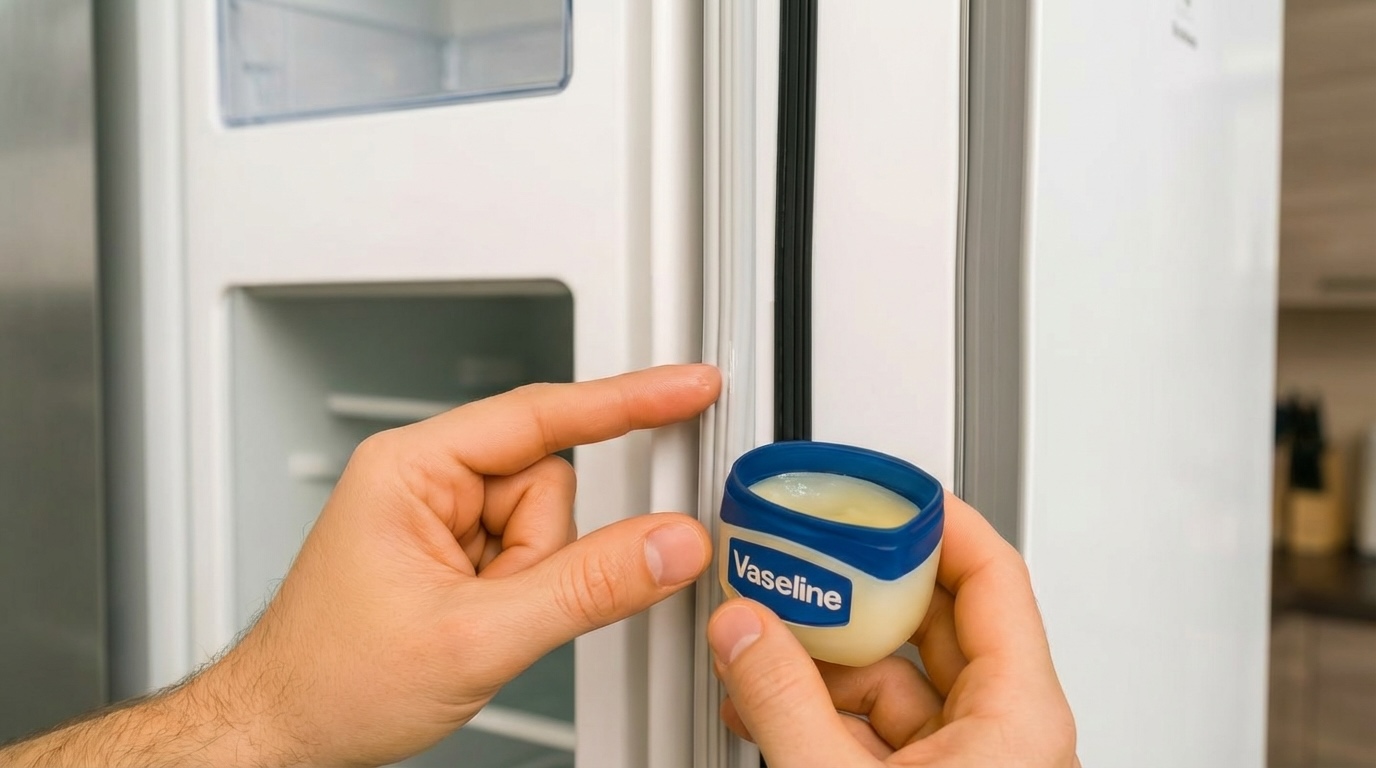
This is where petroleum jelly helps. A very thin layer can reduce friction so the gasket seats correctly and restores that tight closing feel.
3) The door needs hinge adjustment
Upright freezer doors sag over time. Even a slight drop changes the compression pattern and creates a gap.
4) The unit is not level
If the freezer isn’t leveling properly, the cabinet can twist just enough to prevent an even seal.
5) Frost buildup is blocking the seal
Once ice forms along the frame, the door seal cannot compress. The fix is not just “defrost.” It’s defrost plus alignment and sealing correction.
What we recommend first:
- Clean the gasket and the door frame thoroughly with mild soap and warm water
- Dry completely
- Apply a thin wipe of petroleum jelly to help the gasket glide and seat
- Check for uneven gaps around the perimeter
If the door still won’t seal evenly, that’s when we step in for hinge and alignment correction.
Chest Freezers: Fewer Hinges, Different Seal Problems
A Frigidaire chest freezer doesn’t swing shut. It seals downward with gravity, which makes it less prone to hinge sag, but it can still leak.
Most chest freezer door-not-sealing calls happen because:
- The freezer is overfilled and the lid cannot sit flat
- Ice builds up along the rim
- The lid gasket hardens or twists
- Debris is stuck on the sealing surface
A quick tip we give customers:
If frost is forming in a ring around the rim, the lid is almost always sitting slightly high somewhere. Clearing ice and reducing load height usually fixes it early.
Single Door Freezer Columns: Premium Units That Need Precision
Single door Frigidaire freezer columns are popular in higher-end kitchens because they look built-in. They also require precision.
When these units won’t seal, we often find:
- The unit is slightly out of level
- The door is not aligned square to the frame
- Trim, flooring, or cabinetry interferes with full closure
In these cases, replacing the gasket alone often fails. The correct repair is almost always leveling, alignment correction, then gasket evaluation.
Frigidaire Refrigerators With Freezers
Let’s move to the second category. We’ll depict the popular fridge models that include full freezer sections with the same door sealing failures. In our Atlanta service calls, customers often say “my freezer door not sealing,” even when it’s the freezer compartment inside a refrigerator.
Let’s get deeper into the models according to their freezer design.
Side-by-Side Freezers
Models: FGHS2631PF, FFHS2622MS
Models: FGHS2631PF, FFHS2622MS
In side-by-side units, the freezer is a full-height door, just like an upright freezer. That means the same causes show up:
- Door alignment drift
- Hinge adjustment needed
- Gasket flattening on the handle side
- Vacuum seal weakening over time
What we see most often:
Frost buildup starts at the top corner opposite the hinge. It’s a classic sign the door is slightly off-square and the gasket is not compressing evenly.
Bottom Freezer Drawer
Models: FRFS2823AS, FGHB2868TF
Also common in: Gallery series, Professional series
Bottom freezer drawers seal differently than doors. Instead of swinging into place, the drawer must slide perfectly into alignment every time. That makes these models more sensitive to:
- A refrigerator that isn’t properly leveling
- A drawer loaded heavily on one side
- Ice chips and frost along the rail lip
- Drawer rails shifting or loosening
- Gasket deformation around corners
What homeowners typically report:
- “The freezer drawer won’t close all the way.”
- “It closes, but frost keeps coming back.”
- “We have to slam it to keep it shut.”
That is usually not a “bad gasket” problem first. It is often an alignment and rail-seating problem that prevents the gasket from compressing evenly.
The Basic Elements You Should Know
When we diagnose a Frigidaire door not sealing complaint, we’re always looking at these core elements:
- Door gasket / door seal: the rubber seal that must stay flexible and seated
- Hinge adjustment: needed when doors sag and cause uneven compression
- Leveling: necessary for both upright freezers and drawer freezers
- Frost buildup: the sign that warm air is entering (and also a cause of further leakage)
- Vacuum seal: the tight “grab” sensation when the door closes correctly
- Petroleum jelly: a practical conditioning step to help gasket seating when it’s dry or dragging
We use these terms because they describe the real mechanics.
What You Can Try Before Calling Us
If your gasket is not torn and the door isn’t obviously crooked, these steps are safe and often effective:
- Clean the door gasket and frame contact area
- Dry completely (moisture prevents proper compression)
- Remove any frost buildup along the sealing line
- Apply a thin film of petroleum jelly to help the gasket seat
- Close the door and check if the vacuum seal returns
If it still leaks, the odds are high that your issue is alignment, leveling, hinge sag, or rail seating. That is where professional repair makes the difference.
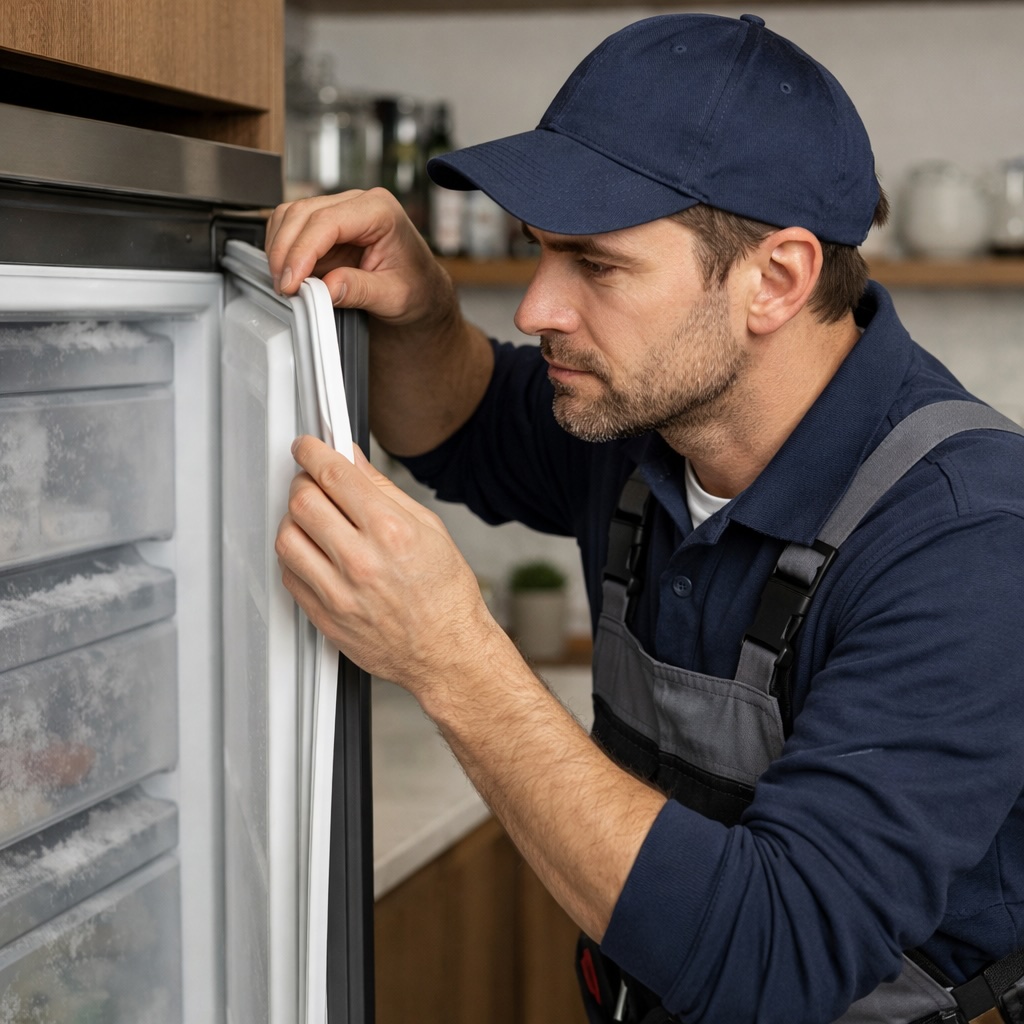
When to Call for Professional Appliance Repair Master in Atlanta
We recommend service when:
- The door gasket is torn, warped, or pulling away
- Frost comes back quickly after defrosting
- The freezer door won’t close unless forced
- The unit is not holding temperature consistently
- You suspect hinge adjustment or rail alignment issues
- The refrigerator/freezer is rocking or unlevel (a major leveling red flag)
A door-not-sealing problem can strain the compressor and shorten the life of the appliance. Fixing it early is one of the most cost-effective repairs you can make.
A Tight Seal Protects The Whole Appliance
A Frigidaire freezer door not sealing is not just a comfort issue. It affects temperature stability, energy efficiency, and long-term reliability. Whether you own a standalone upright or chest freezer, or a refrigerator with a freezer compartment like FGHS2631PF, FFHS2622MS, FRFS2823AS, FGHB2868TF in the Gallery series or Professional series, the solution comes down to the same core checks.
We restore sealing by correcting the true cause, which usually involves a combination of gasket conditioning or replacement, hinge adjustment, cabinet leveling, frost removal, and restoring the vacuum seal.
If your Frigidaire freezer door won’t close or your door seal is leaking, we’re ready to help.
FAQ
1. Why is my Frigidaire freezer building frost around the door?
Because warm air is entering through a weak seal. Moisture freezes along the gasket line, creating frost buildup that makes sealing worse.
2. Can petroleum jelly help a door gasket seal better?
Yes, when used correctly. A very thin layer helps a dry gasket slide and compress evenly, improving the seal and restoring the vacuum seal feel.
3. How do I know if I need hinge adjustment?
If the door seals on one side but not the other, if frost appears repeatedly in the same corner, or if the door looks slightly sagged, you likely need hinge adjustment.
4. Why does my freezer door pop open after closing?
That usually points to a weak vacuum seal, an alignment problem, or a cabinet that isn’t properly leveling.
5. Do these refrigerator models really count as freezer door seal problems?
Yes. FGHS2631PF and FFHS2622MS have side-by-side freezer doors, and FRFS2823AS and FGHB2868TF have bottom freezer drawers. Their freezer sections rely on the same door gasket and sealing principles.