
When a Frigidaire starts drifting warm, it rarely stays quiet. The high temperature alarm sounds, the display flashes an H or HI error code, or certain platforms throw the H1 error code. Different messages, same situation: temperature too warm.
We handle these calls every week across Atlanta and throughout Georgia, especially in high-end kitchens where Gallery series and Professional series appliances are expected to perform like premium equipment. Our clients are not looking for trial and error. They want a technician who can read the symptoms, test the right systems, and correct the real cause so the alarm does not return next week.
This guide reflects how we diagnose warm-temperature complaints in the Frigidaire cases. It covers both standalone freezers and refrigerators with freezer compartments. Standalone freezers can run into warm temperature issues just as often as refrigerator platforms. On refrigerator models, the freezer section is usually the first place we see performance loss, and it can also affect fresh food temperatures depending on the design.
Refrigerator models we commonly service for warm-freezer complaints:
- FGHS2631PF,
- FFHS2622MS,
- FRFS2823AS,
- FGHB2868TF,
- plus Gallery series and Professional series configurations.
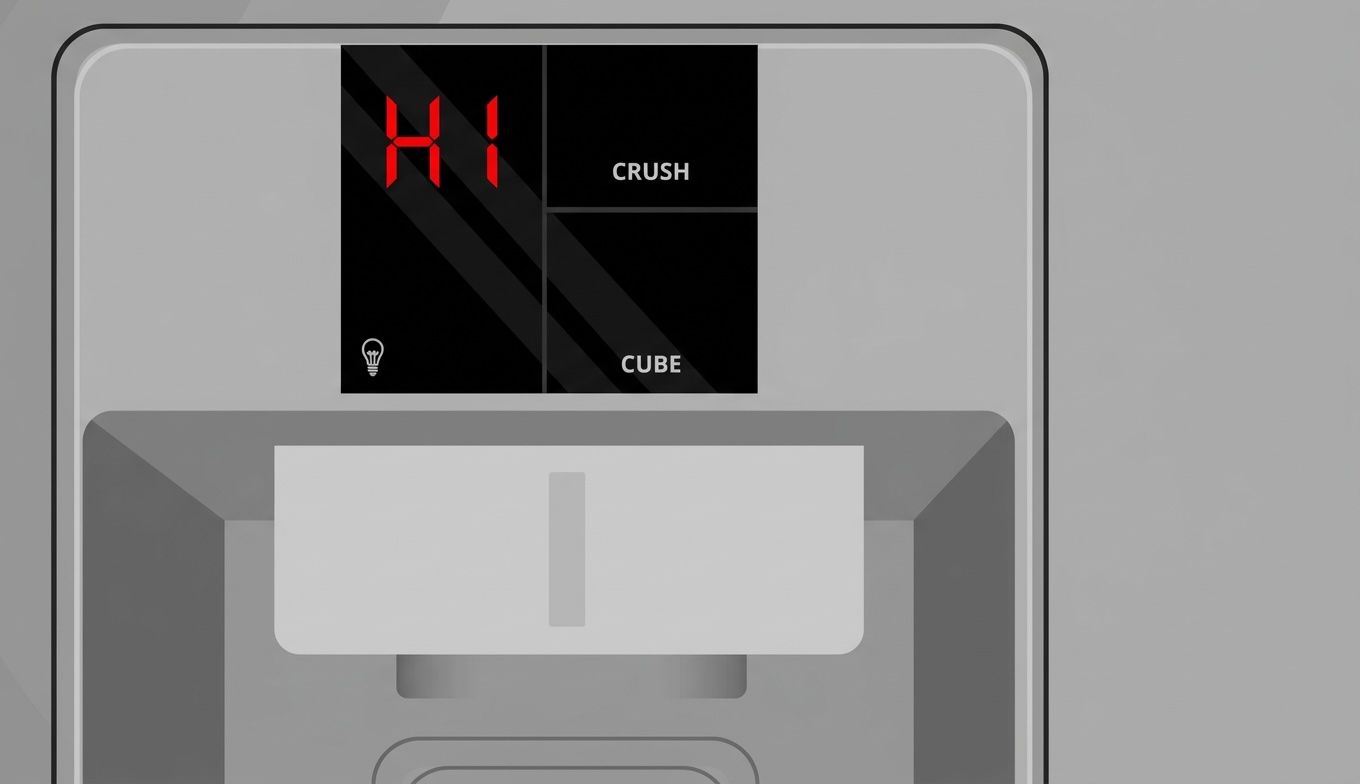
The warning is the symptom, not the diagnosis
Owners often ask us whether HI, H, or H1 is serious. We treat it as serious because it signals the unit is not maintaining a stable temperature.
Warm-temperature complaints almost always fall into one of these buckets:
- Airflow is restricted because of frost buildup blocking vents
- Cold air is not being moved because of evaporator fan motor failure
- The system cannot reject heat efficiently because condenser coils are dirty or airflow around the cabinet is restricted
- The appliance is being controlled incorrectly because the temperature sensor input is wrong, most commonly from a thermistor malfunction
A thermistor is a type of temperature sensor. In many Frigidaire designs, the thermistor is the key sensor the control board uses to regulate cooling. If it reads incorrectly, the unit can behave like it has a major cooling problem even when the sealed system is still capable.
Our problem-solving map that works
We built this flow to prevent wasted time, wasted parts, and repeat alarms.
Step 1: Confirm what you own
- Standalone freezer: one compartment that only freezes
- Refrigerator with freezer compartment: side-by-side or French door unit
Step 2: Confirm whether the cabinet is truly warm
If food is soft, ice is wet, or items are thawing, treat it as an active cooling problem. If the alarm is sounding but food still feels solid, verify with a thermometer because the display can be wrong when the temperature sensor system is failing.
Step 3: Use the three clues that narrow the diagnosis fast
- Airflow: do you feel a steady stream at the vents
- Frost: do you see abnormal frost patterns, especially heavy frost on the back wall
- Recovery: does the unit pull back down after door openings, or does it keep falling behind
Standalone Frigidaire freezers: when temperature climbs
Standalone freezers are simpler machines, but they are unforgiving. If temperature rises, food changes fast and alarms come quickly. On standalone units, we see warm-temperature complaints most often from door sealing, frosting patterns, fan performance, and sensor accuracy.
Door sealing, the humidity trap
A freezer door that is not sealing perfectly pulls humid air into the cabinet. That moisture turns into frost. Frost becomes blockage. Then the unit runs longer and still loses ground.
What we do first:
- Remove anything that prevents full closure
- Clean the gasket and the mating surfaces
- Confirm the cabinet is level so the door closes naturally
- Look for gasket deformation or tears
Frost buildup blocking vents
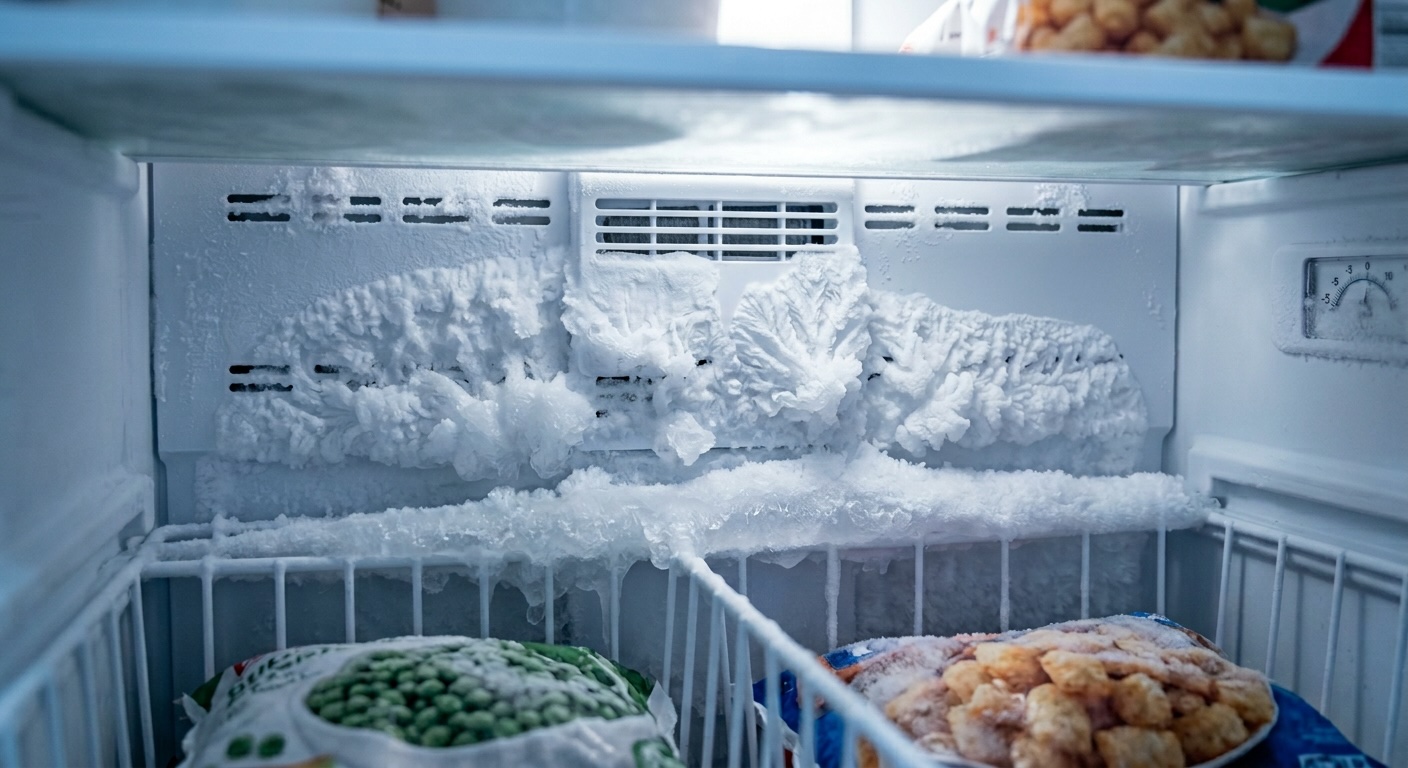
This is the most common visual issue. Frost buildup blocking vents stops circulation, and circulation is what turns cold evaporator metal into a cold cabinet.
What you can safely check:
- Frost on the back wall thicker than normal
- Vents iced over or buried behind packaging
- Overpacking that blocks air paths
If frost returns quickly after clearing, we suspect a defrost performance issue, recurring door leakage, or insufficient airflow from the fan.

Evaporator fan motor failure
A lot of owners assume a fan is fine if they hear a noise. We do not. Evaporator fan motor failure can be complete, intermittent, or weak enough that airflow never reaches the front of the cabinet.
How it shows up:
- Weak airflow at vents
- Uneven freezing, colder near the rear, warmer in the front
- A freezer that runs constantly but does not recover
- Repeated high temperature alarm events after normal door openings
A fan can also be obstructed by ice, so we always check for both motor issues and ice interference.
Thermistor malfunction and temperature sensor problems
When alarms return but the freezer does not feel consistently warm, we evaluate sensor input. A thermistor malfunction can send false temperature readings, which makes the control board cycle incorrectly.
Common signs:
- The display temperature does not match a thermometer
- The unit shuts off too early or runs at strange intervals
- Warm alarms return without a clear pattern
This is where we test the temperature sensor circuit properly. On many Frigidaire platforms, that means testing the thermistor.
Dirty condenser coils and slow recovery
Even standalone freezers need to reject heat. Dirty condenser coils reduce performance and make recovery slow, especially after loading groceries or during high-use periods.
In Atlanta homes, pet hair and kitchen dust build quickly. Cleaning coils is one of the simplest fixes, but also one of the most ignored.

Refrigerators with freezer compartments: what we typically see on popular Frigidaire platforms
Side-by-side and French door refrigerators can show symptoms in both sections because the freezer side often drives overall cooling. A warm freezer can quickly become a warm fresh food section, depending on airflow design.
Three symptom patterns we see most often
Pattern 1: Freezer warm and fresh food warm
Most common causes:
- frost buildup blocking vents
- evaporator fan motor failure
- dirty condenser coils and poor heat rejection
- temperature sensor errors that cause poor cycling
Pattern 2: Back wall cold but food soft near the front
This points strongly to airflow. Cold is being made but not delivered.
Most common causes:
- vents blocked by packaging
- frost buildup blocking vents
- early-stage evaporator fan motor failure that is weak or intermittent
Pattern 3: HI or H appears, clears, then returns, or H1 keeps returning
This often points to intermittent conditions or control feedback.
Most common causes:
- thermistor malfunction in the temperature sensor circuit
- loose wiring or connector issues affecting sensor readings
- intermittent airflow collapse from frost and fan problems
When the H or HI error code and H1 error code repeat, we treat them as proof the unit is not maintaining stable conditions, not as a screen glitch.
Our freezer-first checklist that prevents wasted parts
This is the order we use on service calls because it identifies the real cause quickly and prevents unnecessary part replacement.
1) Confirm real temperature and recovery behavior
We verify freezer temperature with a thermometer and watch how quickly it recovers after door openings. Recovery behavior tells us more than a static number.
2) Confirm door sealing and alignment
A door that was slightly open overnight can create enough frost to trigger a high temperature alarm the next day, even if the door is now closed.
3) Check venting and airflow where it counts
We check whether cold air is moving through the vents. If airflow is weak and there is frost buildup blocking vents, the freezer will continue to show temperature too warm warnings.
4) Verify evaporator fan motor performance under real conditions
We confirm the fan runs when the system is calling for cooling and that it moves air. This is where we catch intermittent evaporator fan motor failure that owners often miss because the fan works sometimes.
5) Inspect condenser coils and airflow around the cabinet
Tight cabinetry and dirty coils are a common combination in luxury kitchens. When coils are dirty, the system loses efficiency and the freezer struggles to recover after normal use.
6) Test the temperature sensor system when behavior does not match mechanics
If airflow and heat rejection check out but alarms continue, we test the temperature sensor circuit, including the thermistor. A thermistor malfunction can keep triggering warnings even after mechanical issues are corrected.
7) Confirm stable operation before we leave
We verify that the unit is recovering temperature correctly and operating consistently. If we cannot prove stability, we do not close the call.
What you can safely do today, and when to call us
Safe DIY actions
- Confirm doors close fully and the gasket is clean
- Avoid overpacking and keep vents clear
- Look for abnormal frost patterns
- If accessible, remove dust from condenser areas carefully
- Use a thermometer to confirm actual freezer temperature
When to schedule service
- Food is softening or thawing
- The high temperature alarm returns after basic checks
- The display shows an H or HI error code more than once
- The H1 error code repeats
- You keep finding frost buildup blocking vents
- Airflow is weak or intermittent, suggesting evaporator fan motor failure
- Display readings disagree with a thermometer, suggesting thermistor malfunction or another temperature sensor issue
Same-day Frigidaire service in Atlanta and across Georgia
If your Frigidaire is showing temperature too warm warnings, we treat it as a priority. We diagnose the cause, repair it cleanly, and verify stable operation before we leave.
Conclusion
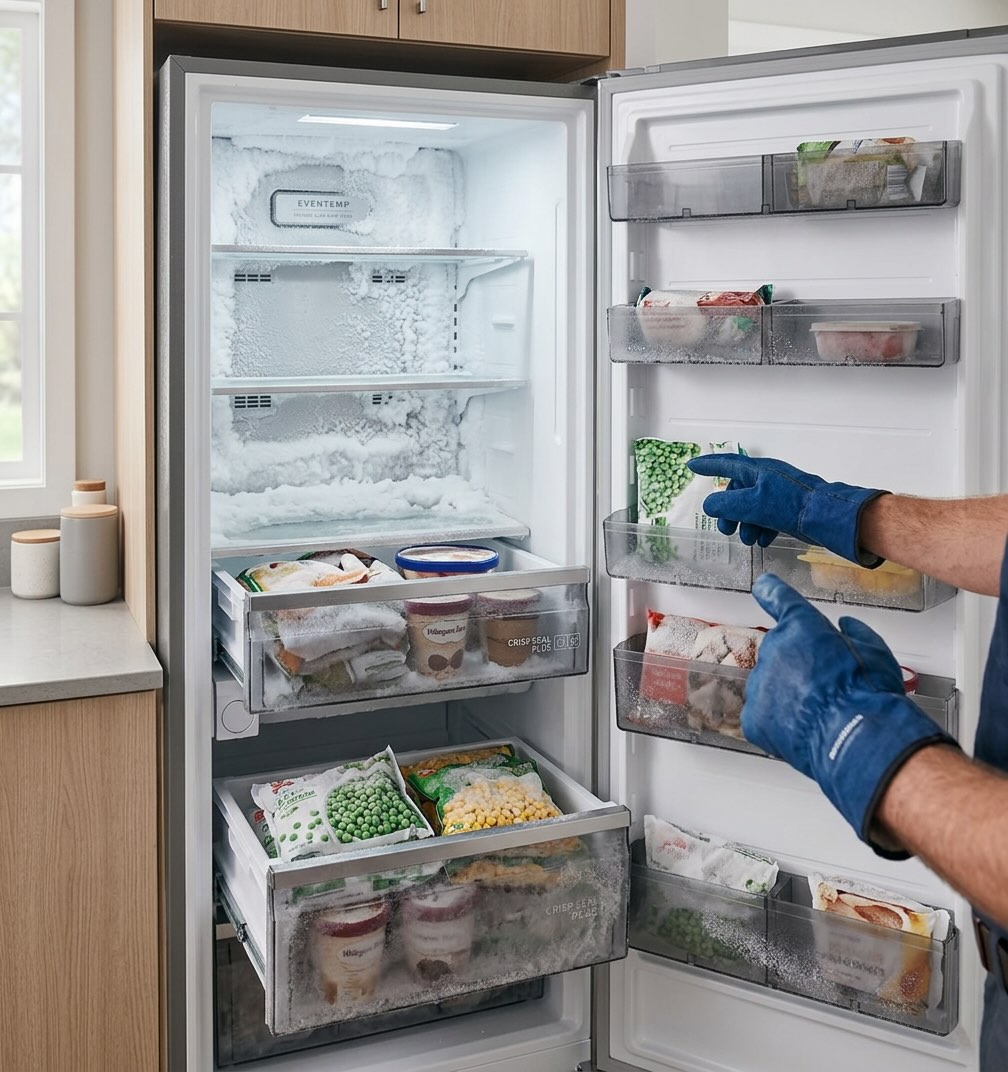
When a Frigidaire reports temperature too warm, the cause is usually practical and fixable. In our service work, the most common issues are frost buildup blocking vents, evaporator fan motor failure, dirty condenser coils that reduce heat rejection, and control problems caused by a thermistor malfunction in the temperature sensor circuit.
Whether you own a standalone freezer or a refrigerator with a freezer compartment, the path to a real solution is the same: confirm temperature, restore airflow, verify fan performance, and test sensors when the numbers do not match reality.
FAQ
1. What does temperature too warm mean on a Frigidaire?
It means the appliance is not maintaining a safe temperature in the affected compartment. You may see a high temperature alarm, an H or HI error code, or the H1 error code depending on the model.
2. What causes a high temperature alarm?
The most common causes we see are frost buildup blocking vents, evaporator fan motor failure, dirty condenser coils, door sealing problems, and temperature sensor issues such as thermistor malfunction.
3. What does H or HI mean on the display?
An H or HI error code typically indicates the compartment temperature is too warm. If it repeats, the unit is failing to recover temperature consistently.
4. What does the H1 error code mean?
The H1 error code is commonly associated with a warm temperature condition. If it repeats, we usually find airflow restriction, frost buildup, a fan issue, or a thermistor malfunction.
5. Is a thermistor the same as a temperature sensor?
A thermistor is a type of temperature sensor used by the control board to read compartment temperature. If it fails or drifts out of range, the control can respond incorrectly and trigger temperature too warm warnings.
6. How do I know if evaporator fan motor failure is the issue?
Weak airflow at vents, intermittent fan sound, uneven temperatures, and repeated high temperature alarms are common signs. Ice interference can create similar symptoms, which is why airflow inspection matters.