
When your Frigidaire shows Error Code E2, the freezer is warning you that its temperature control system isn’t operating normally. That can lead to inconsistent freezing, heavier frost, longer run times, and food that doesn’t stay at a stable, safe temperature.
We wrote this article to help you respond the way our factory-trained technicians do—calmly, logically, and without guesswork. Inside, we’ll walk you through the most common real causes behind E2, the quick checks worth doing first (door seal, airflow, and temperature settings), and the technical faults we test when the code returns, including freezer temperature sensor/thermistor failures, open circuit or shorted circuit conditions, sensor wiring problems, and cases where the control board is misreading sensor resistance.
You’ll learn whether this is likely a simple recovery issue—or whether it’s time to schedule service to prevent food loss and keep your Frigidaire performing the way it was built to.
What We See Most Often When Customers Call Us About E2
Homeowners rarely can say that they deal with exactly E2. They try to depict the situation like:
- The freezer is running constantly.
- It doesn’t feel as cold as it used to.
- Everything is freezing, but the texture is weird.
- It clears, then comes right back.
- The freezer’s been defrosted, and it still won’t behave.
Those details matter. Because E2 is not just a code, it’s a symptom of a system that is trying to regulate temperature without clean feedback.
And in high-end kitchens, that’s more than a nuisance. Temperature instability affects food quality first, and appliance longevity next.
What E2 Typically Means
In our service work, Error Code E2 almost always points to a freezer temperature signal problem. The system is either receiving the wrong temperature information or losing the signal altogether — and when that happens, the freezer can’t regulate cooling with the precision it’s designed to maintain.
We typically trace E2 back to one of four causes:
1) A failing freezer temperature sensor (thermistor)
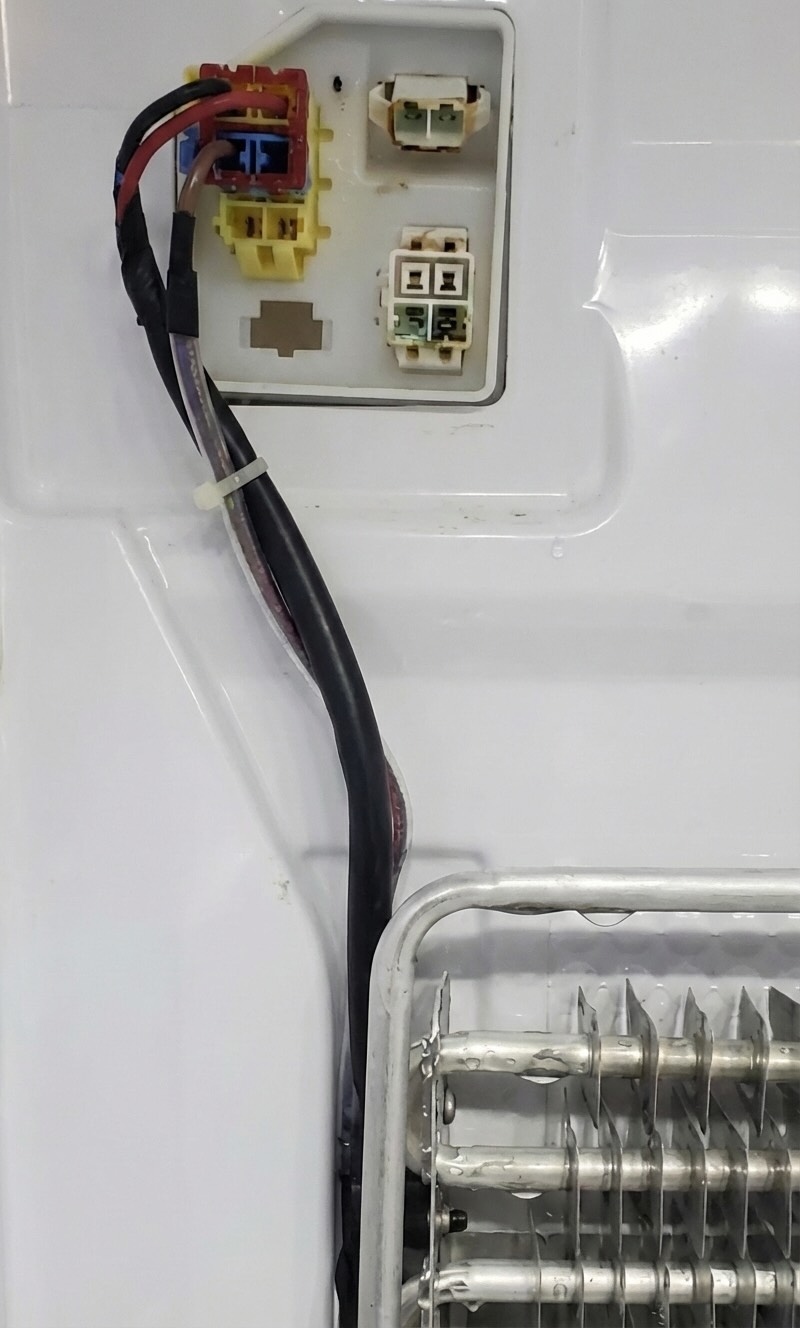
The freezer temperature sensor, often called a thermistor, measures temperature by changing resistance. If it starts drifting or becomes intermittent, the freezer may overrun, undercool, or struggle to stabilize — and E2 appears because the system can’t trust the feedback.
2) Sensor wiring issues
Sensor wiring problems are one of the most common root causes we find. A connector can loosen, a harness can get pinched behind panels, corrosion can build, or ice can form where wiring runs through cold zones. Even a small wiring fault can interrupt the signal and trigger repeated E2 codes.
3) Open circuit or shorted circuit faults
This is the technical way of describing what we see every day in our practice:
- Open circuit means the system isn’t receiving a usable signal at all.
- Shorted circuit means the signal is collapsing or reading out of range.
Both conditions can trigger E2 and lead to unstable freezing performance.
4) Control board misinterpretation
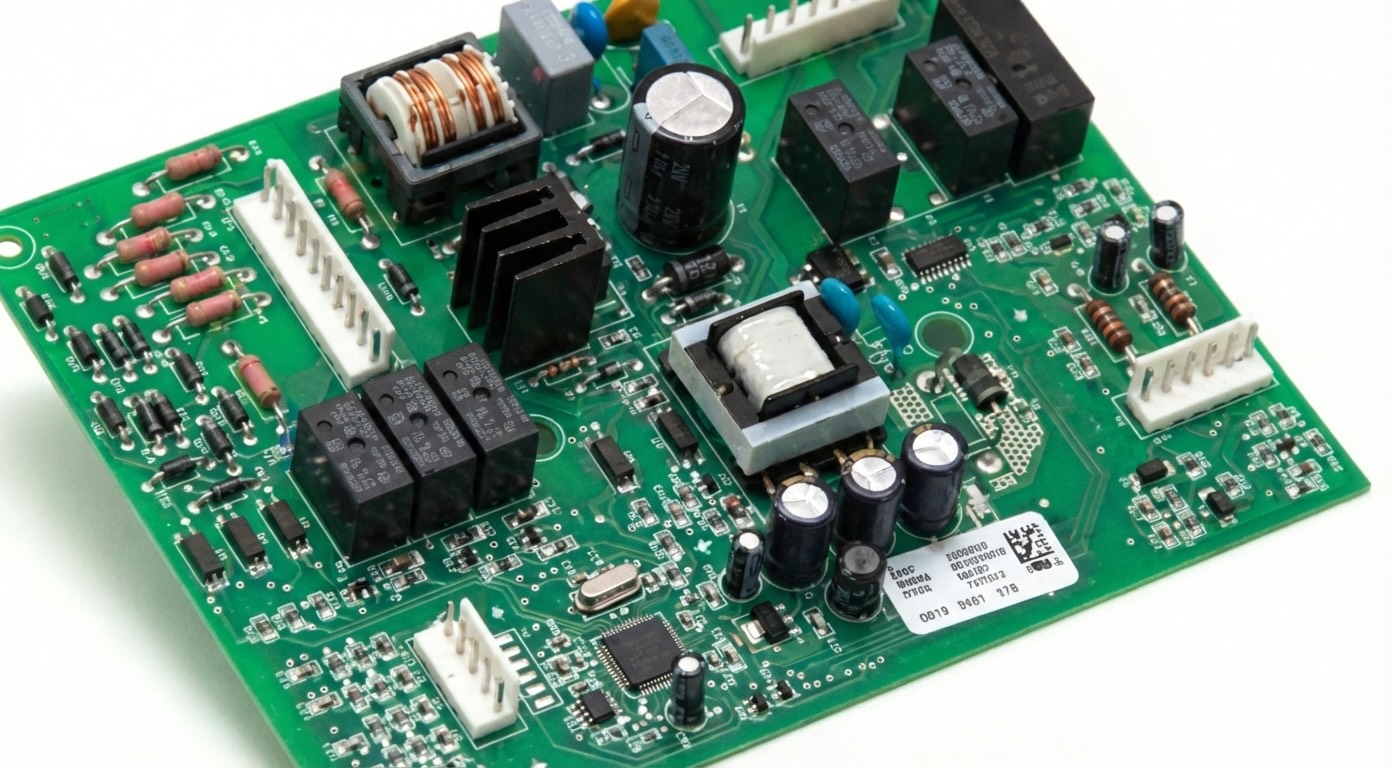
When the sensor and wiring test healthy but E2 keeps returning, we evaluate the control board. It’s not the most common failure, but it does happen — especially when the board begins reading sensor resistance incorrectly or processing temperature feedback inconsistently.
The Best First Move Homeowners Can Make
We’ll say this plainly: most homeowners don’t need to take anything apart.
But there are a few smart observations that can save time:
Check the door seal and closing behavior
A poor seal introduces warm air constantly, and temperature recovery becomes chaotic.
Look for abnormal frost patterns
If frost is building quickly along vents or a rear panel, airflow is being compromised.
Listen for airflow changes
If the freezer feels quiet when it normally has airflow movement, the evaporator fan may not be circulating cold air properly.
Clear the code once
If E2 returns quickly, it isn’t just a glitch. It’s an active fault.
How We Diagnose E2
This is where our factory-trained experience matters. When we arrive for an E2 call, we don’t guess. We isolate.
1) We start where the code points: the freezer temperature sensor circuit
This is where our factory-trained experience matters. When we arrive for an E2 call, we don’t guess. We isolate.
2) Then we check sensor wiring, because it fails quietly.
A weak connector or compromised harness can look perfect to the eye but fail under vibration or temperature change.
3) Then we perform a multimeter test to verify sensor resistance
A multimeter test lets us measure the sensor’s resistance and compare it to expected behavior. We also verify readings through the wiring harness so we know whether the failure is:
- at the sensor
- in the wiring
- or at the control board input
4) We verify airflow and evaporator fan performance
Even a perfect sensor can report instability if cold air isn’t moving the way it should. A weak or failing evaporator fan causes warm zones, poor recovery, and inconsistent temperatures.
5) Only then do we evaluate the control board
We treat the control board as the final step, not the first. That’s how you avoid unnecessary expenses and get a repair that lasts.
Why People Search Error Codes E1 E2 ER All At Once
We see this all the time. A homeowner searches error codes E1 E2 ER and gets a swirl of conflicting answers.
That happens because different Frigidaire platforms display faults differently. Some show letter-number codes. Others show alarm messages. Some shift between codes when the control system is trying to interpret what’s wrong.
Our approach stays the same:
we don’t chase the internet, we chase the fault. Sensor. Wiring. Airflow. Control logic. In that order.
Frigidaire Models We Commonly See With E2 Complaints
In Atlanta and throughout Georgia, E2 calls most often come from Frigidaire Gallery series and Professional series households, including model families such as:
- FGHS2631PF
- FFHS2622MS
- FRFS2823AS
- FGHB2868TF
These platforms tend to have advanced temperature monitoring, so when the sensor circuit isn’t stable, the system reports it quickly—and correctly.
When It’s Time to Stop Troubleshooting
We recommend service when:
- the code returns after clearing
- temperatures drift or don’t stabilize
- the freezer runs constantly or behaves erratically
- frost and airflow issues appear suddenly
- food texture starts changing (soft → refreeze)
- you suspect sensor circuit issues
At that point, professional testing prevents wasted time, and you avoid damage from unstable cooling.
Same-Day Frigidaire Error Code E2 Repair in Atlanta & GA
At Appliance Repair Master, we treat E2 as a technical fault that needs a clean diagnosis, not a parts roulette approach.
Our E2 repair process typically includes:
- verifying actual temperature behavior
- testing the thermistor / freezer temperature sensor circuit
- isolating open circuit vs shorted circuit failures
- checking sensor wiring continuity and connectors
- confirming sensor resistance with multimeter test procedures
- evaluating evaporator fan performance and airflow
- confirming control board function only when sensor and airflow tests prove healthy
We do this every day on Frigidaire Gallery and Professional series refrigeration in Atlanta homes, and our goal is always the same: restore stable temperatures and keep the code from returning.
The Final Thoughts
Frigidaire Error Code E2 is a temperature feedback failure—usually tied to the freezer sensor circuit. Sometimes the culprit is a failing thermistor. Just as often, it’s sensor wiring, airflow issues, or a circuit fault that has become intermittent.
If the code clears and returns, don’t keep resetting. This is the point where professional testing makes the repair faster, cleaner, and far more reliable.
FAQ
1. Can E2 clear on its own?
Sometimes, if the trigger was temporary and temperatures stabilize quickly. But if E2 returns, the underlying fault is still present.
2. Is E2 always a bad sensor?
Not always. We frequently find sensor wiring issues, connector faults, airflow restrictions, and evaporator fan problems that destabilize sensor readings.
3. What does “open circuit” or “shorted circuit” mean?
An open circuit means the control board is not receiving a usable signal. A shorted circuit means the signal is collapsed or out of range. Both can trigger E2.
4. How fast can you repair E2 in Atlanta?
In many cases, same-day. Once we confirm model and symptoms, we can test sensor resistance and isolate the fault quickly.