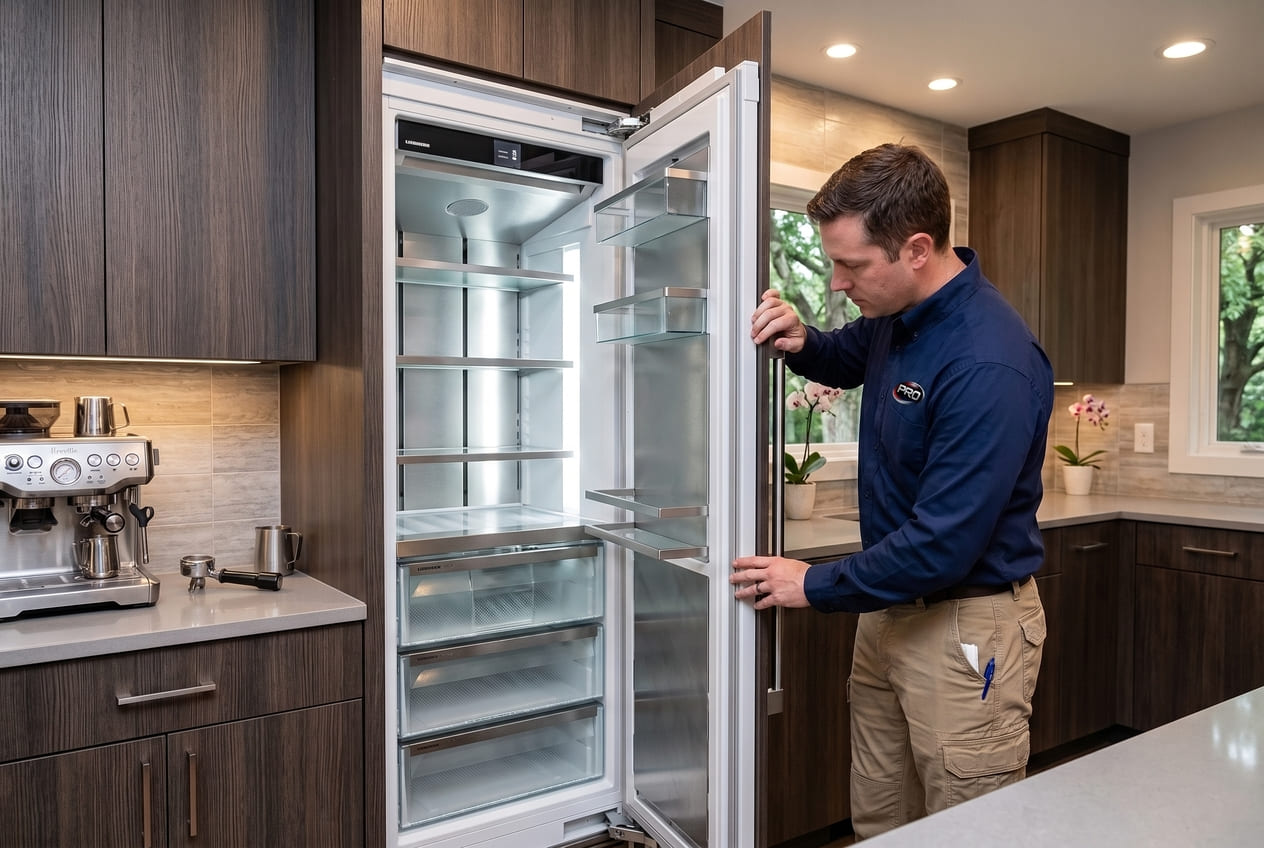
A Liebherr freezer door should close cleanly, catch the gasket evenly, and stay shut without a shove. When the door stops short, rebounds, drags across a drawer, or leaves the alarm active, start with the door path: packed storage, drawer travel, cabinet level, hinge movement, gasket shape, and built-in panel fit.
Atlanta humidity makes the problem show up fast. A freezer door that misses its final close pulls warm air toward the front edge. Moisture freezes around the drawer, gasket, or cabinet lip, and the next close gets rougher. A small closing problem can turn into ice buildup, repeated alarms, longer run times, and food that loses its hard freeze near the front of the compartment.
Appliance Repair Master repairs Liebherr freezer door problems across Atlanta and nearby Georgia areas. We service CS series, HCB series, SBS series, French door, bottom-freezer models and inspect the full closing system: door seal, door alignment, door won’t close, door gasket, hinge problems.
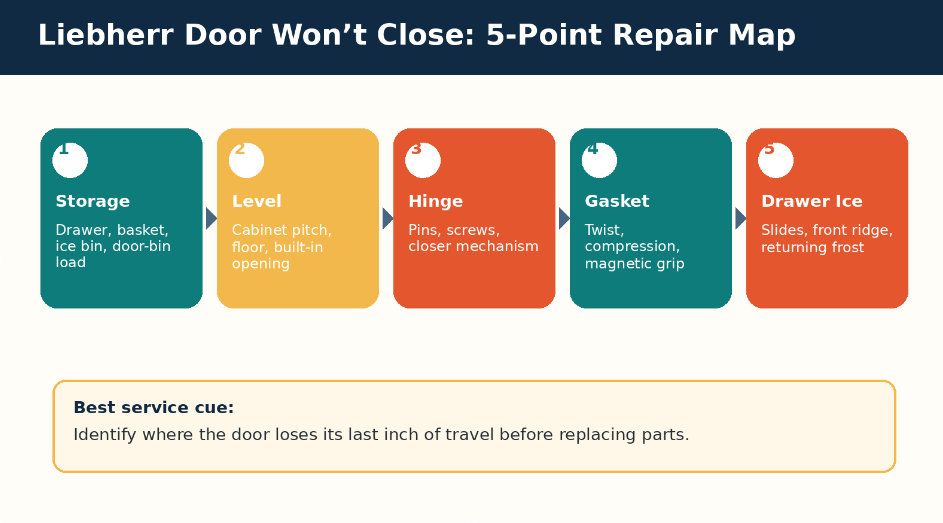
Start With the Way the Door Fails
The door behavior points to the first inspection area:
- A door that stops before touching the cabinet points toward drawer clearance or something inside the freezer.
- A door that reaches the frame and bounces back points toward gasket shape, leveling, or hinge tension.
- A door that closes only when lifted points toward hinge movement or door alignment.
Door Close Checker
Door stops short Check freezer drawer position, food packaging, ice bin placement, basket height, and door-bin load. → Check interior clearance | Door pops back Check gasket twist, cabinet level, hinge movement, and closer mechanism. → Check level and gasket shape |
Door closes only when lifted Check hinge wear, loose screws, pin movement, panel weight, and door alignment. → Check hinge symptoms | Freezer drawer catches Check ice behind the drawer front, slide resistance, basket height, and package interference. → Check drawer ice |
Alarm stays active Check incomplete closure, weak gasket contact, sensor-side closure, and door position. → Start a service request |
Packed Storage Can Stop the Final Close
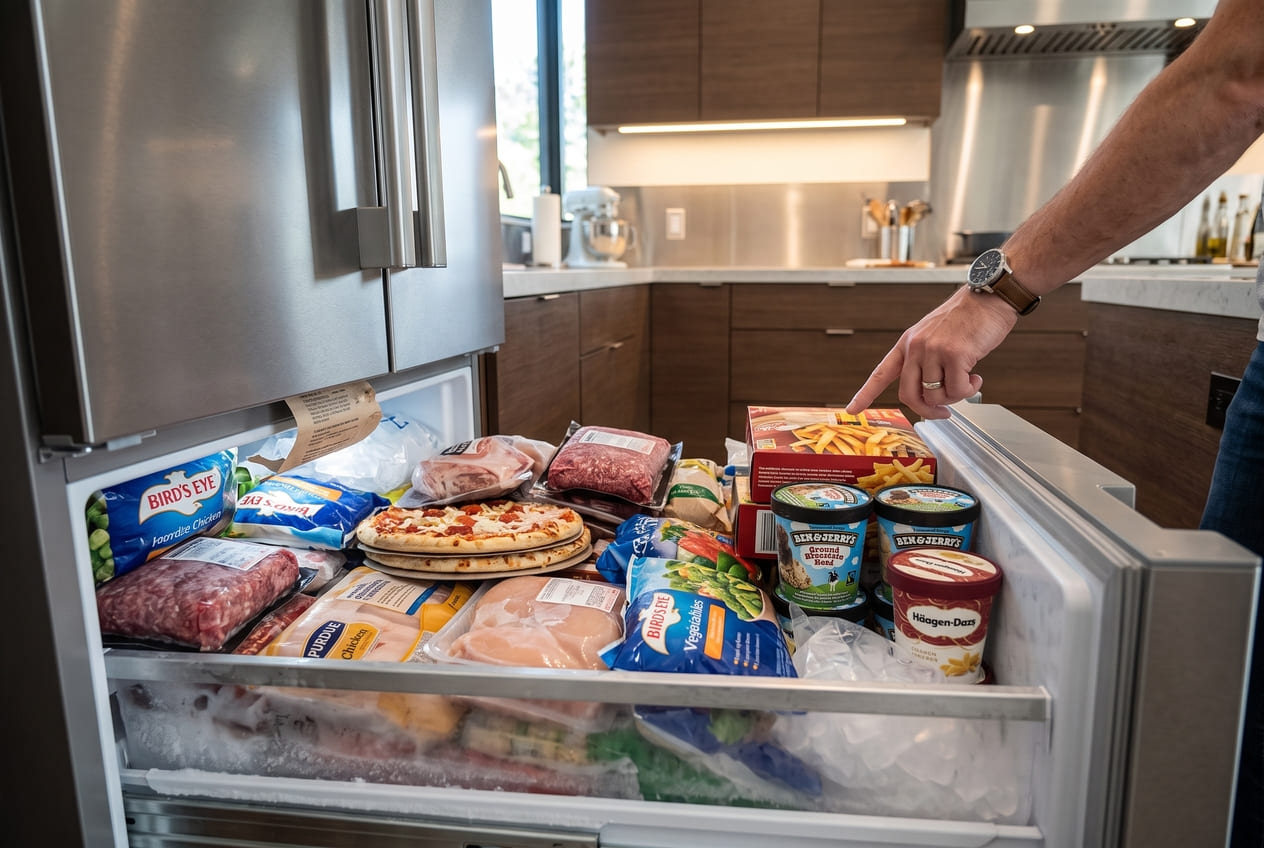
A Liebherr freezer can be loaded neatly and still block its own door. One frozen bag leaning into the liner, one basket sitting forward, one ice bin slightly proud of the compartment, and the door loses its last inch of travel.
Repair focus
obstructions items inside preventing closing unit at capacity check remove
In plain service terms, we look for:
- freezer drawers sitting forward
- frozen packages touching the door liner
- food stacked above the basket rim
- ice bins sitting out of position
- shelves or baskets shifted under weight
- door bins carrying too much load
- oversized containers blocking the closing angle
- custom panel edges brushing nearby cabinetry
If the unit is packed to capacity, clear the front row first. Push the drawers all the way back. Reseat the ice bin. Then close the door slowly and watch the final inch. If the door closes cleanly with less load, the repair path starts with storage pressure, drawer travel, or basket position.
60-Second Clearance Check
CHECK | Front-row frozen items cleared |
CHECK | Drawers pushed fully back |
CHECK | Ice bin seated flat |
CHECK | Basket contents below the rim |
CHECK | Door bins lightened |
CHECK | Shelf supports sitting straight |
CHECK | Custom panel clear of surrounding cabinetry |
CHECK | Door retested with the freezer lightly loaded |
Pro tip
Remove only the front row first. If the door closes cleanly after that, the obstruction sits near the drawer front, liner, or door-bin load. That detail helps the technician avoid chasing the wrong part.

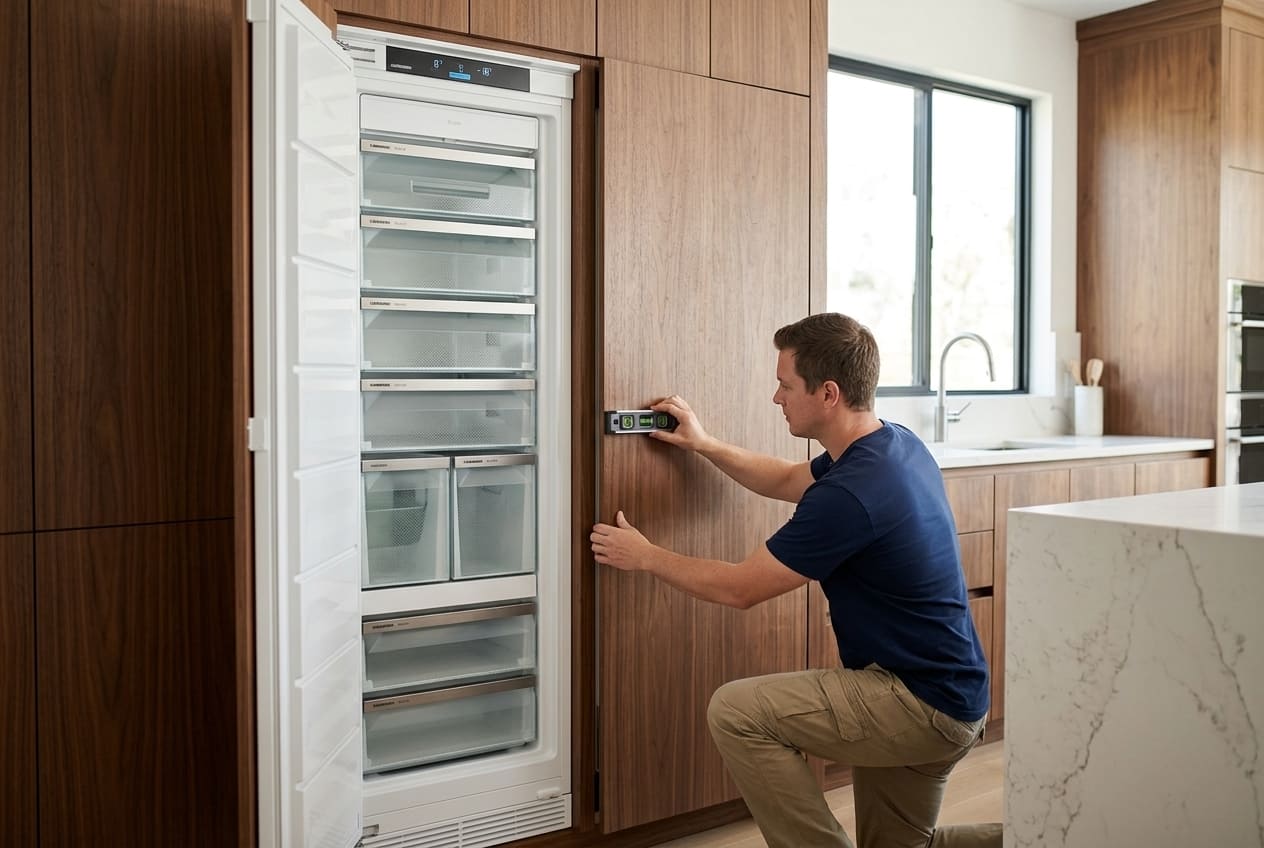
Leveling Changes the Door Swing
A Liebherr freezer can look straight from the front and still close poorly. Door swing depends on the cabinet’s pitch, the floor under the unit, and the way the appliance sits inside the opening. This matters even more in Atlanta kitchens with hardwood, tile, or built-in cabinetry.
Repair focus
unbalanced refrigerator level slightly lower back front aid door closure spirit level
That phrase comes up often when homeowners search for door-closing help. In service, the safer rule is model-specific: set the appliance stable, square, and aligned according to the Liebherr installation guide for that unit. A spirit level helps confirm the cabinet position. The final check is still the door: clean swing, even contact, no rebound, no lift at the handle.
A level problem can show up after:
- moving the appliance for cleaning
- new flooring
- cabinet work
- a kitchen renovation
- leveling-foot adjustment
- heavy freezer loading
- built-in panel service
Leveling Clues
Door drifts open Check front-to-back pitch and floor stability. | Door needs a push Check cabinet level, gasket resistance, and drawer clearance. |
Door changed after flooring work Check appliance height, leveling feet, and cabinet opening. | Built-in door sits proud Check panel fit, hinge seating, and appliance position. |

Hinge Movement Can Steal the Close
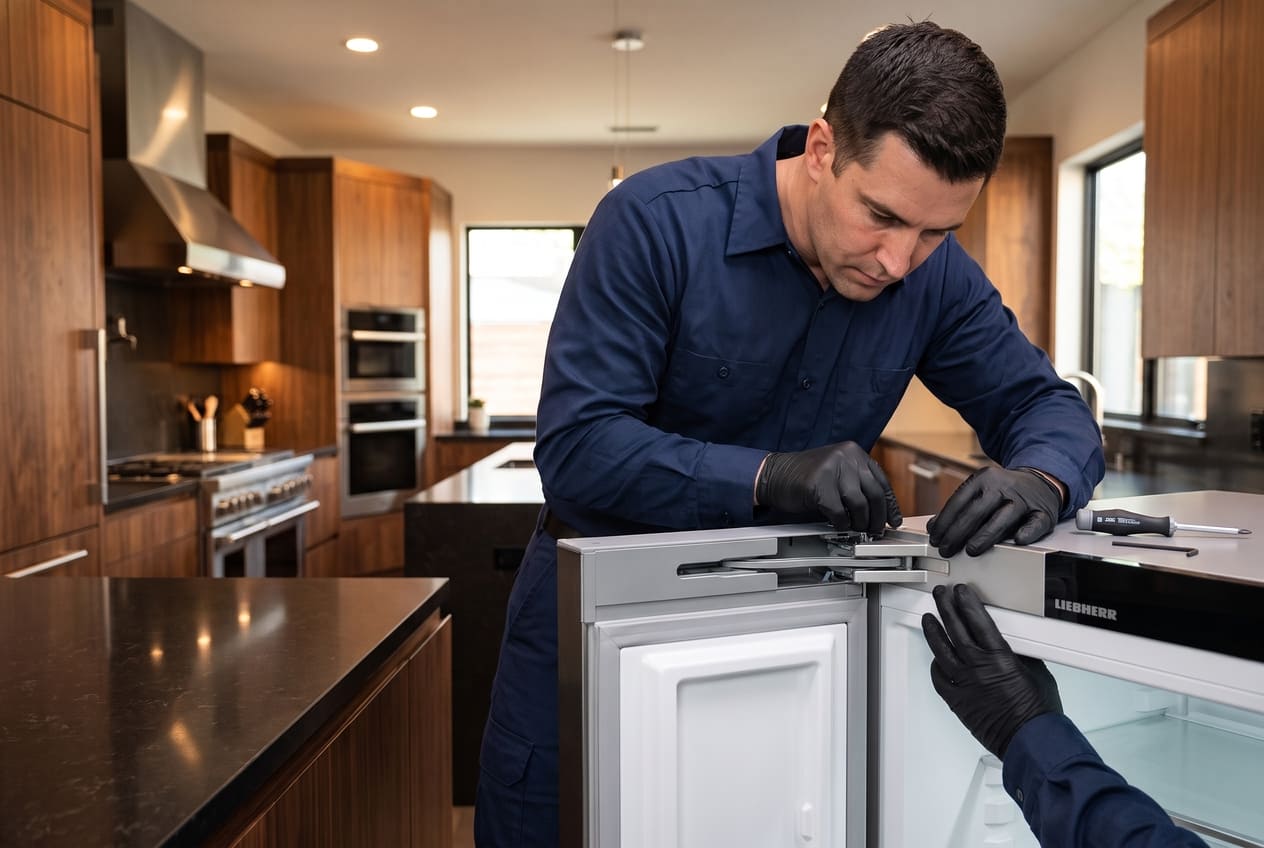
If the handle side sits low or the door closes only when lifted, the hinge system needs attention. A Liebherr hinge controls the door’s height, travel, and final landing angle. Loose screws, worn pins, panel weight, or closer-mechanism drag can keep the gasket from landing cleanly.
Repair focus
hinge issues misalignment wear pins movement loose tighten screws inspect closer mechanism
A hinge problem often shows up as:
- handle side lower than hinge side
- door rubbing nearby trim
- soft-close action changing suddenly
- door closing better when lifted
- gasket pressure missing near the bottom
- frost near one repeated corner
- loose or uneven door movement
This repair takes more than tightening every screw in sight. The door weight needs support. The closer mechanism needs inspection. Hinge pins, screws, movement, and final gasket compression all need a clean check after adjustment.
Hinge & Closer Mechanism Checklist
VERIFY | Door height checked at handle side |
VERIFY | Hinge pins inspected |
VERIFY | Loose screws identified |
VERIFY | Hinge wear checked |
VERIFY | Closer mechanism inspected |
VERIFY | Door swing tested |
VERIFY | Panel weight reviewed on built-in models |
VERIFY | Gasket compression tested after adjustment |
Pro tip
If lifting the handle helps the door close, say that when scheduling service. That points the visit toward hinge movement, panel weight, door alignment, or closer travel.

Gasket Shape Can Push the Door Back
Liebherr gasket has to sit flat, stay flexible, and pull evenly against the cabinet. If it twists, folds under itself, hardens, or loses magnetic grip along one section, the door may reach the frame and still fail the final close.
Repair focus
door gasket demagnetized damaged twisted prevent sealing hairdryer heat readjust
Gasket trouble can look like:
- door rebound near the final close
- one corner refusing to seat
- frost returning at the same edge
- twisted gasket folds
- flattened or stiff rubber
- a loose section pulling away from the channel
- weak magnetic grip along one side
Minor gasket deformation needs careful handling. Controlled service heat can help in some cases, especially when the gasket is still flexible and seated correctly. Torn, brittle, stretched, or hardened rubber usually needs model-correct replacement. Aggressive heat near the liner can damage the gasket, the door surface, or the seal channel.

Pro tip
Skip aggressive heat on the gasket. If the rubber looks cracked, brittle, stretched, shiny, or pulled from the channel, the safer repair is inspection and model-correct replacement.

Ice Around Freezer Drawers Can Block the Door
Ice near the drawer front can hold a drawer forward just enough to stop the door. The drawer may look seated from above, while a ridge of ice behind the front edge blocks the last inch of travel.
Repair focus
ice buildup freezer drawers obstruct drawer closing manually defrost check gasket clean lubricate slides
This often follows repeated warm-air entries. Atlanta humidity adds moisture fast once the freezer loses a clean close.
Look for:
- drawer resistance near the final inch
- frost or ice along the front edge
- drawer scraping or dragging
- door closing better after removing the drawer
- ice returning after safe, model-appropriate defrosting
- residue near the gasket by the drawer area
- slides that feel dry, dirty, or uneven
Safe defrosting can clear the blockage for the moment. If the ice returns within days, the freezer still has an air leak, slide issue, gasket problem, or alignment problem near the front edge. Clean around the drawer slides and preserve the factory grease in the runners; household lubricants can attract debris or interfere with the slide surface.
Freezer Drawer Ice Check
LOOK | Drawer slides fully |
LOOK | No ice ridge behind the drawer front |
LOOK | Basket contents below the rim |
LOOK | Slide area cleaned |
LOOK | Factory grease in runners preserved |
LOOK | Gasket near drawer area cleaned |
LOOK | Door retested after drawer reseating |
LOOK | Ice monitored after safe defrosting |
Built-In Liebherr Doors Need a Panel Check
Many Liebherr units in Atlanta homes sit inside finished cabinetry. That gives the kitchen a clean look, and it also adds another layer to door service. A custom panel can shift the door’s balance. Cabinet trim can catch the edge. A small pitch change in the opening can affect the final close.
For built-in and panel-ready Liebherr freezers, we check:
- panel weight
- hinge-side clearance
- handle-side height
- cabinet face contact
- trim rub
- door swing
- final gasket pressure
A built-in door can look aligned from across the kitchen and still lose compression at the lower corner. That’s where a careful service visit matters.
Why homeowners reach out to Appliance Repair Master
- Liebherr-focused door diagnosis
- same-day service availability
- gasket, hinge, and alignment inspection
- freezer drawer and ice buildup checks
- built-in and panel-ready awareness
- model-specific repair planning
- Atlanta-area scheduling
- 15+ years of appliance repair experience

Model Notes for Liebherr Freezers
CS series
CS units often show door-close trouble after moving, cleaning behind the appliance, or adjusting flooring. Leveling and hinge position belong in the same inspection.
Pro tip
Mention any recent movement or floor work when scheduling.
HCB series
HCB built-in models need careful checks around panel weight, cabinet fit, and hinge travel. A panel can look flush while still changing the door’s closing angle.
Pro tip
If the panel looks even while the door rebounds, ask for hinge and closer-mechanism inspection.
SBS series
Side-by-side models make height differences easier to see. Compare handle position and vertical gaps before ordering gasket service.
Pro tip
Stand several feet back. Small height differences show better from across the kitchen.
French door
French door configurations can lose closure at the meeting edge or lower corner. One side can shift the other during closing.
Pro tip
Close each door slowly and watch the meeting point.
Bottom-freezer
Bottom-freezer models often develop closure problems from packed baskets, ice buildup, or slide resistance near the front.
Pro tip
Clear the front of the basket and retest the door. If the close improves, drawer travel belongs in the repair.

What Appliance Repair Master Checks
For a Liebherr door that won’t close, our technician inspects the full closing system from the inside out:
- food and drawer clearance
- ice buildup near drawer fronts
- shelf and basket position
- door-bin weight
- cabinet level
- hinge pins and screws
- closer mechanism
- door alignment
- gasket shape and magnetic contact
- custom panel fit
- final close under normal load
Repair Visit Timeline
1. Door behavior review We document whether the door stops short, rebounds, needs a lift, drags on a drawer, or leaves the alarm active. | 2. Interior clearance check We check drawers, baskets, door bins, shelves, food packaging, and ice buildup. |
3. Level and alignment inspection We verify cabinet position, door height, hinge-side movement, and handle-side drop. | 4. Hinge and closer check We inspect hinge screws, pins, wear, movement, and closer travel. |
5. Gasket check We inspect twist, hardening, deformation, loose seating, magnetic weakness, and dirt along the contact surface. | 6. Final closure test We test the door under normal loading and verify clean closure without lift, force, rebound, or alarm return. |

Smart Homeowner Moves Before Service
Pre-Service Checklist
DO | Remove bulky items from the front of the freezer |
DO | Push drawers fully back |
DO | Clear visible ice from the drawer path when safe |
DO | Check whether the door closes better when lightly loaded |
DO | Look for a low handle-side corner |
DO | Note whether the door rebounds or stops short |
DO | Clean the gasket with mild soapy water |
DO | Take photos of ice, frost, or door gap before clearing it |
Skip universal gaskets, tape, forced handle pressure, sharp tools near the drawer, and aggressive heat on the gasket. Those shortcuts can turn a closure problem into liner damage, panel damage, or a larger hinge repair.
Pro tip
If the door fails only when the freezer is full, mention that. Load-sensitive closure problems often trace back to drawer travel, basket height, door-bin weight, or hinge position.
When to Get the Door Checked
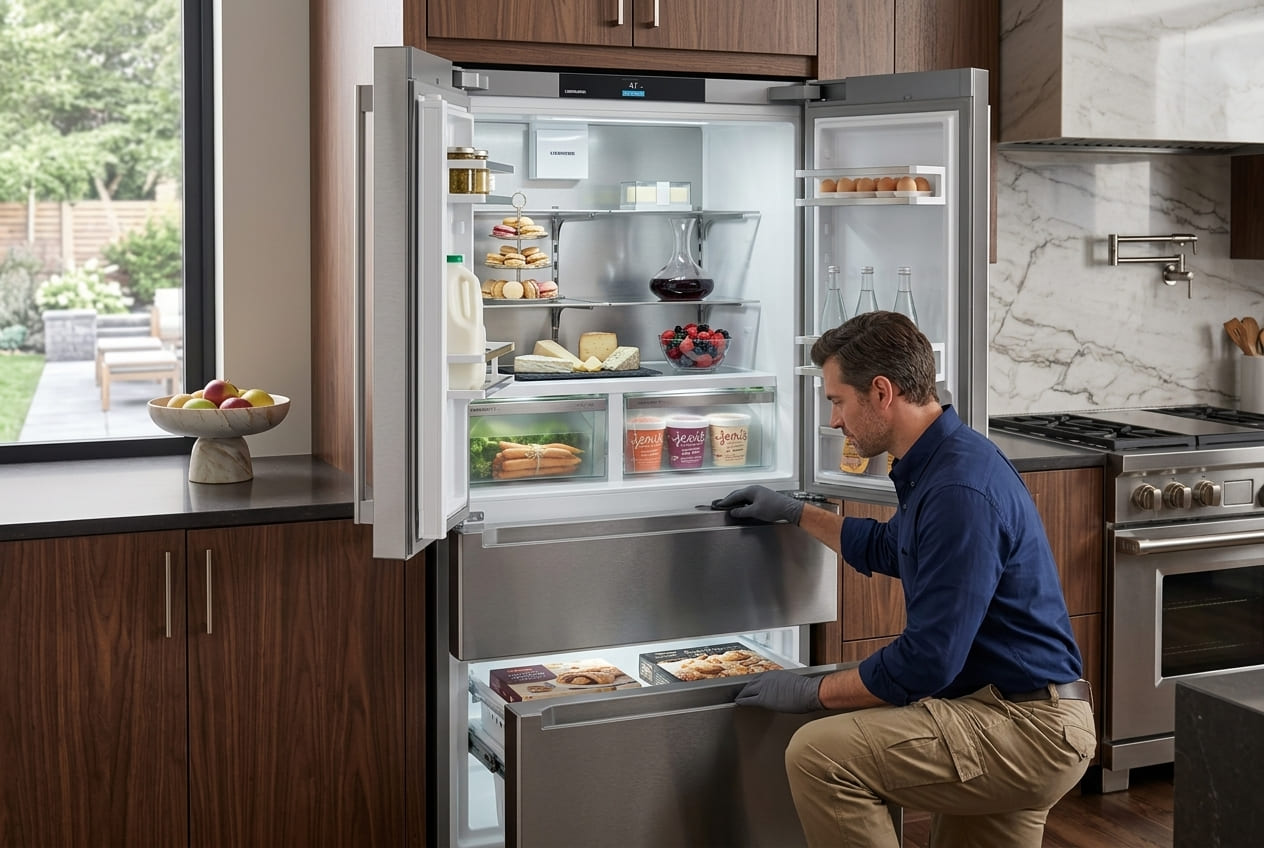
Liebherr door that won’t close cleanly deserves quick attention. Repeated closure failure lets warm air reach the front edge, where it can create frost, ice buildup, longer run times, and repeated alarms.
- the freezer door stops before closing
- the door pops back after touching the gasket
- the alarm returns after closing
- the door seals only when lifted
- a drawer blocks the door path
- ice keeps building near the front edge
- the gasket looks twisted, hard, or damaged
- the door changed after moving, cleaning, or remodeling
- the handle side sits lower than the hinge side
Bottom Line
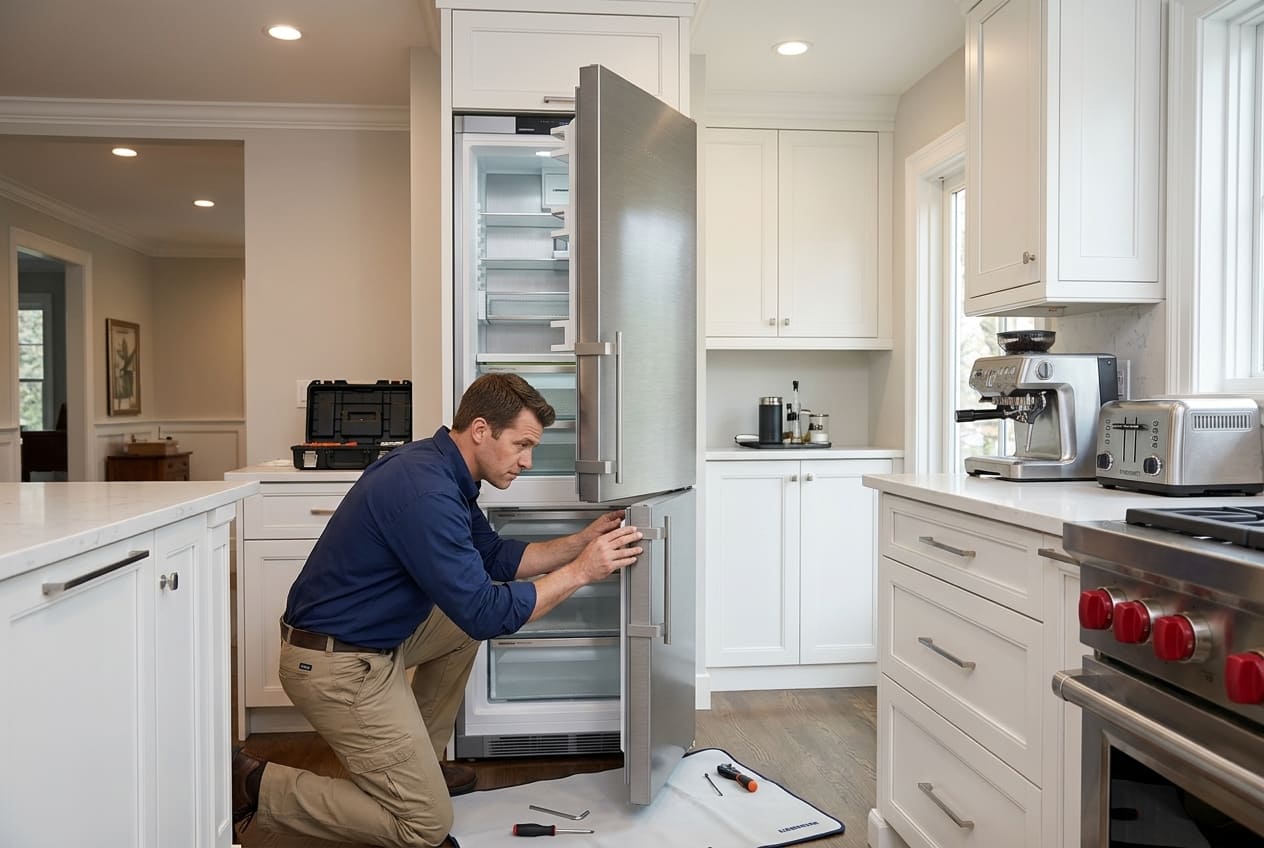
If your Liebherr freezer door won’t close, the cabinet is losing control at the front edge. In Atlanta’s humidity, that can turn into ice buildup, repeated alarms, longer run times, and food that doesn’t stay frozen the way it should.
The fix starts with finding why the door lost its final movement: blocked drawers, an overloaded compartment, poor cabinet level, loose hinge hardware, a twisted gasket, or ice buildup in the drawer path. Appliance Repair Master checks those points in one visit and corrects the source of the closure failure.
For Liebherr freezer door repair in Atlanta and nearby Georgia areas, reach out to Appliance Repair Master and get the closing path checked before frost and drawer ice spread.
Request Liebherr Door Repair
What happens when you close the door? | Stops short / pops back / needs lift / drags on drawer / alarm stays active / unsure |
Where do you notice resistance? | Top corner / lower corner / hinge side / handle side / drawer area / full door edge |
Appliance style | CS series / HCB series / SBS series / French door / bottom-freezer / unsure |
What changed recently? | Large grocery load / appliance moved / flooring work / cabinet work / ice buildup / nothing obvious |
Preferred service timing | Today / tomorrow / this week / first available |
Lead form microcopy
Same-day Atlanta service may be available. Share what the door is doing, and our team will help identify the right service path.
FAQ
1. Why won’t my Liebherr freezer door close?
Common causes include blocked drawers, overloaded storage, poor cabinet level, hinge movement, closer mechanism problems, gasket deformation, and ice buildup near the drawer front.
2. What should I check first?
Clear the front edge of the freezer, push drawers fully back, check the ice bin, remove items above the basket rim, and close the door slowly. If the door closes when lightly loaded, the issue likely involves obstruction or drawer travel.
3. Can leveling stop a Liebherr door from closing?
Yes. If the cabinet pitch is wrong or the floor has shifted, the door can stop short, rebound, or lose gasket pressure. Leveling and alignment belong in the same inspection.
4. Why does my Liebherr door close only when I lift it?
That usually points toward hinge movement, door sag, loose hardware, panel weight, or door alignment. The gasket may still be usable, while the door lands at the wrong angle.
5. Can a twisted gasket prevent the door from closing?
Yes. A twisted, damaged, hardened, or demagnetized gasket can resist the final close or keep the door from sealing after it reaches the cabinet.