Fifteen Years of Bosch 800 Reliability Complaints. What Goes Wrong
Fifteen years of Bosch 800 repair calls in Atlanta, and the pattern hasn’t changed. Most Bosch 800 Series refrigerator calls start with the same owner complaints: low ice production, reduced water flow, temperature changes, longer run times, or questions about warranty issues and customer service.
Let’s imagine we work with the B36CT80SNS French Door Bottom Mount Refrigerator, so we don’t start by guessing parts. We’ll better begin with the model number, water filter status, water supply, freezer temperature, door seal, and ventilation checks.
The Bosch 800 is a genuinely well-engineered refrigerator. Say that plainly because it matters: the cooling system can run past ten years without complaint.
A compressor problem isn’t the first assumption when the refrigerator is still cooling. It’s better paying attention on everyday causes first: frequent door openings, blocked external ventilation openings, warm food loads, water pressure, blocked filters, or ice maker settings. If those checks don’t explain the complaint, then the diagnosis moves deeper.
The repair is almost always straightforward — once someone figures out which part was given out. That’s where the money goes wrong. Everything vanishes in playing riddles with appliances.

How the Bosch 800 Ice and Water System Works
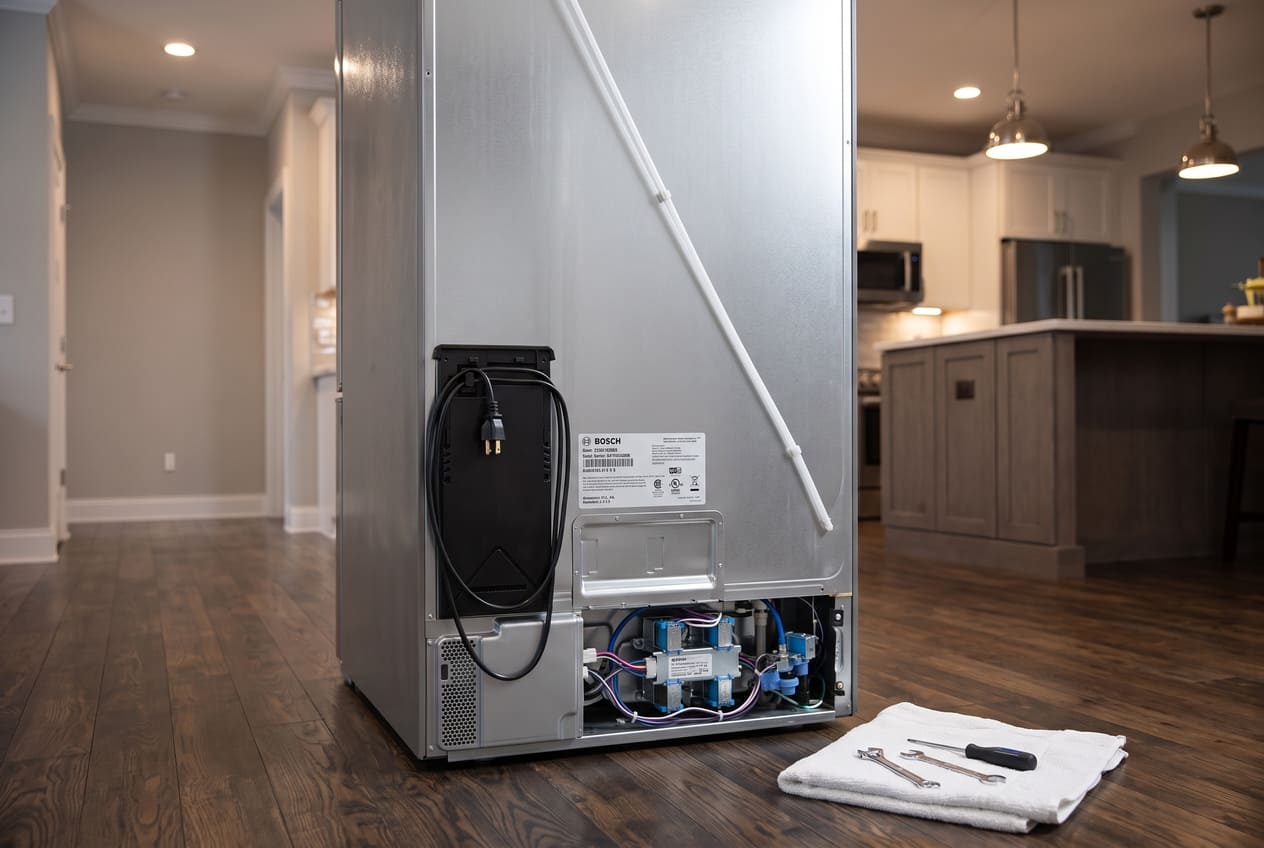
On the B36CT80SNS, the ice maker and interior water dispenser both run through the refrigerator’s water system. When water output is reduced or ice cube production is low, we start with the shared basics: the filter or bypass cap, water pressure, shut-off valve, and the water hose behind the unit. If the dispenser still works but the ice maker is not functioning, we don’t stop at the water line. We also check whether ice cube production is switched on, whether the ice storage container is blocked, and whether the ice maker itself has a fault.
Ice cube production starts after the appliance is switched on and the freezer compartment has reached the set temperature. The first batch can take about four hours, and a full ice storage container can take up to 48 hours. That timing matters because a new or recently serviced B36CT80SNS may be working normally even before the bin looks full.
When the water dispenser still works but the ice maker is not functioning, the water line is only part of the diagnosis. We check whether ice cube production is switched on, whether the appliance has water supply, whether the water hose is kinked, and whether the ice maker has a fault. When ice cube production is low, we also check water pressure, the water filter, recent freezer use, and whether food or objects are blocking the ice maker’s fill level sensor.
The Ice-Making Cycle — What's Supposed to Happen
Knowing the sequence helps pin down where things go sideways. Let’s get deeper into how a healthy Bosch 800 makes ice:
- The control board calls for a fill. The water inlet valve’s ice maker coil energizes, pulling the gate open.
- Water travels from the supply line through the valve, up the fill tube, and into the ice mold.
- The mold sits in the freezer at 0–5°F. The water freezes over several hours.
- Once the freezer compartment reaches the set temperature, ice cube production starts; the first batch can take about four hours.
- Once ice cube production is running, the ice maker fills the ice storage container automatically and stops when the container is full.
- The first batch can take about four hours after the freezer reaches the set temperature, and the full ice storage container can take up to 48 hours.
- Keep food and loose objects out of the ice storage container because they can block the fill level sensor and stop normal ice production.
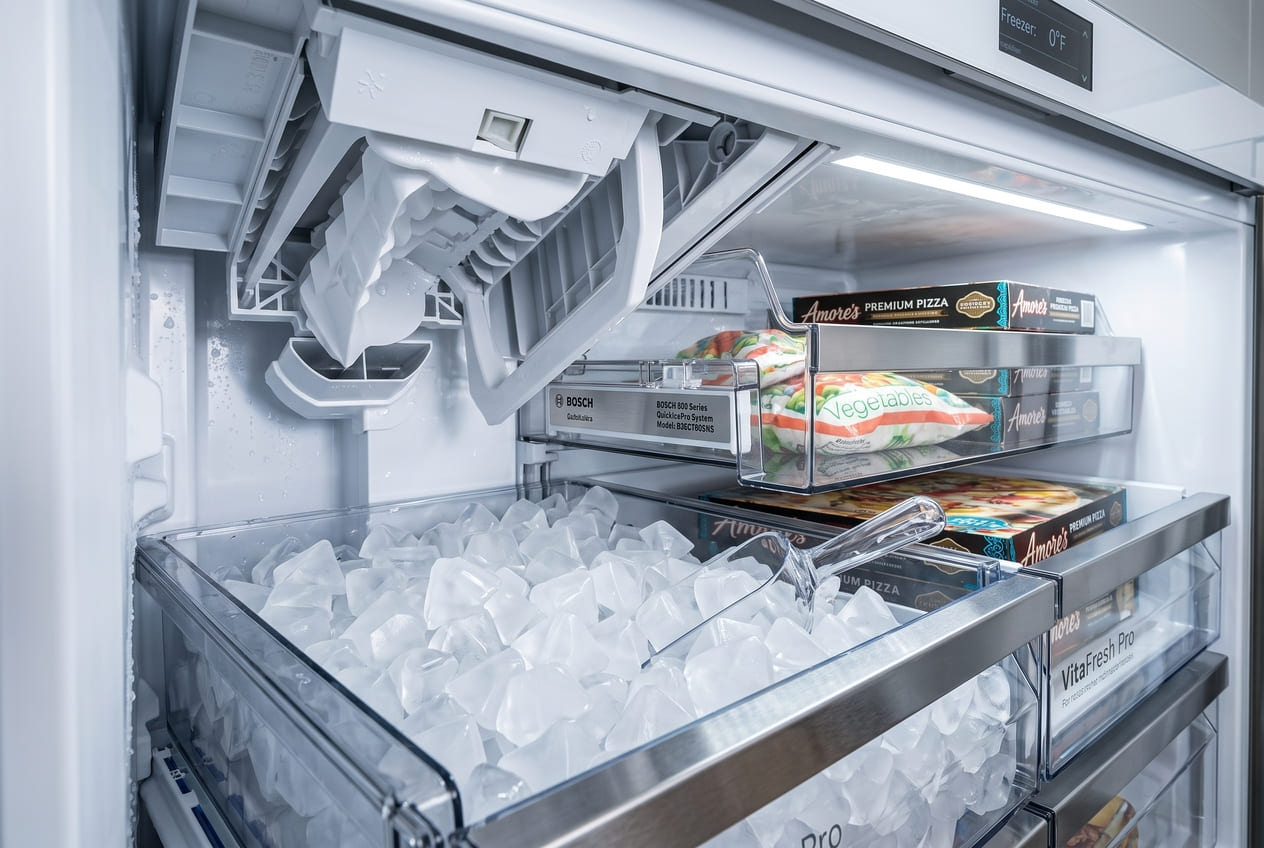
An empty ice bin doesn’t condemn the ice maker. On a B36CT80SNS, the first cubes can take about four hours after the freezer reaches its set temperature, and filling the container can take up to 48. If ice cube production stays low after that, we check the parts of the water system that actually affect output: water pressure, filter, shut-off valve, and the hose behind the refrigerator. If those are clear and the ice maker is still not functioning, then the ice storage container and the ice maker itself need the close look.
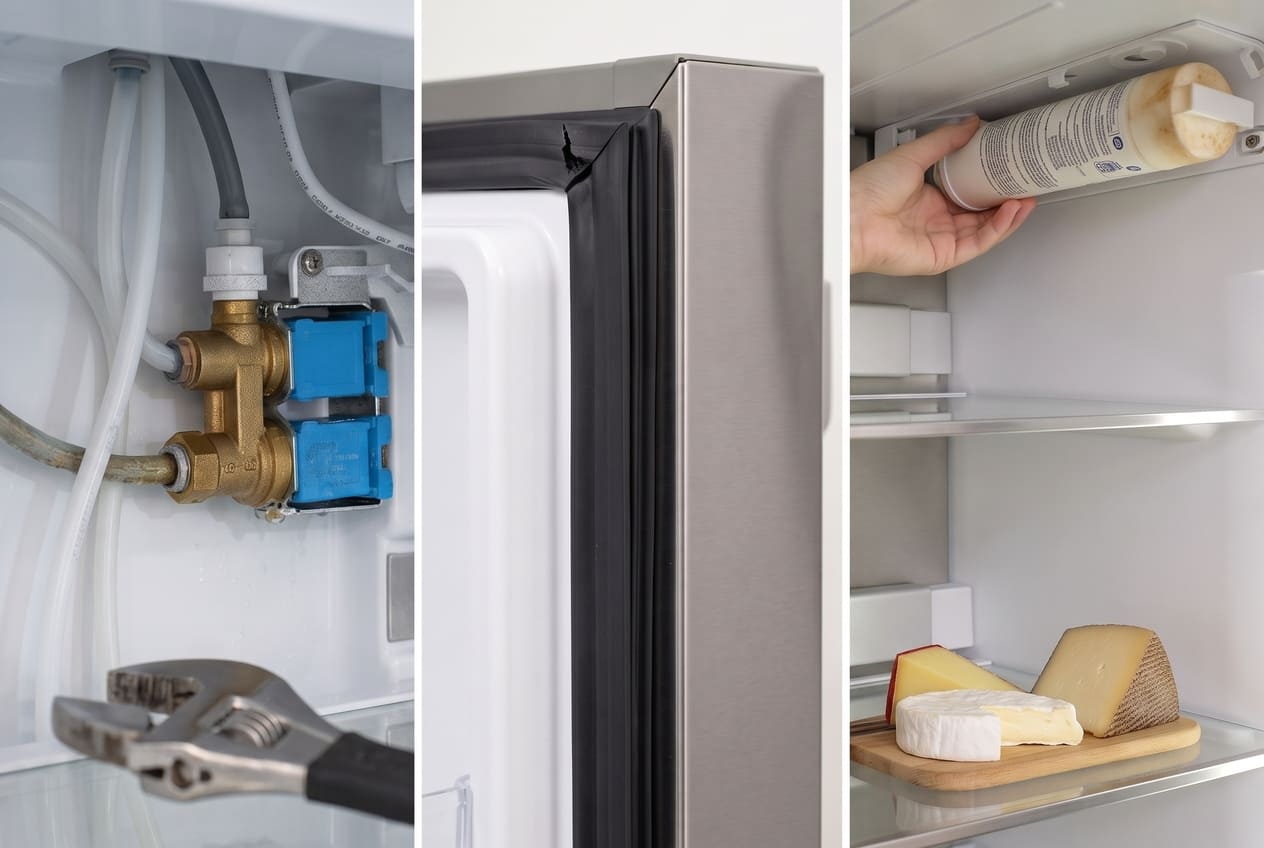
The Three Parts That Go Wrong
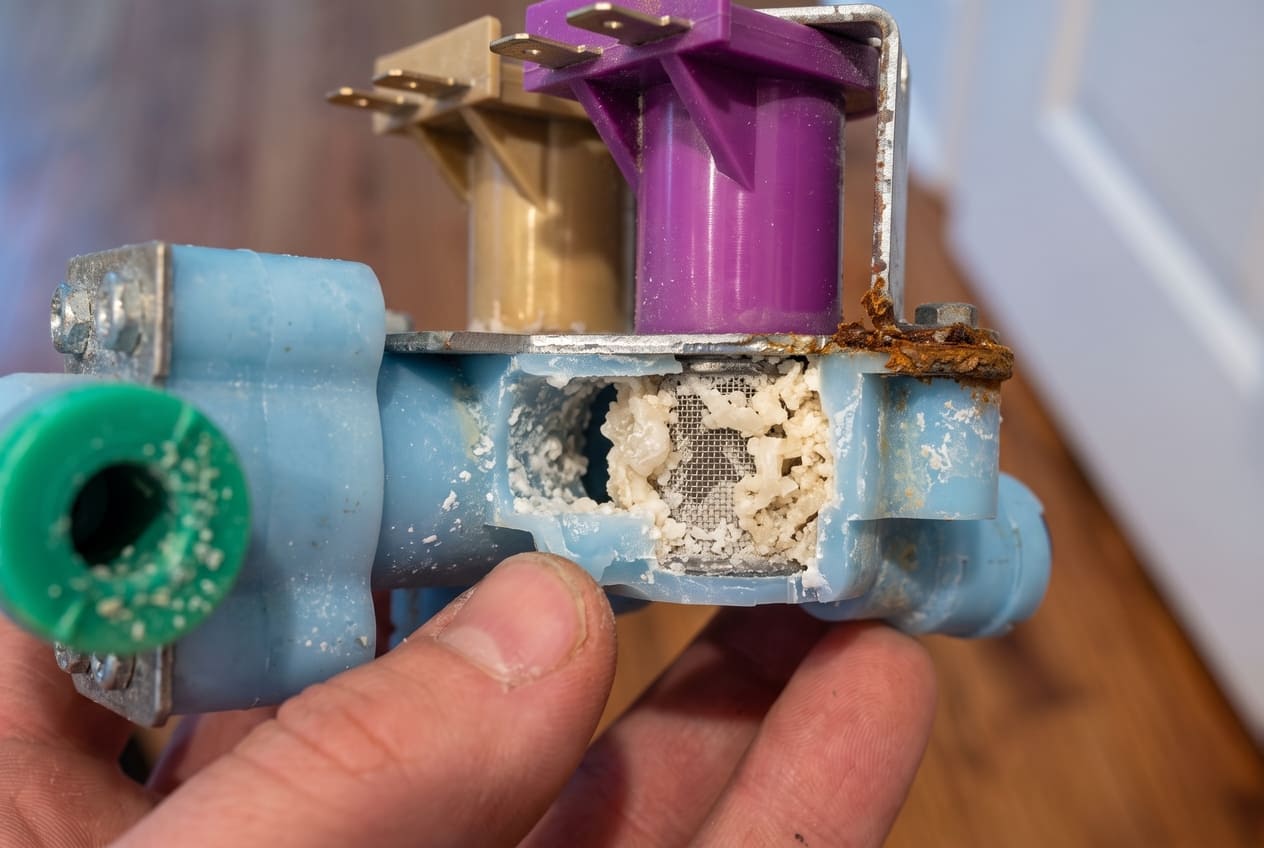
We Get Most of The Customer Service Complaints Considering The Water Inlet Valve
The valve is a solenoid that powers the coil, then the plunger lifts, and water flows. This pulls the plunger and the spring closes the gate. A mesh screen at the inlet catches sediment before it hits the valve seat. Simple in principle. Gets complicated after a few hundred thousand cycles in Atlanta tap water.
Atlanta’s tap water has enough mineral content that calcium and magnesium deposits build on the screen and valve seat over time. The screen is restricted. The solenoid coil, stressed from years of firing, weakens. The spring fatigues. By year four to six, the valve still opens but just not fully, and not on command.
The symptoms follow the decline.
- First, smaller cubes — the mold isn’t filling all the way.
- Then hollow cubes, one weak batch, a reset that buys another cycle before it stops again.
- Eventually nothing. If the valve gives out completely rather than degrading slowly, both the ice maker and the dispenser stop at the same time.
We carry this valve for the most common Bosch 800 models. It’s the first thing we verify when the symptoms fit.
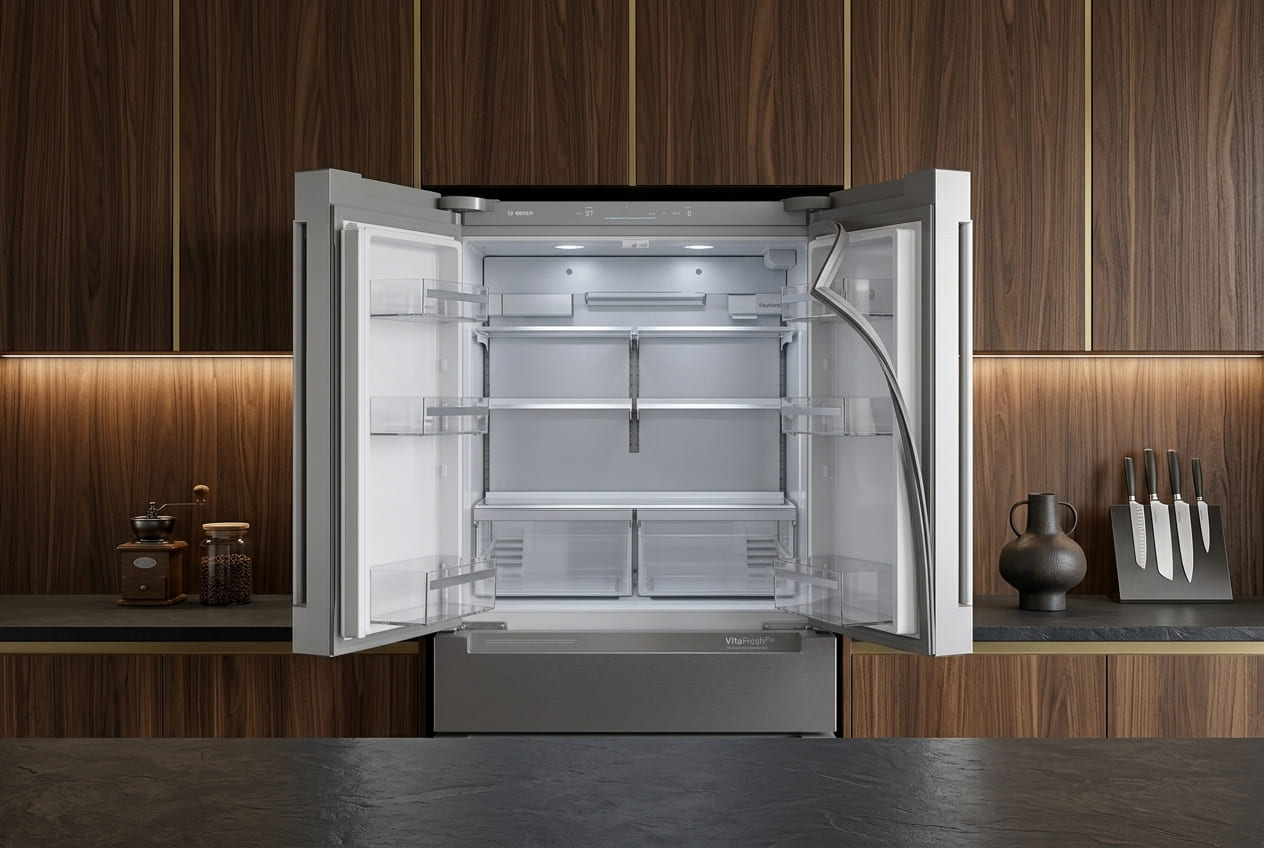
The Door Gasket Is The Part That Fools Everyone
The gasket runs around the perimeter of the door, creating the seal between the door and the cabinet. There’s a magnet strip embedded in it that pulls the door tight against the frame. It’s unglamorous but hardworking.
After five to ten years, the rubber loses elasticity. It cracks at the corners, pulls away from the frame, and goes stiff. Any of those conditions and warm air finds a way in.
The thermostat picks up the rising temperature and runs the compressor harder to compensate. A healthy refrigerator compresses for ten to fifteen minutes an hour. A bad gasket can push that to thirty minutes, or close to constant. The unit runs louder. The energy bill climbs. And most people blame the compressor, which is doing exactly what it’s supposed to do.
We check the gasket on every call that sounds like this. And we catch it more often than people expect.
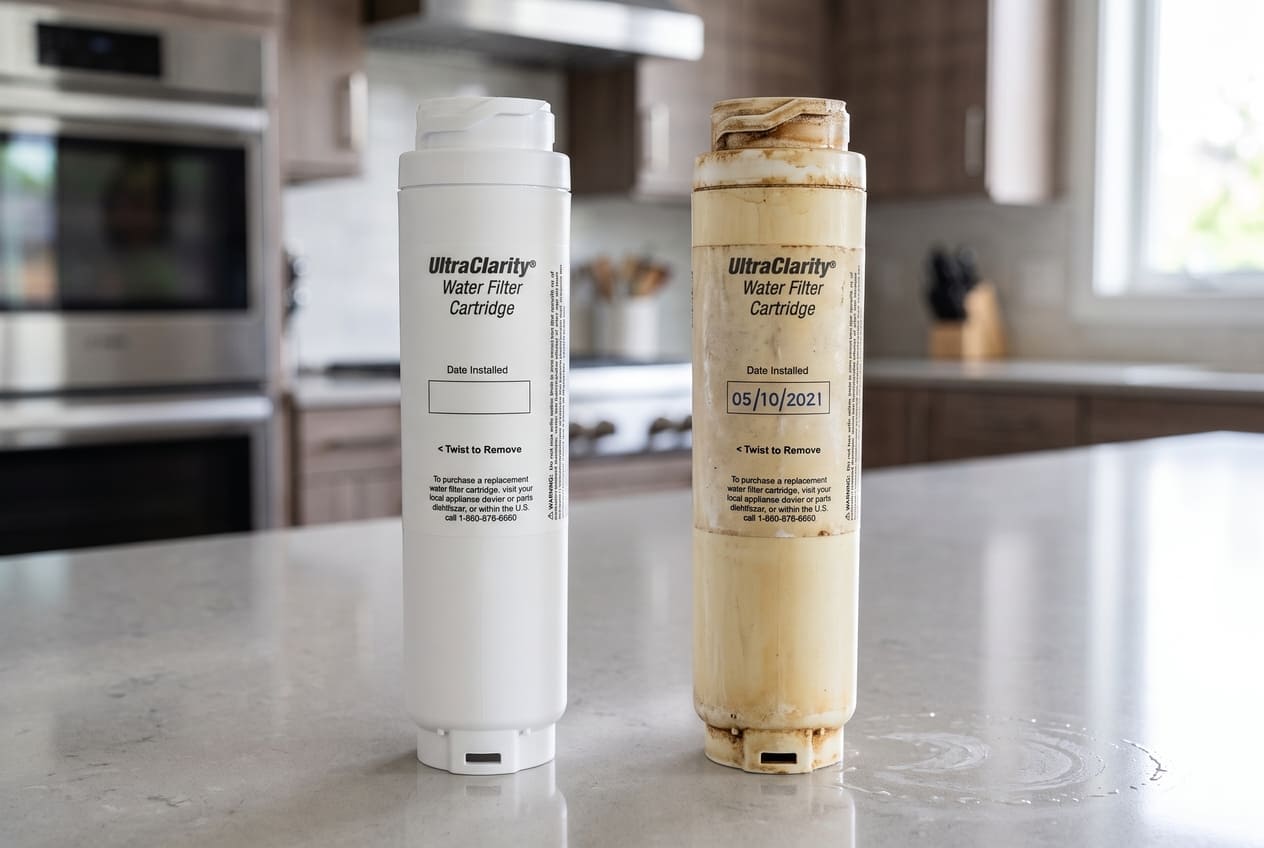
The Water Filter — The $50 Fix That Looks Like a $500 Problem
Bosch calls for filter replacement every six months on units that are used regularly. The filter lives between the household supply line and the valve, pulling out sediment, chlorine, and whatever else your water is carrying before it reaches the ice system.
A filter running on two-year-old service is saturated. Water pressure drops. The dispenser slows down. Ice cubes shrink, then go hollow, then the tray stops filling. Those symptoms are close enough to a valve failure that the wrong part gets blamed constantly.
The test is simple:
- pull the filter,
- run the bypass plug,
- check the dispenser.
If the flow jumps back to normal, the filter was choking it. If nothing changes, the valve is next. We run this before recommending any part.
Four Problems We See on Bosch 800s Every Single Week
We get a gazillion of customer service complaints and the failures are consistent enough that we often know the diagnosis before we arrive.
|
|
|
|
Five Things You Can Check Before Calling Us
None of these need tools. They take ten minutes. More than once, they’ve saved a service call entirely.
Check 1 — The Water Filter
Find the filter — on most Bosch 800 models it’s in the upper right corner inside the refrigerator compartment, or in the base grille. Check for a replacement date sticker.
Over six months old? Swap it out before you call anyone. Run the dispenser for thirty seconds after to push out air, then give the ice maker a few hours to catch up. This closes the case more often than you’d think.
Not sure how old it is? Pull the filter, plug in the bypass, and run the dispenser. Flow jumps back up? Filter was the problem. Nothing changes? Keep going.
Check 2 — The Door Gasket
Slide a piece of paper into the door and close it. Then pull. A good gasket holds the paper tight, you should feel resistance. If it slides right out, the seal isn’t doing its job at that spot.
Test all four sides of each door. A gasket that holds on three sides and slips on one is still a failing gasket. Warm air takes whatever opening it finds.
Also look at the rubber directly. Run your finger along it. Cracks, flat spots, sections peeling away from the frame — any of those mean it’s time for a replacement.
Check 3 — The Water Supply Line
Pull the refrigerator a few inches from the wall and look at the supply line. Kinks, sharp bends, pinch points — any of those will restrict flow just as effectively as a bad valve. And unlike a valve, a kink costs nothing to fix.
Find the shutoff valve on the wall or under the sink and make sure it’s all the way open. A valve that got bumped half-closed during plumbing work will starve the ice maker of pressure for months before anyone notices.
Check 4 — Listen During a Fill Cycle
Lift the ice maker cover and press the ice maker button. When the button lights up, ice cube production is on. Don’t hold that button to run a test cycle; on the B36CT80SNS, holding it for three seconds resets the filter change status.
If ice cube production is on and the ice maker is still not functioning, check water supply, the shut-off valve, the water hose behind the unit, freezer temperature, and the ice storage container.
Check 5 — The Freezer Temperature
Ice needs a freezer sitting between 0°F and 5°F. Above 10°F, the water won’t freeze fast enough to complete the harvest cycle and the maker slows or stops not because anything is broken, but because it’s too warm.
Stick a thermometer in the freezer for an hour. If the temperature is still off, check that the exterior ventilation openings are clear. Dusty external ventilation grilles can be vacuumed, but don’t open panels or brush enclosed cooling components. If the problem points behind inaccessible areas, that belongs to service.
Six Questions to Answer Before You Book An Appointment
These are what we ask on every Bosch 800 call and warranty issues check. Have them ready and you’ll save twenty minutes.
1. Which system stopped? |
|
2. What does the ice tray look like right now? |
|
3. What do you hear when the ice maker tries to fill? |
|
4. Does the water dispenser work? |
|
5. When was the water filter last replaced? |
|
6. Is the compressor running constantly? |
|
The B36CT80SNS Problems — Atlanta's Most Common Customer Service Complaints
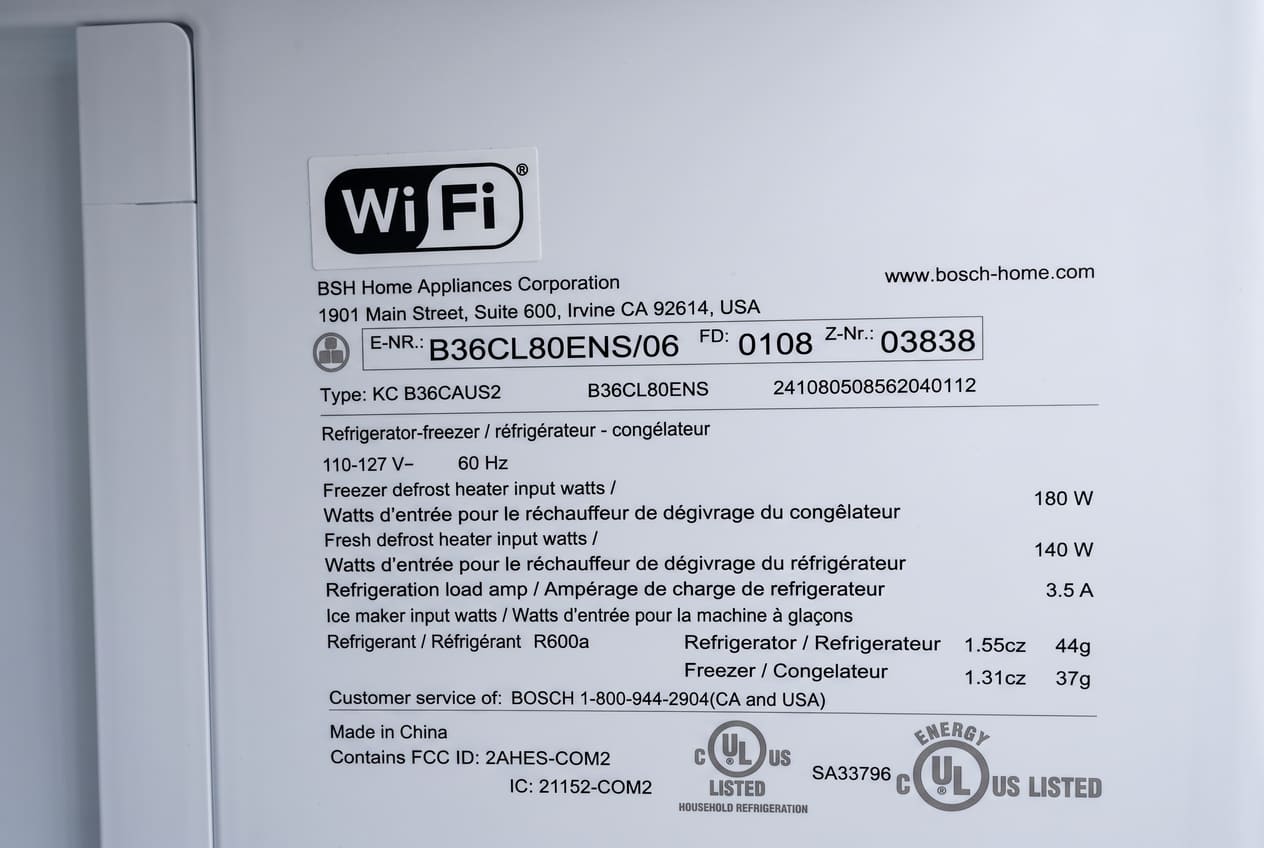
The B36CT80SNS is the model we see most often in Bosch 800 Series refrigerator calls. For other Bosch 800 Series or Bosch Benchmark refrigerators, we check the exact model number and E-Nr. before applying the same repair path.
The seal degrades through years of mineral buildup and mechanical cycling. Most owners miss the early signs because the ice maker is still running — just putting out smaller cubes, which are easy to dismiss as normal variation. By the time production stops, the valve has usually been struggling for months.
What owners report, almost every time:
- Ice cubes getting progressively smaller over days or weeks before production stops entirely
- The water dispenser continuing to work after the ice maker quits — same valve, different coil failing first
- A reset bringing back one batch of ice, then the maker stopping again within hours
- A buzzing sound during fill attempts with little or no water reaching the mold
- The failure appearing suddenly on a unit that seemed to be working fine the day before
The so-called sudden stop is misleading. The valve has been partially restricted for weeks, maybe months. The ice maker was compensating — filling more slowly, producing smaller cubes. The moment the restriction goes complete, production stops in a single cycle and doesn’t come back. The progression was there all along. Nobody noticed the cubes getting smaller.
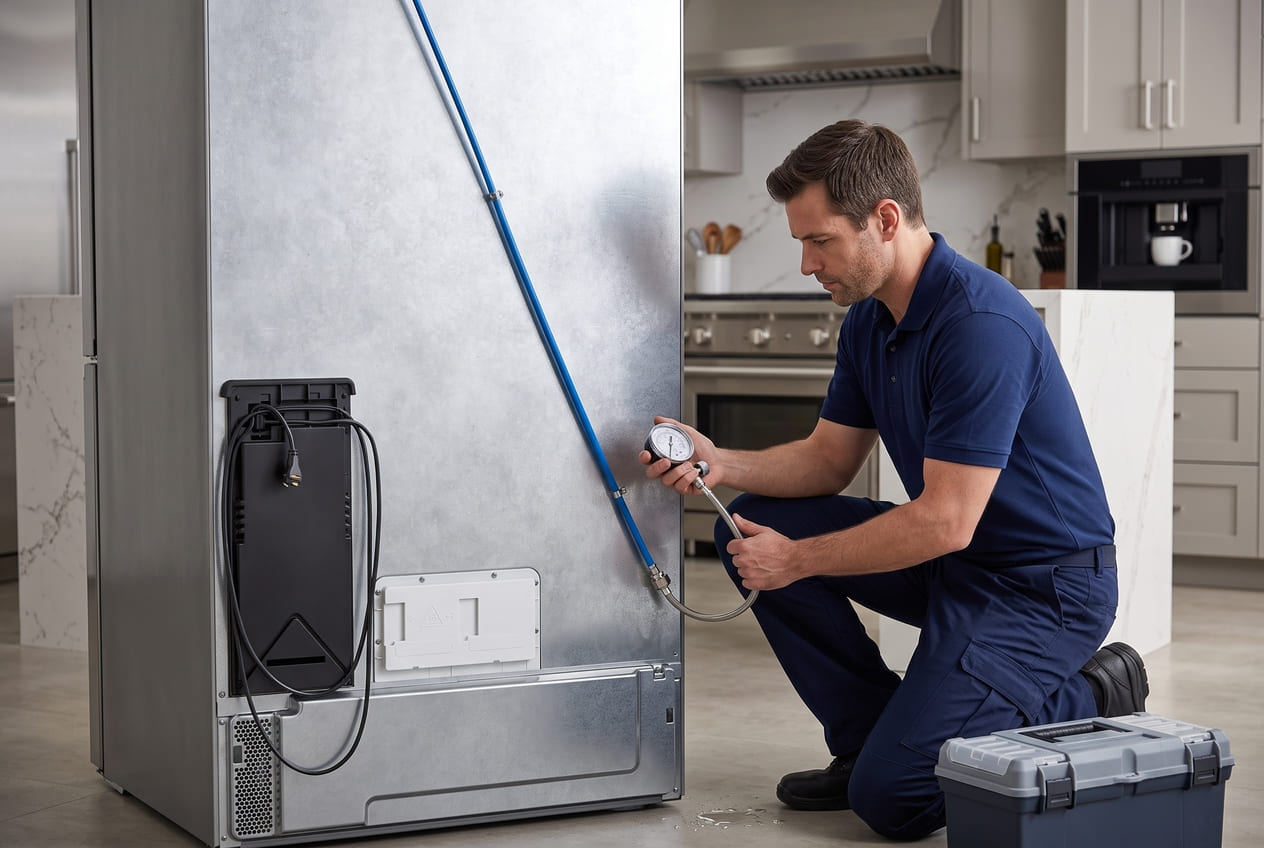
We arrive at B36CT80SNS calls with a very short list of suspects. Pressure check, solenoid test, filter bypass — we confirm it’s the valve and not the filter, then fix it.
Why the Diagnosis Matters More Than the Repair
Specializing in the refrigerator line for fifteen years changes how we approach a service call.
The Phone Call
When you call, we ask specific diagnostic questions:
- Is the tray dry or full of frozen cubes that won’t drop?
- Does the dispenser still work?
- What do you hear when the ice maker tries to fill?
- How old is the filter?
The answers almost always narrow it to one of three causes. We tell you what we think is happening and what the repair will likely involve before anyone drives anywhere.
On Site
Our approach is to test before billing repairs and we provide you with transparent quotes without hidden fees or shadowy services.
Ice maker call: water pressure at the inlet, solenoid under load, filter bypass, fill tube inspection. Then a manual test cycle, watching every step.
Compressor call: gasket seal at all four corners, frost pattern inside the freezer, thermostat cycling interval. The frost pattern alone usually explains everything.
Only after we know what failed do we name the repair and the cost. If the on-site picture is different from what we expected, we explain why before we proceed.
Parts Already in the Van
We carry the water inlet valves and door gaskets for the most common Bosch 800 repair cases. That’s why most repairs close the same day. Waiting on a part ships a two-hour job into next week. We built our inventory around the failures we see constantly so that doesn’t happen.
The Guarantee
If the repair doesn’t hold, we cover warranty issues by coming back and fixing it. We never walk away from a broken refrigerator.
Stories From Our Service Log: 4 Bosch Repairs in Atlanta
Dunwoody · Bosch B36CT80SNS
The situation: Ice maker stopped producing. The homeowner noticed the tray was completely dry. The water dispenser was still working normally.
Mrs. Alice Bristow assumed the ice maker and dispenser were independent systems. The warranty had run out and she’d been quoted a full assembly replacement before calling us.
What we found and fixed: Failed water inlet valve. The ice maker coil had degraded while the dispenser coil still had life. Part was in the van. Done same day.
Marietta · Bosch 800 Series refrigerator
The situation: Compressor running almost constantly for two months. The freezer was holding temperature normally, but the energy bill had increased significantly and the unit was noticeably louder.
Mr. Callum Woodworth has already gotten a compressor replacement quote elsewhere and was close to replacing the refrigerator.
What we found and fixed: Door gasket cracked at the bottom corner and pulled away from the frame. Cold air had been leaking for months. Gasket replaced that afternoon. Compressor back to normal by evening.
Buckhead · Bosch 800 Series
The situation: Ice maker stopping and starting unpredictably. Sometimes it would produce a full batch, sometimes nothing for two days.
The intermittent behavior made it hard to pin down over the phone. A home warranty service had recommended replacing the full ice maker assembly — Mr. David Garcia, who is the owner, had done it, and the problem came back within a month.
What we found and fixed: Two-year-old water filter, severely restricted. The bypass test confirmed it immediately. New filter in, ice maker running consistently ever since.
Sandy Springs · Bosch B36CT80SNS
The situation: Both ice maker and water dispenser stopped working on the same day. A buzzing sound during fill attempts but no water flowing to either.
The dispenser had been slowing down for weeks. The Miller family connected it to the ice maker going out.
What we found and fixed: Complete valve failure across both coils. The dispenser slowdown was the valve announcing what was coming. One replacement brought both systems back.
The Bottom Line
The Bosch 800 is a solid refrigerator. The cooling system outlasts most of what’s in it. Three components wear, on a schedule, in predictable ways: the inlet valve, the gasket, the filter. None of those failures mean the refrigerator is done.
Each one is fixable. The trick is knowing which one it is before anyone orders anything — the symptoms overlap enough that the wrong call happens more than it should.
Fifteen years in Atlanta. We know these refrigerators, we carry the parts, and we test before we quote. That’s the whole thing.
FAQ
1. The ice maker stopped but the water dispenser still works. If they share a valve, how is that possible?
The valve has two solenoid coils: one for the ice maker, one for the dispenser sharing the same valve body. The ice maker coil triggers a short, timed fill of a few seconds. The dispenser coil runs as long as you hold the paddle. When the valve degrades, the shorter ice maker fill is usually the first to fail because it requires the gate to open fully and quickly. The dispenser’s longer draw can still pull water through a partially restricted valve. As the valve continues to degrade, the dispenser slows too.
2. The tray is full of frozen cubes but none of them are dropping into the bin. What's wrong?
The water delivery side is working correctly — the mold filled and froze. What failed is the harvest cycle. The harvest heater that warms the underside of the mold to release the cubes, the ejector motor that rotates to push them out, or the thermistor that triggers the harvest sequence may be the issue. This is a different repair from a valve problem and doesn’t indicate anything wrong with the water supply system.
3. My compressor runs every 15 minutes. Is it failing?
Probably not. A compressor that runs frequently but maintains temperature is almost always responding to something that’s causing heat gain — most often a failing door gasket letting warm air in. We check the gasket seal first on every call like this. A gasket that fails to seal at even one point on the door creates enough air exchange to drive the compressor into overdrive.
4. We replaced the ice maker assembly and the problem came back a month later. What happened?
This happens when the assembly was replaced without confirming the actual cause of failure. If the valve is degraded, a new ice maker assembly will eventually develop the same symptoms because the water supply problem was never addressed. We run a full diagnostic before recommending any repair to make sure we’re fixing what actually failed.
5. How long does a typical repair take?
Valve replacements and gasket replacements typically take one to two hours on site. We carry the common Bosch 800 failure parts, so same-day service is standard for most repairs. If the diagnosis reveals something unexpected that requires ordering a part, we’ll tell you before we leave what the next step is and how long it will take.