
Start Here: Match the Symptom You See
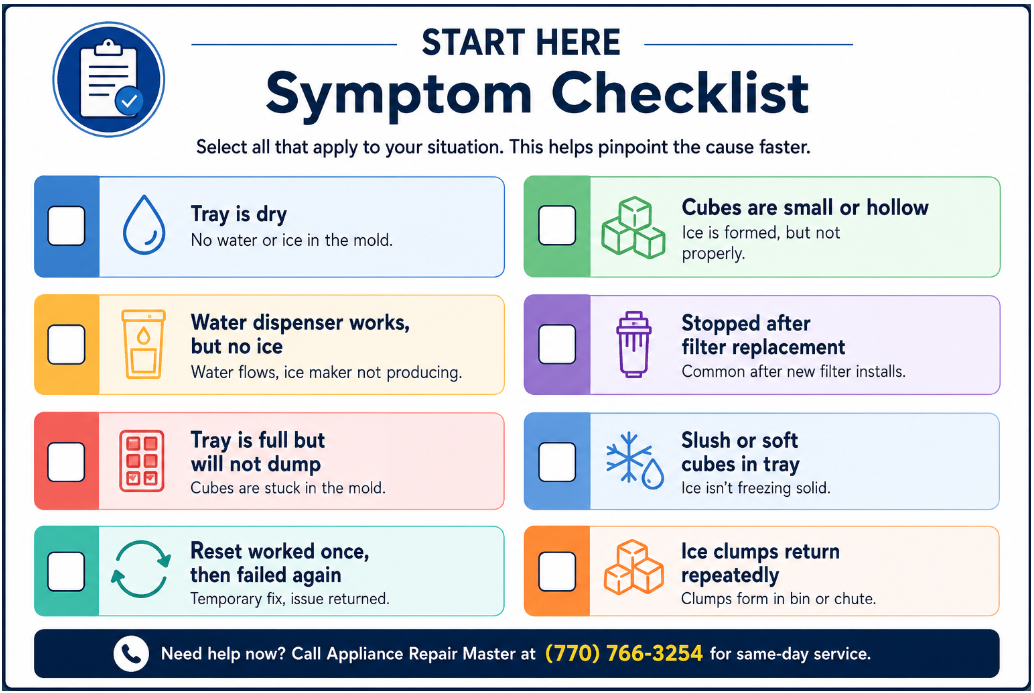
Choose the Bosch ice maker symptom that looks closest to your situation. The next sections explain what usually causes it, what you can safely check, and when it makes sense to schedule service.
What Your Symptom Points To
Dry tray Start with water delivery: filter, line, shutoff valve, fill tube, and inlet valve. | Small or hollow cubes Think weak fill before replacing the ice maker assembly. |
Slush or soft cubes Confirm freezer temperature, airflow, gasket seal, and frost pattern. | Full tray, no dump Focus on harvest: heater, motor, ejector, tray surface, and drop path. |
Bosch refrigerator can stop making ice while the rest of the appliance appears to be operating normally. The freezer may hold cold air, the control panel may show no warning, and the water dispenser may continue to run. That combination makes the problem difficult for homeowners to judge, especially when the only obvious symptom is an empty ice bin.
For Bosch 800 and 500 Series refrigerators, a no-ice failure usually begins in one of four places:
- water delivery,
- freezer temperature,
- harvest movement,
- or control operation.
The repair depends on which system failed first.
A clogged filter can restrict the fill. A kinked supply line can reduce pressure behind the refrigerator. A weak water inlet valve can open inconsistently. Freezer temperature settings can prevent the ice maker from reaching harvest conditions. A full tray with cubes trapped inside can indicate a stuck ice tray or a failed harvest mechanism.
Replacing the ice maker assembly without isolating the cause can turn a straightforward repair into an expensive parts chase.
Problems We Service
-> Bosch ice maker not working | -> Bosch refrigerator not making ice |
-> Bosch 800/500 Series ice maker issues | -> Stuck ice trays |
-> Water inlet valve issues | -> Weak or hollow ice cubes |
-> Freezer temperature problems | -> Hidden reset/test procedure failures |
-> Ice maker works once, then stops again | -> Water dispenser works, but no ice is produced |
Ice Tray Condition Separates Water Problems From Harvest Failures
The empty bin confirms the symptom, but the tray condition helps isolate the failed system. Before replacing the ice maker, check whether the mold is dry, underfilled, slushy, or full of frozen cubes.
A dry mold usually indicates that water is not reaching the ice maker. Small or hollow cubes point toward weak fill. Slush suggests a freezer temperature or airflow problem. A tray full of frozen cubes shifts the diagnosis toward harvest failure.
Ice maker condition | Likely failure area | What the technician checks |
|---|---|---|
Dry tray | Water delivery failure | Filter, shutoff valve, supply line, fill tube, inlet valve |
Small cubes | Weak fill | Filter flow, water pressure, inlet valve response |
Hollow cubes | Restricted supply | Supply line, valve screen, filter seating |
Slush in tray | Temperature problem | Freezer temperature, airflow, gasket, frost pattern |
Full tray, cubes not dropping | Harvest failure | Mold heater, motor, ejector, tray surface |
Ice clumps in bin | Temperature fluctuation | Door seal, airflow, defrost behavior |
Bin full, dispenser not releasing ice | Delivery failure | Bucket, auger, chute, dispenser motor |
This distinction is crucial. A new ice maker assembly won’t correct a weak inlet valve, a pinched water line, or a freezer running too warm. A proper diagnosis separates water delivery, freezing performance, harvest movement, and dispensing.
How Bosch Ice Maker Produces Ice
Bosch ice production depends on a controlled sequence. The refrigerator must fill, freeze, harvest, and reset for the next batch. If one step fails, production stops.
Bosch ice-making sequence
- The control calls for ice.
- The water inlet valve opens for a timed fill.
- Water moves through the fill tube into the mold.
- The freezer pulls the water down to freezing temperature.
- The ice maker waits until the mold reaches harvest conditions.
- A heater loosens the cubes from the mold.
- The motor or ejector moves the cubes into the bin.
- The unit returns to home position.
- The next fill cycle begins.
A no-ice complaint can begin at any point in that sequence. The visible result may be the same, but the repair changes depending on where the process breaks.
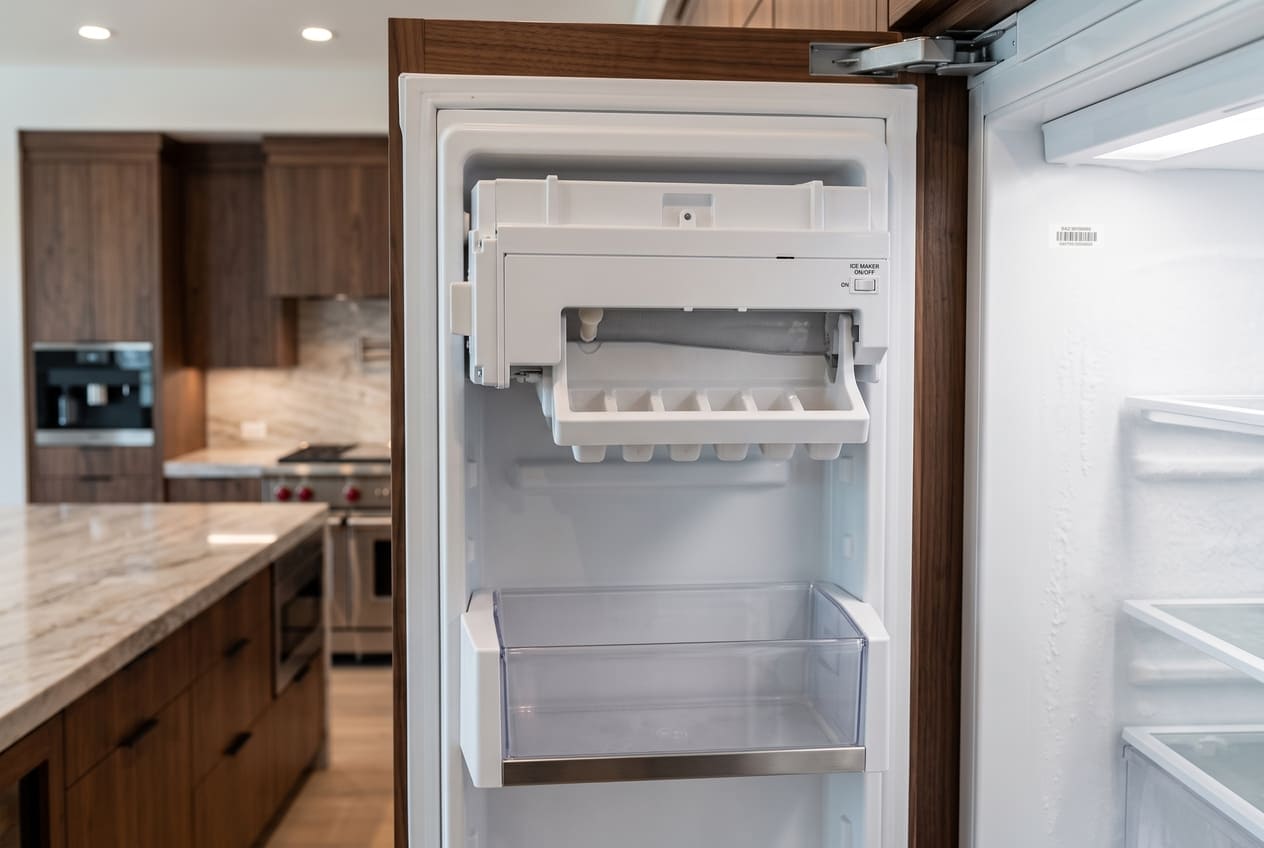
If the Tray Is Dry, Inspect the Water Path First
A dry tray usually indicates that the mold is not receiving water. That doesn’t condemn the ice maker assembly. In many service calls, the ice maker is still functional, but water delivery is blocked, restricted, or inconsistent.
Common causes of a dry Bosch ice tray
[ ] Clogged or overdue water filter | [ ] Filter not seated correctly |
[ ] Air trapped after filter replacement | [ ] Kinked water line behind the refrigerator |
[ ] Partially closed shutoff valve | [ ] Low household water pressure |
[ ] Frozen fill tube | [ ] Weak or clogged water inlet valve |
[ ] Control not sending the fill command |
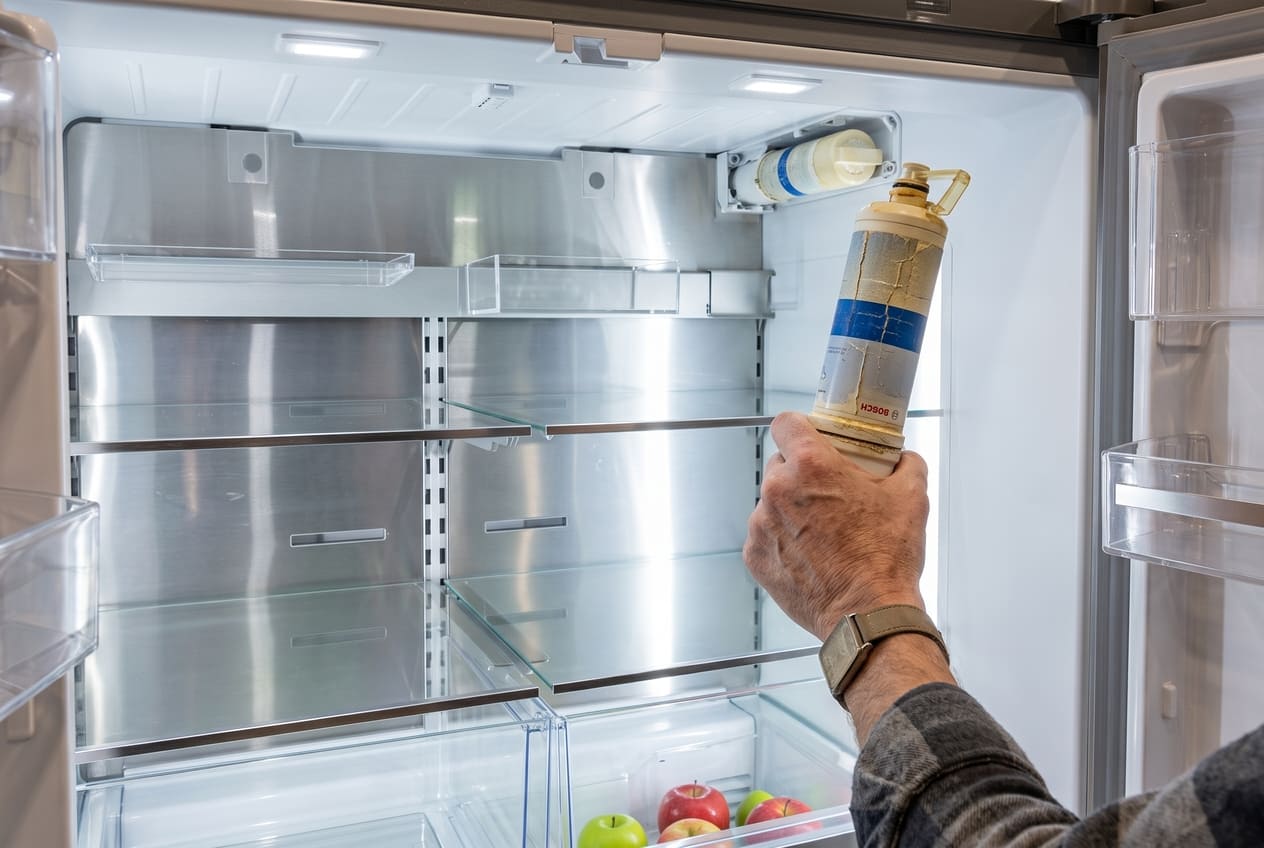
Clogged filter symptoms
A restricted filter can affect the ice maker before the water dispenser appears fully blocked. The dispenser runs while someone presses the paddle. The ice maker receives only a brief timed fill. If the filter restricts flow during that short window, the tray may underfill or remain dry.
Signs include:
- Small cubes
- Hollow cubes
- Slow dispenser flow
- Sputtering after a filter change
- Ice production fading over several days
- No ice after installing a replacement filter
- Random batches after filter replacement
After replacing a filter, flush the water system thoroughly. Air in the line can disrupt early fill cycles and imitate a mechanical failure.
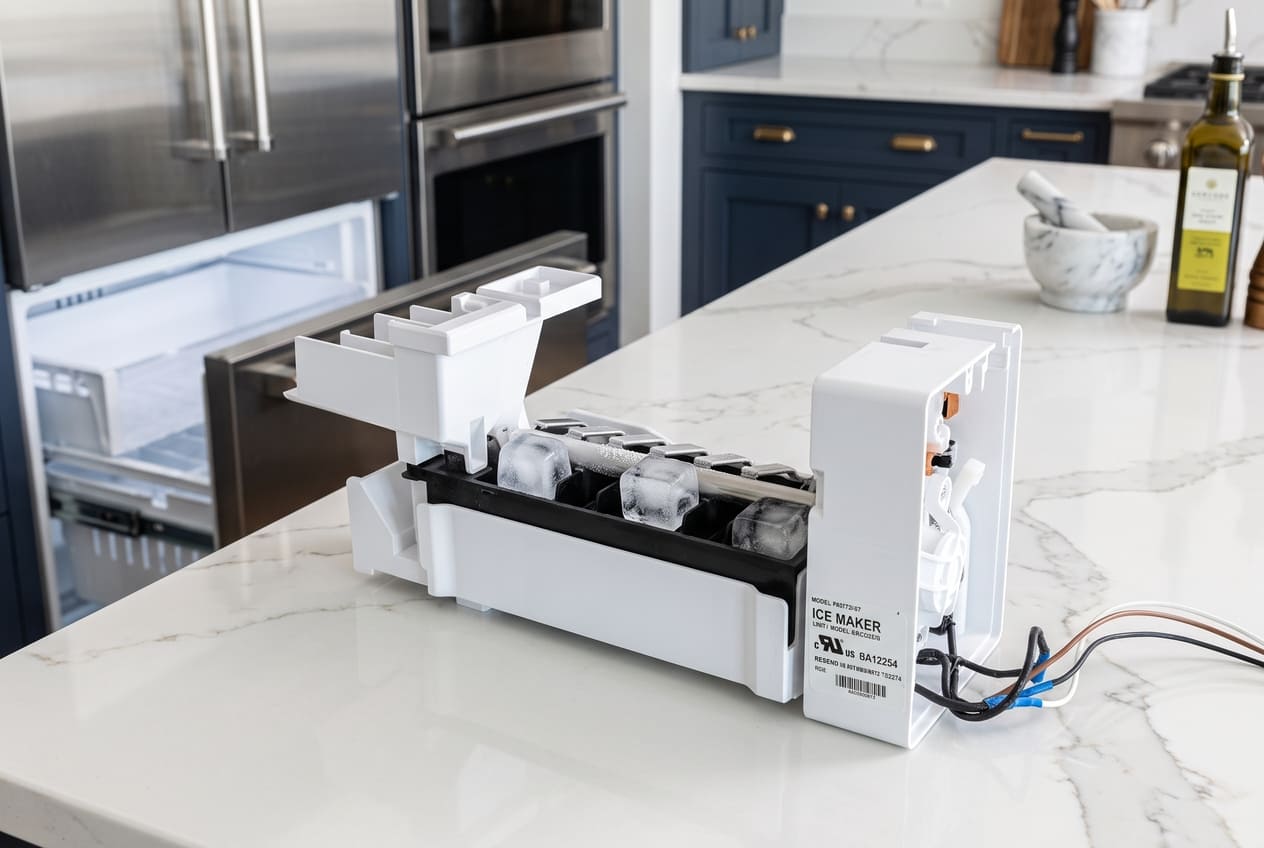
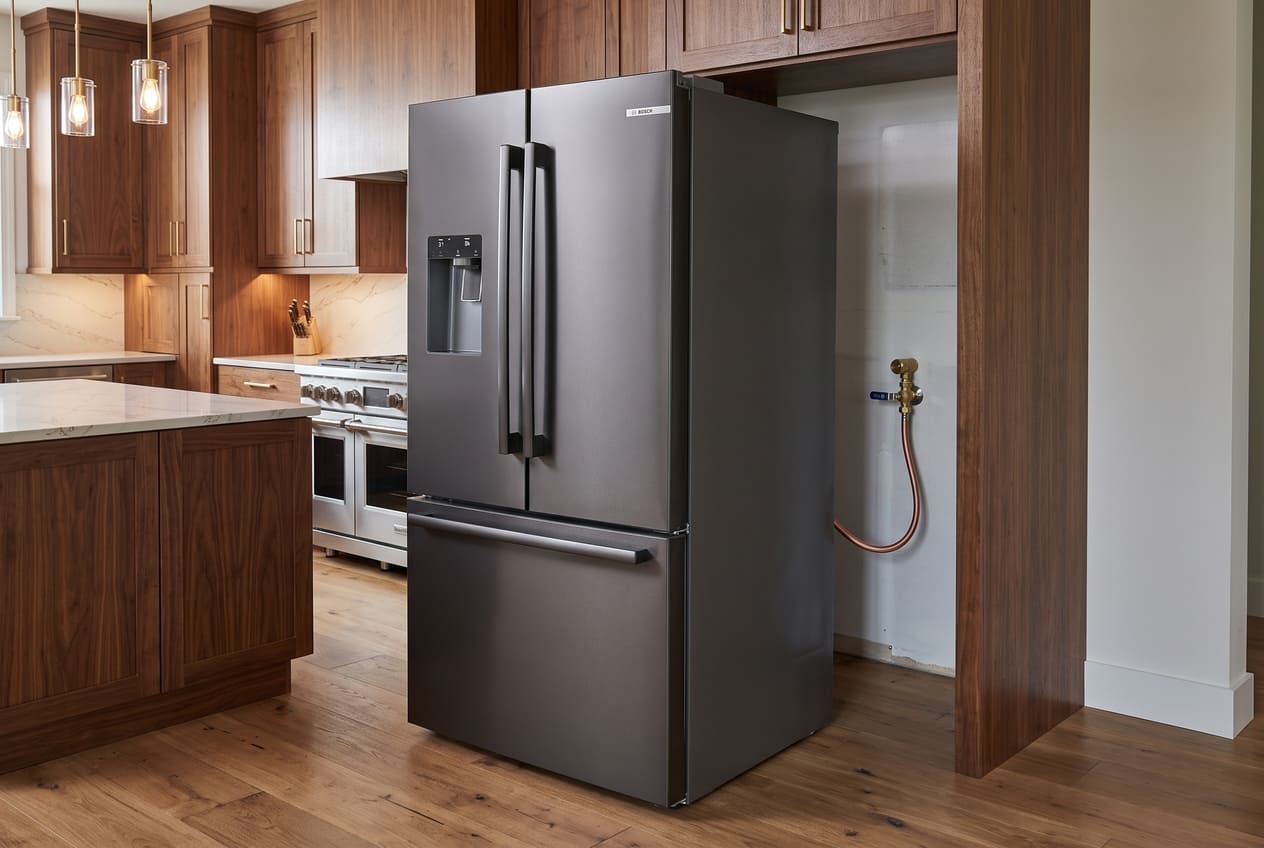
Water line and shutoff valve problems
A refrigerator supply line can bend or flatten when the appliance is moved for cleaning, flooring work, remodeling, or installation. Even a partial restriction can reduce flow enough to stop ice production.
Check for:
- Flattened tubing
- Sharp bends
- Moisture near fittings
- Aging plastic tubing
- A shutoff valve that is not fully open
- Signs that the refrigerator was pushed tightly against the wall
A damaged line should be replaced rather than reshaped. Crushed tubing may weaken and leak later.
Older Atlanta homes can also have restricted valves or fittings due to mineral buildup. If the shutoff valve is only partly open, the ice maker may produce ice inconsistently or stop altogether.
Water Inlet Valve Issues Can Imitate Ice Maker Failure
The water inlet valve controls the fill. When the ice maker calls for water, the valve must open with enough force and consistency to deliver the correct volume into the mold. If the valve weakens, sticks, clogs, or fails electrically, the tray may receive too little water or none at all.
Signs of Bosch water inlet valve issues
- Dry ice tray
- Small cubes
- Hollow cubes
- Inconsistent ice production
- Buzzing during fill with little water entering
- Water dispenser works, but ice maker does not
- Ice production returns briefly after reset, then stops again
A valve can sometimes appear acceptable during a basic electrical check and still fail under real operating conditions. A proper service visit checks water pressure, valve voltage during fill, response time, and actual water delivery.
Replacing the ice maker assembly before testing the inlet valve often misses the real failure.
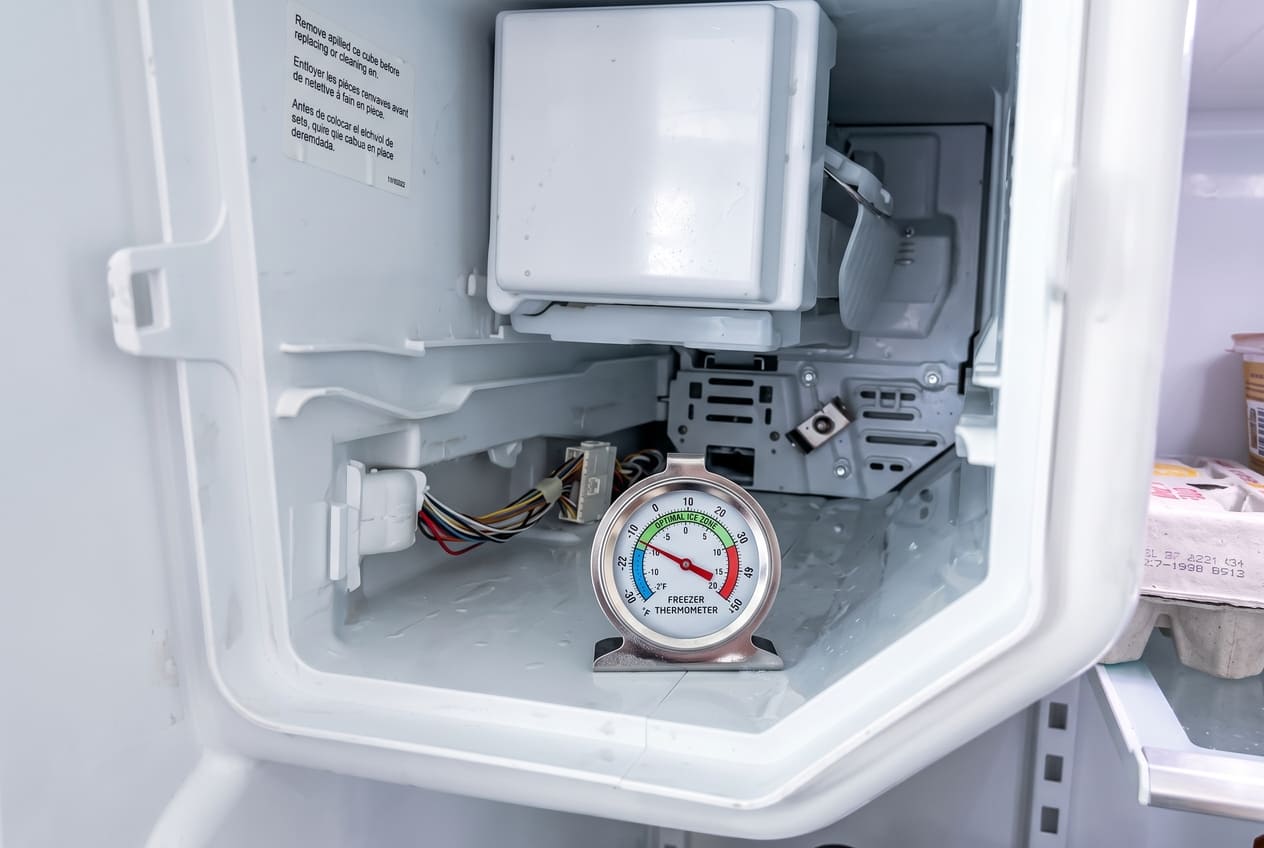
How We Test the Water System
When our technician arrives, the inspection does not begin with a parts assumption. We verify whether the refrigerator is receiving water, whether the valve opens on command, whether the tray fills with the right volume, and whether the failure happens before or after the freeze cycle.
That process protects the customer from unnecessary parts and gives a clear repair path before work begins.
Freezer Temperature Settings Can Stop Ice Production
Bosch freezer can feel cold without staying cold enough for reliable ice production. Ice makers depend on measured temperature, not a quick impression when the door opens.
For steady ice production, the freezer should generally stay close to 0°F. If the temperature rises above the ideal range, the mold may freeze slowly, the harvest cycle may delay, or the ice maker may stop cycling.
Signs that freezer temperature is affecting ice production
[ ] Slush in the ice tray | [ ] Soft or wet cubes |
[ ] Cloudy, irregular cubes | [ ] Ice cream softer than usual |
[ ] Ice clumped together in the bin | [ ] Frost around vents or the rear wall |
[ ] Slow production over several days | [ ] No ice after the freezer door was left open |
[ ] Ice maker stopped after heavy weekend use | [ ] Door gasket appears loose, dirty, or folded |
Atlanta humidity can make small sealing problems more severe. Warm, moist air entering the freezer can create frost, weaken airflow, and delay freezing around the ice maker area.
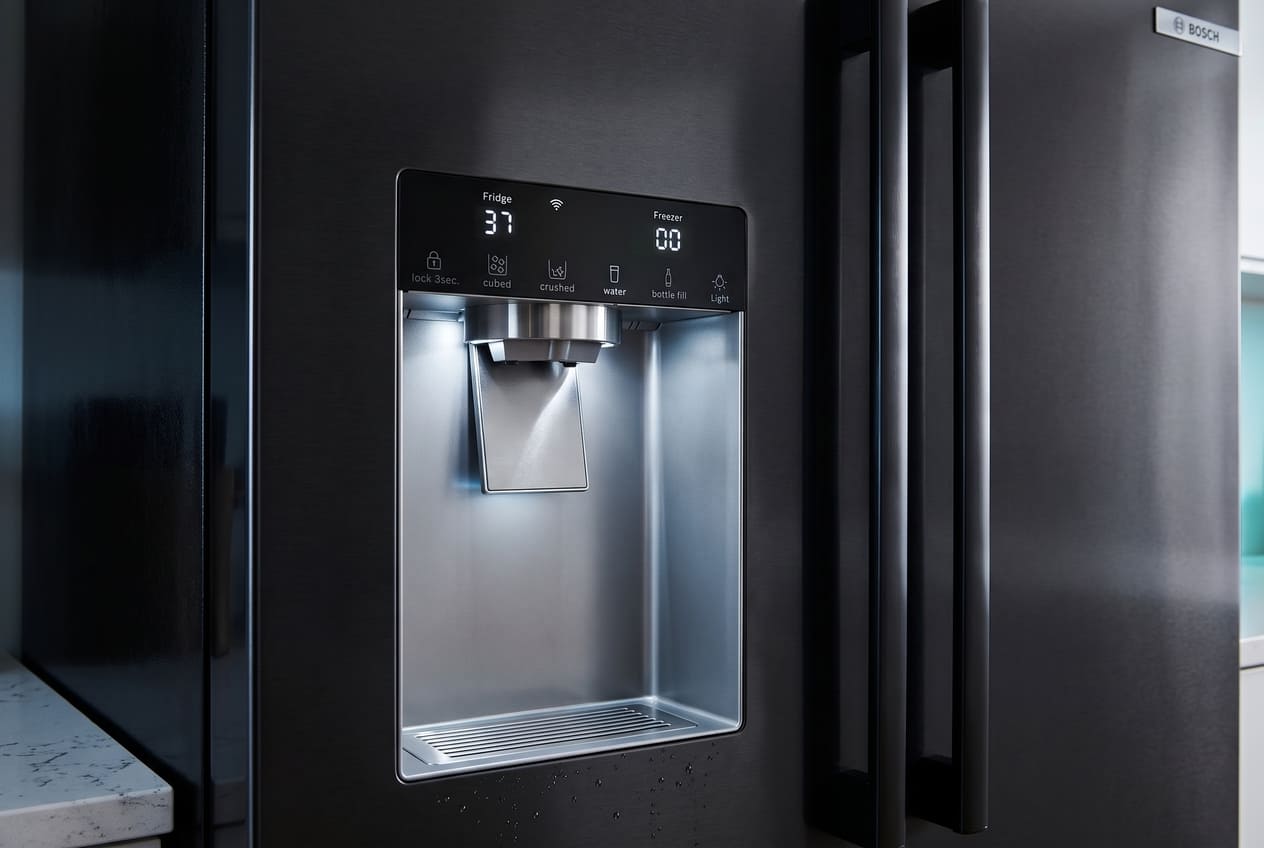
Freezer temperature checklist
Before replacing ice maker parts, verify the cold side of the system.
[ ] Set the freezer close to 0°F | [ ] Use a separate thermometer |
[ ] Keep the freezer closed for several hours before checking | [ ] Make sure vents are not blocked by food |
[ ] Inspect the door gasket around the full perimeter | [ ] Look for frost buildup on the rear wall |
[ ] Check whether ice in the bin is clumped | [ ] Avoid overpacking the freezer around airflow passages |
The control display doesn’t always reflect conditions around the ice maker. A thermometer gives a more reliable reading.
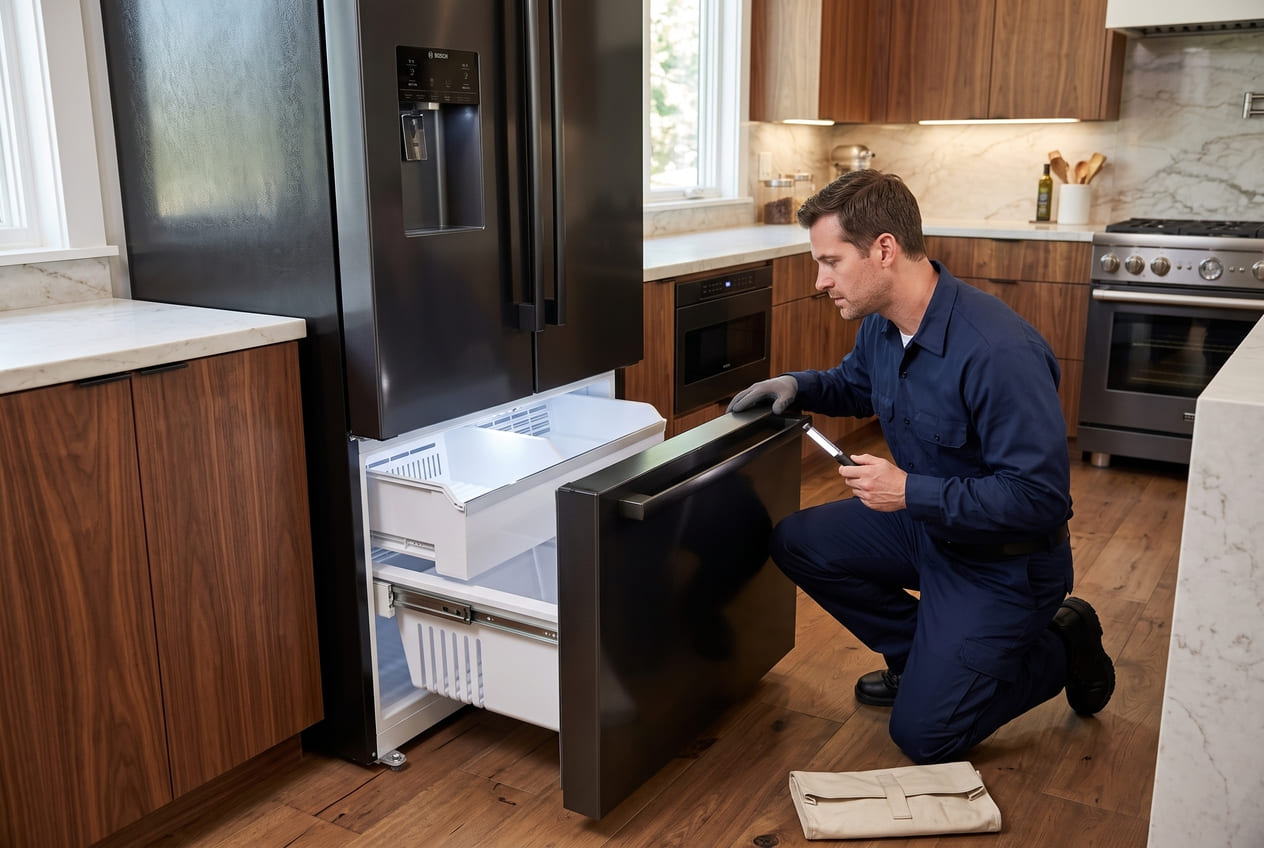
Full Tray, Empty Bin: Stuck Ice Tray or Harvest-Cycle Failure
A full tray changes the repair direction. If the mold contains frozen cubes but the bin remains empty, water delivery has already occurred. The problem has shifted to the harvest system.
During a normal harvest, the ice maker warms the mold slightly, releases the cubes, and moves them into the bin. If the heater, motor, ejector, gears, tray surface, or drop path fails, the cubes remain trapped.
Signs of a stuck ice tray
- Full cubes remain in the tray
- Cubes are partially lifted but not released
- Ejector mechanism stops mid-cycle
- Ice is jammed below the ice maker
- Cubes are oversized, twisted, or fused
- The same batch remains in place for hours
- Reset makes the ice maker move, but the cubes still don’t drop into the bin
Common causes
[ ] Weak mold heater | [ ] Failing harvest motor |
[ ] Stripped gears | [ ] Damaged mold coating |
[ ] Mineral residue in the tray | [ ] Overflowed cubes |
[ ] Thaw/refreeze clumping | [ ] Misaligned ice bin |
[ ] Obstruction in the drop path |
Don’t pry cubes from the mold with a screwdriver, knife, or metal tool. Damage to the mold surface can make future cubes stick repeatedly and may require full assembly replacement.
How We Diagnose a Stuck Tray
If the tray is full but the bin is empty, our technician focuses on the harvest cycle rather than the water supply. We check heater operation, motor movement, tray condition, ejector position, bin alignment, and the drop path. That narrows the repair quickly and prevents unnecessary water-system parts.
Hidden Reset Button Procedure for Bosch Ice Makers
Some Bosch ice makers include a reset or test function that can restart a stalled cycle. This can help after a power interruption, breaker trip, control glitch, or interrupted harvest.
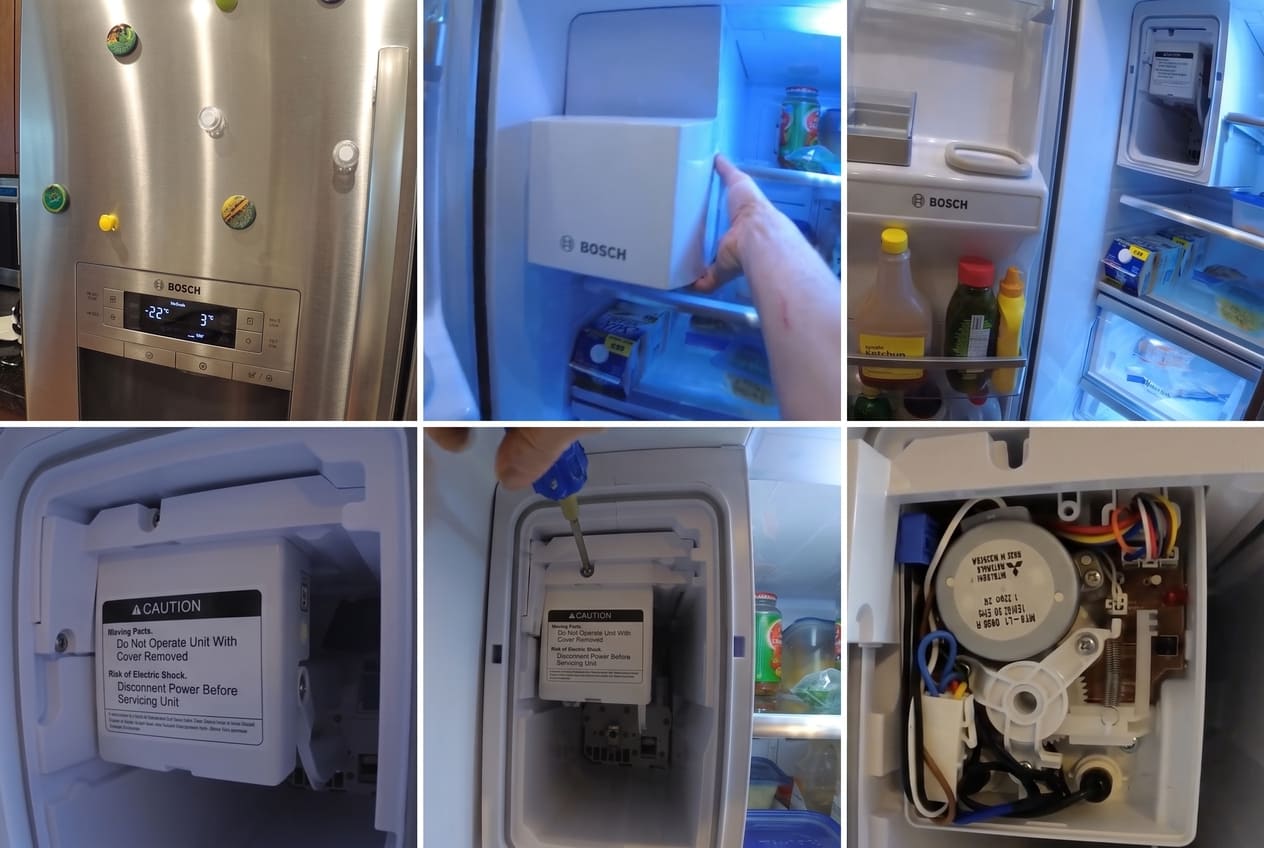
The location depends on the model. On many Bosch refrigerators, the reset or test button is located near the ice maker housing and may be visible after removing the ice bin. Some models use the control panel instead.
Typical hidden reset button procedure
- Confirm that the ice maker is turned on.
- Remove the ice bin.
- Look for a reset or test button near the ice maker housing.
- Press and hold for about 5 to 15 seconds.
- Listen for a beep, motor movement, or a test cycle.
- Reinstall the bin.
- Allow several hours for ice production.
Reset may help when:
[ ] The refrigerator recently lost power | [ ] A breaker tripped |
[ ] The ice maker stopped mid-cycle | [ ] Controls became temporarily unresponsive |
[ ] No visible jam or water restriction is present |
Reset is useless:
[ ] Clogged filter | [ ] Weak inlet valve |
[ ] Frozen fill tube | [ ] Warm freezer |
[ ] Blocked airflow | [ ] Damaged tray |
[ ] Failed harvest motor | [ ] Weak mold heater |
[ ] Door seal leak |
If the ice maker produces one batch after reset and then stops again, the reset didn’t remove the cause. It only restarted the cycle temporarily.
Bosch 800/500 Series Ice Maker Problems
Bosch 800 and 500 Series refrigerators are built with precise systems. Their ice makers need the right freezer temperature, stable water pressure, clean airflow, proper filter flow, and reliable harvest movement.
When one condition slips, ice production can fall sharply without a dramatic warning.
Bosch 800/500 Series symptom map
Symptom | Likely cause | Repair direction |
|---|---|---|
No ice at all | Water supply, valve, control, or temperature issue | Full diagnostic |
Dry tray | No water entering mold | Filter, line, valve, fill tube |
Small cubes | Weak fill | Filter flow, pressure, inlet valve |
Hollow cubes | Restricted supply | Filter seating, line, valve |
Tray full, no dump | Harvest failure | Heater, motor, ejector, tray |
Slush in tray | Freezer too warm | Temperature, airflow, gasket |
Ice clumps in bin | Temperature swing | Door seal, airflow, defrost pattern |
Bin full, no dispensing | Delivery failure | Bucket, auger, chute, dispenser motor |
Ice returns after reset, then stops | Intermittent failure | Valve, control, temperature, harvest system |
Production problems and delivery problems are different. If the bin is empty, the refrigerator is failing to produce or release ice. If the bin is full but ice won’t dispense, the issue may involve the bucket, auger, chute, or dispenser motor.
What Our Technician Checks During Bosch Ice Maker Service Call
Bosch ice maker failures often begin after ordinary household events. The refrigerator may be moved during cleaning. A filter may be changed quickly. A summer storm may interrupt power. The freezer door may be left open during heavy use. A kitchen remodel may leave the supply line slightly pinched behind the unit.
The appliance can appear stable while ice production declines.
Common customer observations
[ ] “The water dispenser works, but the ice maker stopped.” | [ ] “The ice cubes became smaller before the ice maker stopped producing ice. “ |
[ ] “The tray is full of ice, but the cubes won’t drop into the bin.” | [ ] “The ice maker worked once after reset.” |
[ ] “The freezer feels cold, but the bin stays empty.” | [ ] “It stopped after we changed the filter.” |
[ ] “The ice maker stopped working after a power outage.” | [ ] “Ice keeps clumping in the bin.” |
These details enable us to separate water problems from temperature problems, harvest failures from dispenser issues, and control glitches from mechanical failures.
Technician explaining Bosch ice maker repair options to a homeowner
What Our Technician Checks During Bosch Ice Maker Service Call
A strong service call follows the failure path. It never begins with the assumption that the ice maker assembly is bad.
Bosch ice maker diagnostic checklist
[ ] Confirm ice maker status in controls | [ ] Check actual freezer temperature |
[ ] Inspect ice tray condition | [ ] Look for stuck cubes or harvest failure |
[ ] Verify water dispenser flow | [ ] Check filter age and seating |
[ ] Inspect water line behind the refrigerator | [ ] Confirm shutoff valve position |
[ ] Test water inlet valve operation | [ ] Check voltage during fill |
[ ] Look for frozen fill tube symptoms | [ ] Run reset/test mode when supported |
[ ] Inspect airflow and frost pattern | [ ] Check gasket condition |
[ ] Separate ice production problems from dispenser problems |
This order prevents the most common repair mistake: replacing the ice maker assembly when the failure begins upstream.
What Our Technician May Ask
A proper service visit should feel direct and understandable. Our technician may ask:
- When did the ice maker stop?
- Was the filter changed recently?
- Does the water dispenser still work?
- Is the tray dry, slushy, full, or underfilled?
- Did the refrigerator lose power?
- Was the freezer door left open?
- Has ice production been slow for several days?
- Are cubes clumping in the bin?
- Has the refrigerator been moved recently?
These questions are part of the diagnosis. They help identify whether the failure began with water flow, temperature, harvest movement, or controls.
After inspection, the technician explains what failed, why it failed, and what repair is recommended before work proceeds.
What You Can Check Before Calling
Some homeowner checks are worthwhile but repeating them for days is not.
Homeowner pre-service checklist
[ ] Confirm the ice maker is turned on | [ ] Set freezer temperature near 0°F |
[ ] Verify actual freezer temperature with a thermometer | [ ] Replace an overdue water filter |
[ ] Flush the system after filter replacement | [ ] Inspect the water line if the refrigerator can be moved safely |
[ ] Make sure the shutoff valve is fully open | [ ] Remove the bin and clear loose ice |
[ ] Check for clumped ice blocking movement | [ ] Try reset/test mode if your model supports it |
Stop troubleshooting and schedule service if:
[ ] The tray remains dry | [ ] The tray is full but will not release cubes |
[ ] Reset works once and fails again | [ ] The ice cubes are smaller than normal or come out hollow. |
[ ] Ice output keeps declining | [ ] Freezer temperature is unstable |
[ ] Ice clumps return repeatedly | [ ] You hear a buzz but no fill occurs |
[ ] The dispenser works but the ice maker does not |
At that point, the repair needs testing.
Why DIY Gets Expensive
Bosch no-ice problem can lead to a costly sequence: replace the filter, replace the ice maker, reset the refrigerator, order another part, then discover the original problem was a weak valve, blocked line, or warm freezer.
The visible symptom doesn’t identify the failed system by itself.
DIY guessing vs. testing the real cause
DIY approach | Professional diagnostic approach |
|---|---|
Replace the ice maker first | Check water, temperature, tray, valve, harvest |
Reset repeatedly | Identify why the cycle keeps stopping |
Replace the filter again | Confirm flow and valve behavior |
Order parts online | Verify the failed system before replacement |
Focus only on the bin | Inspect tray condition and fill behavior |
Assume dispenser failure | Confirm whether ice is being produced |
A measured diagnosis is faster, cleaner, and usually more economical than replacing parts until something changes.
Repair or Replace the Refrigerator?
If the Bosch refrigerator cools properly and the only issue is ice production, repair usually makes sense. This is especially true for Bosch 800 and 500 Series refrigerators in good overall condition.
Repair usually makes sense when:
[ ] Freezer temperature is stable | [ ] Fresh-food temperature is stable |
[ ] Door gaskets are in good condition | [ ] The problem is limited to ice production |
[ ] The issue involves the filter, valve, line, tray, or ice maker assembly | [ ] The refrigerator hasn’t had repeated major failures |
Replacement becomes more reasonable when:
[ ] Freezer temperature cannot hold | [ ] Fresh-food temperature is unstable |
[ ] Frost problems keep returning | [ ] Control panel issues appear |
[ ] Sealed-system symptoms are present | [ ] Several expensive repairs are needed together |
[ ] The refrigerator is older and heavily worn |
Repair decision table
Situation | Likely recommendation |
|---|---|
Clogged filter or restricted line | Repair |
Weak water inlet valve | Repair |
Stuck ice tray only | Repair |
Ice maker assembly failure only | Usually repair |
Ice failure plus warm freezer | Broader cooling diagnosis |
Ice failure plus control issues | Depends on age and condition |
Multiple major system failures | Consider replacement |
A technician can help determine whether repair is sensible before parts are approved.
Why Choose Us for Bosch Ice Maker Repair
Bosch refrigerators require careful diagnosis, where all the details matter. A technician who treats every no-ice complaint the same way can miss the fault.
Appliance Repair Master provides:
[ ] Bosch refrigerator repair experience | [ ] 15+ years in appliance service |
[ ] Same-day service when available | [ ] Local Atlanta and Georgia coverage |
[ ] Clear diagnostic process | [ ] Bosch 800/500 Series familiarity |
[ ] Practical repair recommendations | [ ] No unnecessary parts replacement |
[ ] Direct explanation before repair approval |
We don’t treat the ice maker as an isolated part. We inspect the full system that allows ice production to happen.
Service Areas
Appliance Repair Master provides Bosch refrigerator ice maker repair in:
- Atlanta
- Marietta
- Sandy Springs
- Roswell
- Decatur
- Alpharetta
- Buckhead
- Midtown
- Brookhaven
- Smyrna
- Dunwoody
- Nearby Georgia communities
FAQ
1. Why is my Bosch ice maker not working if the water dispenser still works?
The dispenser can continue working even when the ice maker is not receiving enough water. The dispenser runs longer, while the ice maker has a short timed fill. A clogged filter, weak inlet valve, low pressure, or restricted supply line can affect the ice maker first.
2. What does a dry Bosch ice tray mean?
A dry tray usually means water is not reaching the ice maker. Possible causes include a clogged filter, kinked supply line, partially closed shutoff valve, frozen fill tube, or water inlet valve issue.
3. Why are my Bosch ice cubes small or hollow?
Small or hollow cubes usually indicate weak fill. The ice maker may receive water, but not enough volume or pressure. Common causes include filter restriction, low pressure, pinched line, or a weak inlet valve.
4. Why is my Bosch ice tray full but not dumping?
A full tray that will not release cubes often points to a stuck ice tray or harvest-cycle failure. The heater, motor, ejector, gears, tray coating, or drop path may need inspection.