
GE freezers are built to last, and most owners enjoy years of reliable, quiet performance. But when a GE freezer starts making loud noise, it’s often the first clear sign something’s off. In our experience at Appliance Repair Master here in Atlanta, these sounds rarely go away on their own — ignoring them can lead to bigger issues down the line.
Our technicians field calls every day from homeowners dealing with everything from a low hum that suddenly turns into a growl to sharp rattling that wakes the house. The good news? Different noises point to different problems. Some are simple fixes you can handle yourself, while others need professional tools and know-how to avoid making things worse. In the sections below, we’ll walk you through what these sounds mean, why they happen in GE models, and when it’s time to bring in the experts.
The Quiet Expectation: How Silent Should Your GE Freezer Be?
Modern GE freezers, especially those in the Profile series and Café series, are engineered with solid sound insulation and efficient components to keep everyday operation discreet. Most owners tell us the background sound is barely noticeable — think a soft, steady low hum when the unit is running, occasional gentle clicks during defrost cycles, or brief whirs when the ice maker kicks in.
GE designs these premium lines to run quieter than many older models, with vibration-dampening mounts and better fan balancing. In our Atlanta service calls, customers with Profile series or Café series units usually describe normal operation as “you have to really listen to hear it” in a quiet kitchen.
That said, no freezer is completely silent. A faint compressor hum or the occasional gurgle from refrigerant flow is expected. The key difference? Normal sounds stay consistent, low-volume, and don’t suddenly change or demand attention. If a new or sharper noise starts grabbing your focus — especially one that echoes through the house or disrupts sleep — it’s no longer in the “normal” category. That’s when it’s worth digging deeper into the cause.
Decoding the Racket: Common Causes of Noise in GE Freezers
Over the years, our technicians have seen the same handful of issues pop up repeatedly in GE models. Here’s a straightforward breakdown of the most frequent culprits we encounter:
- Fan blade obstruction — Debris, frost buildup, or loose items in the freezer often cause intermittent knocking, scraping, or thumping as blades hit something during rotation. This is one of the simplest (and most common) problems we fix.
- Evaporator fan issues — The evaporator fan sits behind the rear panel in the freezer compartment. When bearings wear out or ice forms around it, you get high-pitched whirring, squealing, or a constant whooshing evaporator fan noise that often gets louder when you open the freezer door.
- Condenser fan motor problems — Located at the back or bottom, the condenser fan motor pulls air over the coils. Dust buildup, failing bearings, or a seized motor can produce grinding, rattling, or a persistent low buzz from the lower rear of the unit.
- Compressor troubles — The compressor is the heart of the cooling system, and when it starts struggling — due to worn mounts, internal wear, or overworking — it can turn into a noticeably compressor loud growl, vibration through the floor, or heavy humming that cycles on and off.
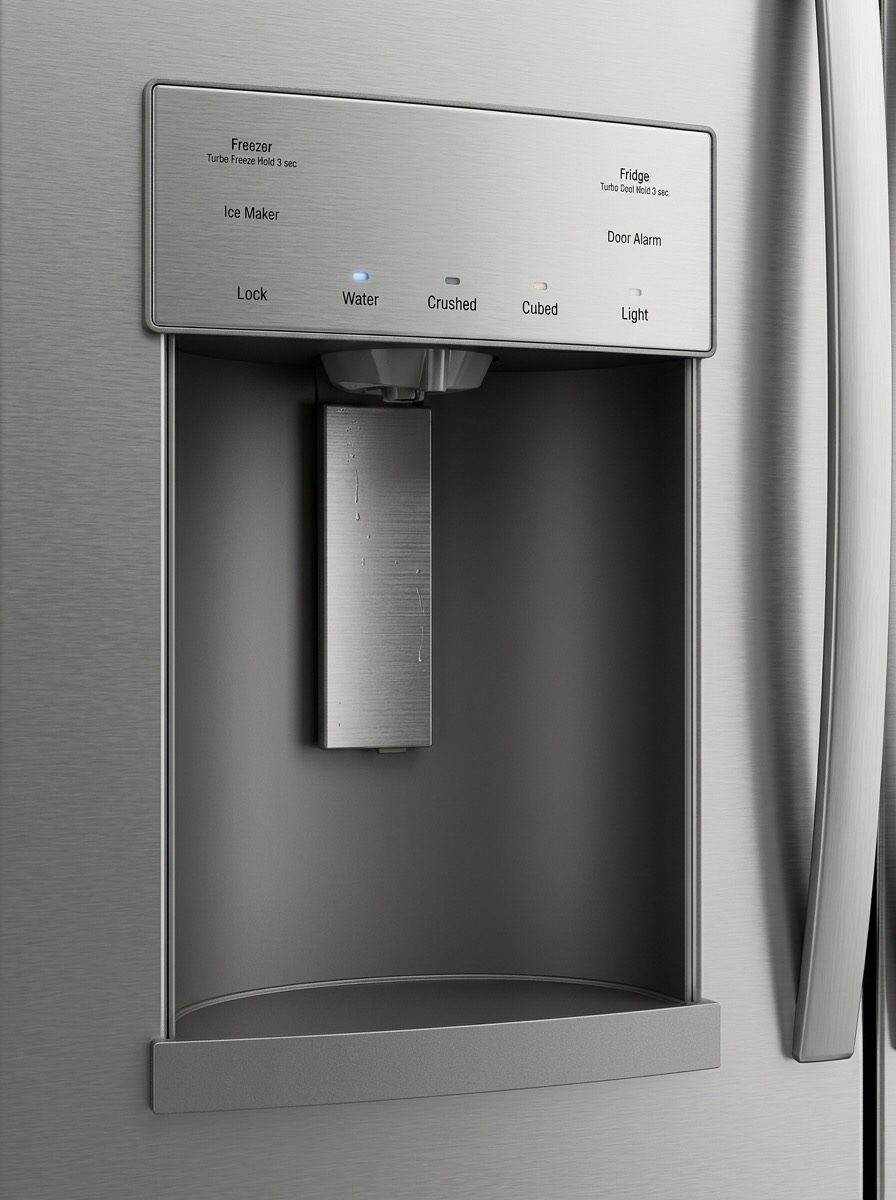
- Ice maker noise and water inlet valve buzzing — During ice production, you might hear clicking, knocking, or a rhythmic buzz. The ice maker noise can come from the harvest cycle or motor strain, while water inlet valve buzzing often sounds like a steady or pulsing hum every time water flows in — especially if pressure is off or the valve is starting to fail.
These are the patterns we see most often in popular GE models like the GFE28GYNFS, PYE22KYNFS, and GNE27JYMFS, as well as across Profile series and Café series units. Pinpointing which sound matches your situation is the first step to quieting things down.
A Diagnostic Table: Listen to What Your Freezer is Telling You
The fastest way to narrow down the issue is to match the sound you’re hearing to its most likely source. Below is a quick-reference table based on patterns we see constantly in GE freezers (including GFE28GYNFS, PYE22KYNFS, GNE27JYMFS, and Profile/Café series models). Use it to decide whether this is a quick home check or something that needs a technician right away.
Type of Noise | Likely Culprit | Severity & Immediate Action |
Grinding / Scraping / Thumping | Fan blade obstruction (ice, food debris, or loose packaging hitting blades) | Medium. Unplug the unit, remove any visible obstructions around accessible fans, defrost if frost is suspected. If it continues, call a pro. |
High-pitched whirring / Squealing / Constant whooshing | Worn or obstructed evaporator fan | High. Usually requires removing the rear freezer panel. Don’t attempt DIY unless experienced — risk of damaging the cooling system. Schedule service. |
Rattling / Vibration / Shaking through the floor | Uneven placement or loose parts; sometimes early compressor mount wear | Low to Medium. Start with leveling adjustment using a spirit level and adjustable feet. Check that the unit isn’t touching cabinets or walls. |
Loud, deep humming / Growling / Heavy pulsing (especially when cycling on) | Compressor loud operation or failing mounts | High. The compressor is working too hard or developing internal issues. Continuing to run it risks complete failure. Call for diagnosis ASAP. |
Steady or pulsing buzzing (often from the back or bottom) | Water valve buzz from the water inlet valve or a struggling condenser fan motor | Medium to High. If it’s the valve, check water pressure first. Persistent buzz usually means replacement needed. Technician recommended. |
Clicking / Knocking during ice production only | Normal ice maker noise or early water inlet valve buzzing | Low to Medium. Turn off the ice maker for 24 hours to test. If the sound stops, the ice maker or valve is the source — easy fix for us. |
This table covers about 90% of the loud noise complaints we handle in Atlanta. Listen carefully: note when the sound happens (door open/closed, during ice making, only when running), how long it lasts, and whether cooling is still normal. Those details help us zero in even faster when you call.
Quick Fixes You Can Try
Before picking up the phone, run through these safe, no-tools-required (or minimal-tools) steps. We recommend them to every customer because they resolve a surprising number of cases — especially the simpler ones.
- Leveling adjustment. Place a bubble level on top of the freezer (side-to-side and front-to-back). Adjust the front leveling legs (usually by turning them clockwise to raise) until it’s perfectly level. Even a slight tilt causes parts to vibrate and amplify making noise.
- Pull the unit away from the wall (if safe and cords allow) and vacuum the condenser coils and the area around the condenser fan motor. Dust buildup forces the fan to work harder and creates extra noise.
- Check for anything touching the freezer — cabinets, walls, loose items inside, or even the power cord. Small contact points turn normal vibrations into loud rattling.
- Power cycle the unit: unplug it for 5–10 minutes, then plug it back in. This can reset minor electronic glitches that cause erratic fan or compressor behavior.
Important safety note: Never remove panels inside the freezer compartment to reach the evaporator fan yourself unless you’re trained to handle sealed refrigeration systems. Doing so risks refrigerant leaks, electrical hazards, or voiding any remaining warranty.
If the noise quiets down after these steps — great! Monitor it for a few days. If the loud noise returns or never really went away, it’s time for professional help.
When to Call Appliance Repair Master: Signs You Need a Pro
Some noises are stubborn enough that home checks won’t cut it — and pushing further on your own can lead to bigger (and more expensive) problems. Here are the clear red flags we tell every Atlanta customer to watch for:
- The loud noise continues or gets worse even after you’ve completed the safe DIY steps (leveling, cleaning coils, power cycling, removing obvious obstructions).
- You hear persistent sounds coming from behind the sealed rear panel in the freezer compartment — this almost always means the evaporator fan needs attention, and accessing it requires proper evacuation of refrigerant to avoid system damage.
- The compressor is the source: a deep, heavy growl that vibrates the floor, especially if it’s accompanied by longer run times, warmer freezer temps, or the unit feeling unusually hot to the touch.
- Water inlet valve buzzing that’s constant (not just during ice fill) or extremely loud — often a sign the valve solenoid is failing and could soon leak or stop working entirely.
- You own one of the models we see these issues in frequently, like the GFE28GYNFS or GNE27JYMFS, and the sound matches patterns that typically need specialized GE parts (fans, valves, or compressor mounts).
In our 15+ years of experience, waiting too long on these signs often turns a $200–400 repair into a full system replacement. We carry OEM GE parts for these exact models and can usually diagnose and fix on the first visit — saving you time and preventing secondary failures.
The Appliance Repair Master Advantage for Atlanta Homeowners
When you call us, here’s what sets our service apart for GE freezer owners in the Atlanta metro and surrounding GA areas:
- Fast phone triage: Describe the noise (and when it happens), and our techs can often tell you the likely cause before we even arrive.
- Same-day or next-day scheduling in most cases — no long waits for “the next available slot.”
- Transparent diagnostics: We explain exactly what we find, show you the faulty part if possible, and only recommend what’s needed — no upsells.
- Genuine GE parts: We stock or quickly source original components for Profile series, Café series, and standard models so repairs last.
- Workmanship guarantee: Backed by our standard warranty on parts and labor.
We’ve built our reputation on handling noisy GE freezers the right way the first time — quietly, efficiently, and without drama.
Conclusion: Peace and Quiet Restored
A noisy GE freezer is almost always a symptom rather than a random occurrence. Whether it’s a simple fan blade obstruction that just needs a quick defrost or a more serious issue with the compressor or evaporator fan, addressing the problem early usually prevents much larger (and costlier) breakdowns later.
In our experience at Appliance Repair Master, most Atlanta homeowners who act promptly — either with basic DIY checks or by calling us when needed — get their unit back to near-silent operation and avoid premature compressor or system failure.
If your freezer has started making loud noise and the simple steps didn’t help, don’t wait for it to become a bigger headache. A professional diagnosis with the right tools and parts can restore quiet performance quickly and reliably.
FAQ
1. My GE freezer is making a loud buzzing sound only when the ice maker is on. What is it?
This is typically the water inlet valve buzzing as it opens to fill the ice mold. If the buzz is excessively loud or continues long after the fill cycle, the valve may be failing or the water pressure might be too high/low.
2. I hear a rattling noise from my GE Profile series refrigerator. What should I check first?
Start with leveling adjustment. Even a small tilt can cause the cabinet or internal components to vibrate and create rattling. Also make sure no items inside the freezer are touching the walls or fan area.
3. Is a clicking sound from my GE freezer normal?
Occasional clicks from the compressor starting/stopping or the defrost timer are completely normal. However, rapid, continuous clicking or clicking together with poor cooling or other strange noises usually indicates a problem.
4. Can a noisy freezer lead to a breakdown?
Yes. A failing condenser fan motor or evaporator fan can cause the system to overheat, forcing the compressor to work much harder than normal. This significantly shortens the life of the unit and often leads to complete failure.
5. Do you service older GE freezer models as well as the newer ones?
Yes. Our technicians regularly work on a wide range of GE refrigerators — from older standard models to the latest Profile series and Café series units. We keep common parts in stock and can source others quickly.
6. My freezer makes a humming noise that gets louder over time. Is this dangerous?
A gradually louder hum often points to the compressor working harder due to a failing fan, dirty coils, or early compressor issues. It’s not immediately dangerous, but it’s a strong signal that the unit needs professional attention soon.