
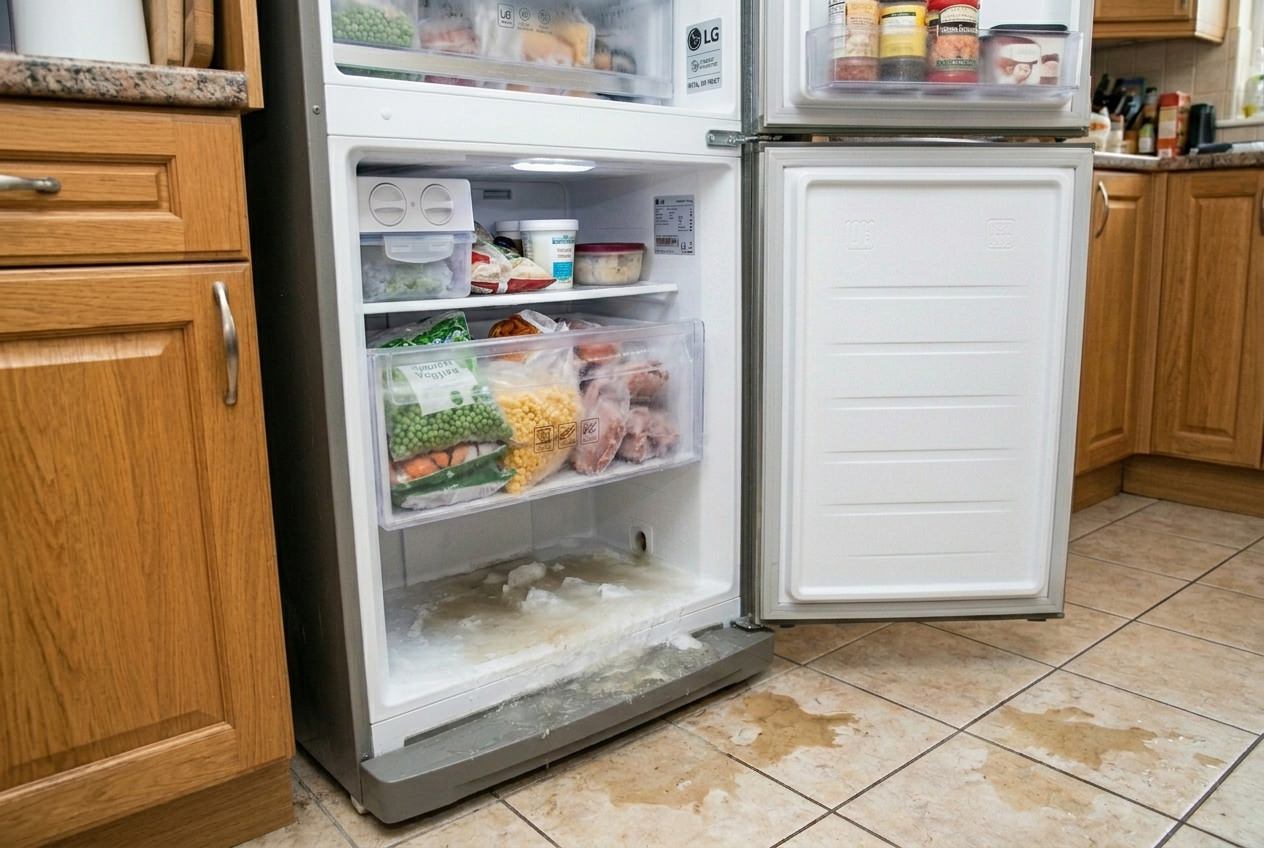
Precision is the hallmark of LG engineering. Your refrigerator operates as a high-performance ecosystem, balancing sub-zero temperatures against the external environment. However, when that equilibrium shifts, the result is often a cold pool on your kitchen floor. In a city where the humidity rivals a steam room, a water leak isn’t just a nuisance.
At Appliance Repair Master, we treat a water leak as a forensic challenge. We dissect the thermal anatomy of your unit to resolve the friction between LG’s elite engineering and Atlanta’s relentless climate. Whether you are battling a clogged defrost drain or the notorious ice maker assembly leak found in the LG LFXS Series, our objective is a return to factory-spec reliability. Our guide unravels the technical mysteries of refrigerator moisture and provides the roadmap to a dry, protected kitchen.
If you’re ready to stop the squish and save your floors, read on to know more about how we diagnose and solve these failures at the source.
Anatomy of an Atlanta Leak: The Source Finder
Before we pull the unit away from the wall, let’s reckon a little with the physical clues your refrigerator is leaving behind. Water follows the path of least resistance, and where it pools tells us exactly which component has hit its limit. Use this diagnostic blueprint to trace the disruption.
Puddle Coordinates | Mechanical Diagnosis | Primary Suspect |
Beneath Freezer Drawers | Drainage Saturation | Clogged defrost drain |
Behind the Rear Panel | Hydraulic Fracture | Water inlet valve |
Dripping from the Chute | Thermal Breach | Ice maker assembly leak |
Sweating on the Cabinet | Gasket Fatigue | Door seal damage |
Spilling from Center Base | Evaporative Lag | Drain pan overflow |
The Bio-Film Barrier: Clearing the Defrost Path
LG refrigerators are designed with a sophisticated “self-cleaning” defrost cycle. Every few hours, the system melts frost to maintain airflow. In the Deep South, however, the air is thick with more than just heat; it carries a microscopic load of dust and yeast that loves a cold, damp home.
The Anatomy of a Blockage:
This airborne debris enters the drain path and creates a gelatinous bio-slime. This obstruction leads to a clogged defrost drain. When the water can’t exit, it has only one path: gravity. It pools in the freezer floor, freezes into a treacherous ice dam, and eventually spills out onto your hardwoods.
PRO TIP:
The Penny Check
If you see a sheet of ice under your freezer basket, your drainage highway is officially closed. Clearing the floor ice is a temporary fix; the internal drain line requires a high-pressure thermal flush to prevent the “Atlanta Factor” from clogging it again next week.
Supply-Side Stress: The Water Inlet Valve
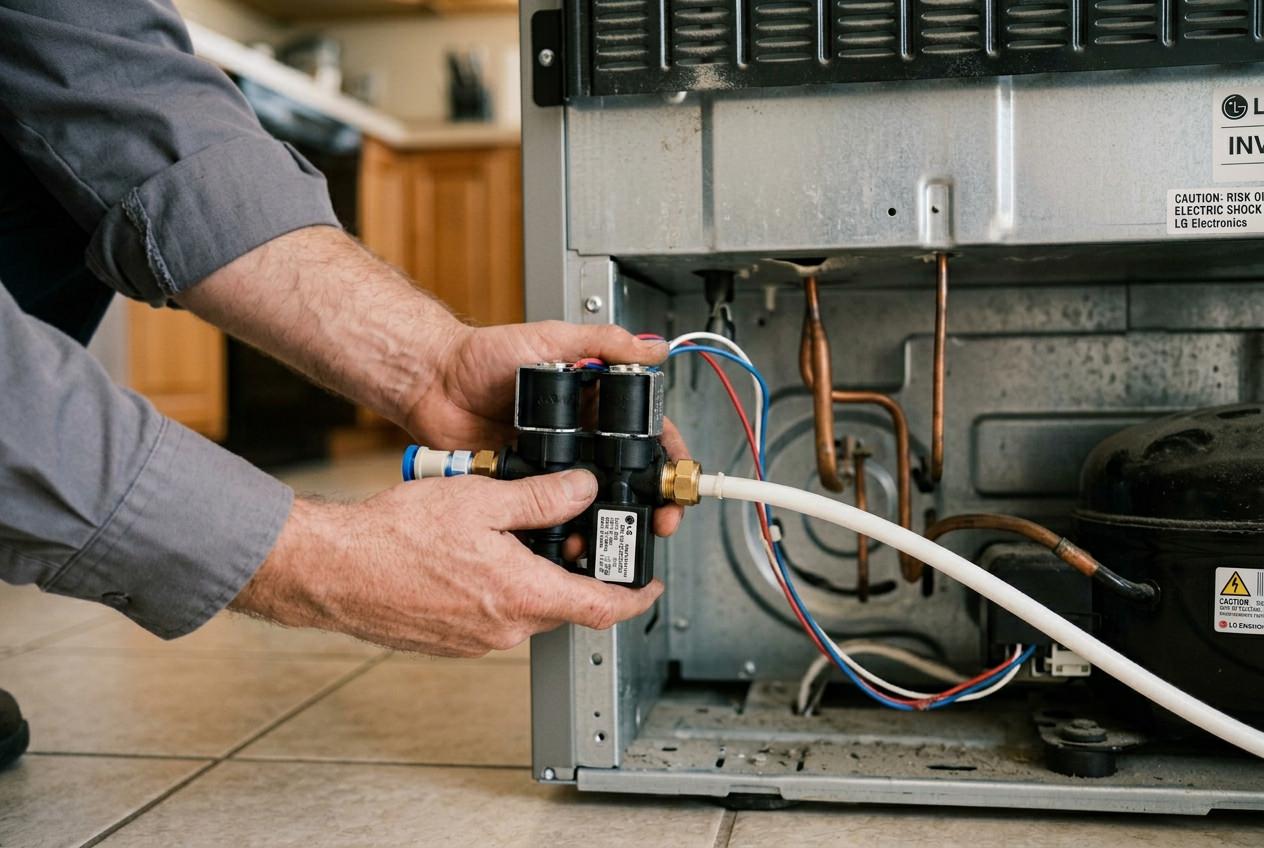
If your leak feels more like a plumbing failure than a drainage issue, the water inlet valve is likely under duress. This solenoid-operated gatekeeper handles the high-pressure demands of your dispenser and ice maker.
The Mechanical Fatigue:
Atlanta’s mineral-heavy water and the constant vibration of the solenoids eventually cause the plastic valve housing to develop hairline fractures.
- The Symptom: You may notice a persistent dispenser drip that refuses to quit.
- Technical Spec: We test the solenoid windings for a resistance between 200 and 500 Ohms. If the resistance has drifted, the valve can’t “seat” properly, leading to a slow, silent water leak that eventually triggers a drain pan overflow.
The Ice Maker Ecosystem: Lawsuits and Latent Heat
Owners of the LG LFXS Series (lawsuit) are often all too familiar with the ghost leak. These units are highly advanced but sensitive to the Heat of Fusion required to make ice in a humid environment.
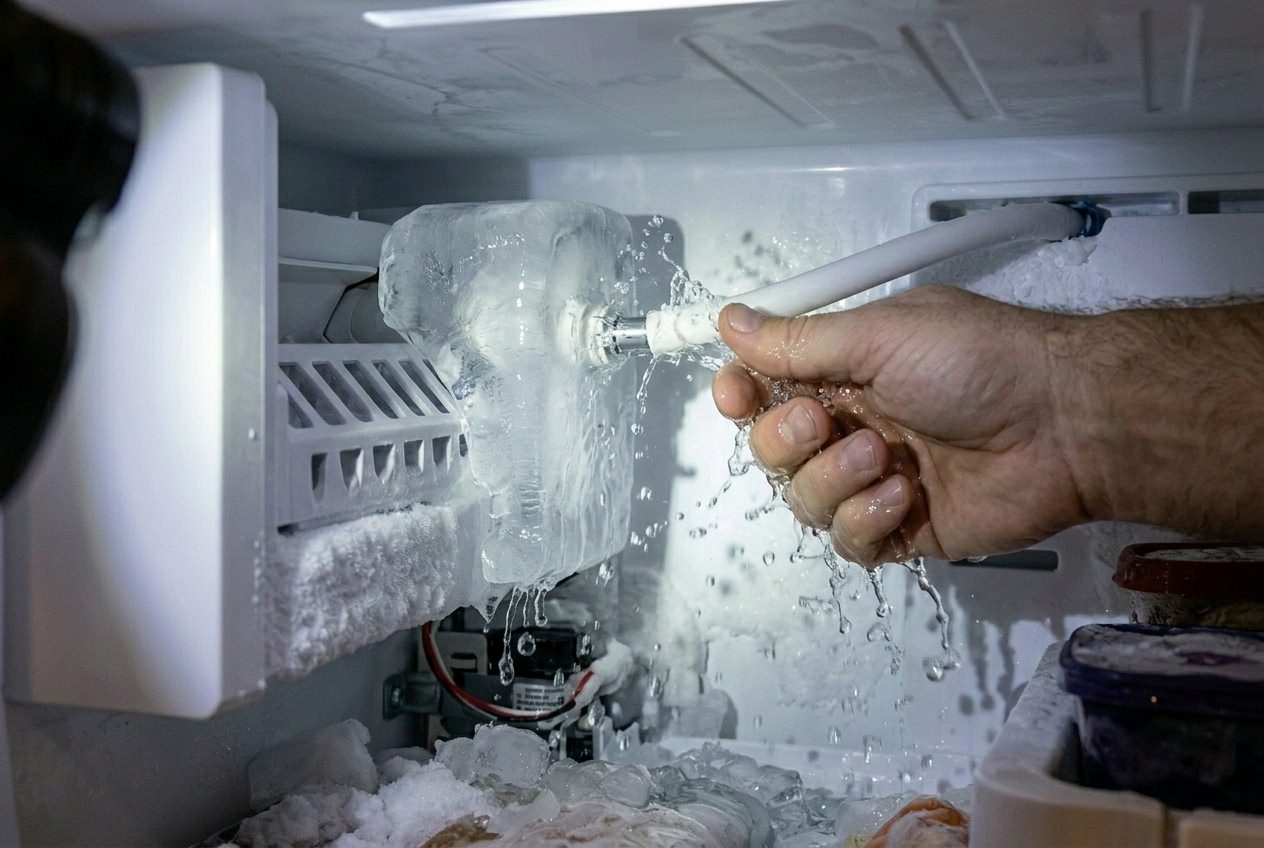
- The Frozen Fill Tube: If your home’s water pressure is too low, the supply “trickles” rather than sprays. This trickle freezes instantly upon contact with the freezer air, creating a frozen fill tube. The next call for water results in a spray-back that runs down the back of the freezer cabinet and onto your floor.
- Ice Maker Assembly Leak:If internal seals fail, warm air enters the ice room. This creates massive frost and a persistent drip from the dispenser chute. We restore the 100% airtight seal by replacing the assembly, ensuring your kitchen stays dry and your ice stays fresh.
Thermal Integrity: Door Seal Damage
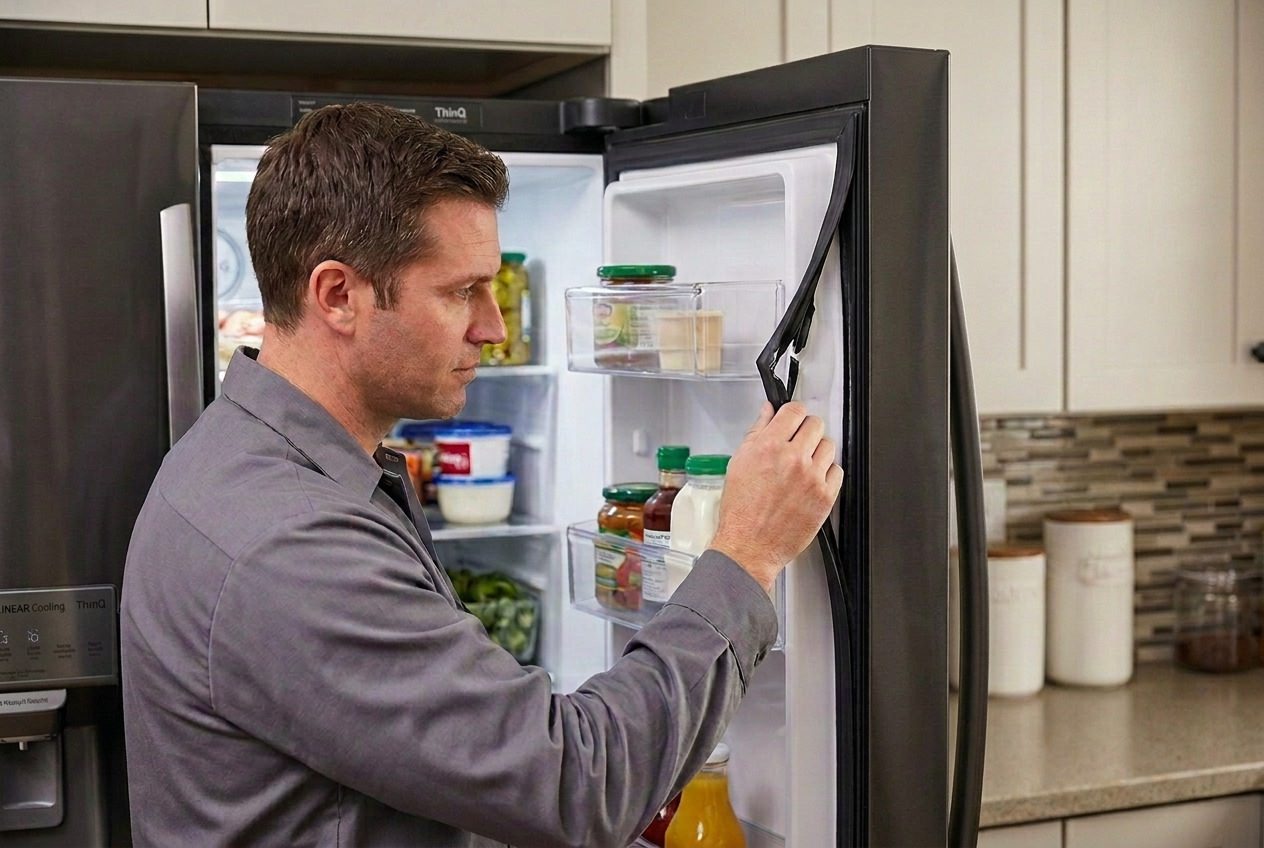
Your door gasket is the first and last line of defense. It is the only thing standing between the “sauna” of a Georgia summer and the 0°F sanctuary of your freezer.
Thermal Compromise:
When a gasket suffers door seal damage, humid air rushes in. This air hits the cold interior and turns into immediate condensation, the same way a cold soda sweats on a porch.
- The Result: This moisture overwhelms the internal drainage, pools at the base, and creates the illusion of a mechanical water leak.
- The Check: If your gasket feels brittle or has lost its magnetic “snap,” you are cooling the entire ZIP code, and the extra moisture will eventually lead to a drain pan overflow.
Factory Hardware: Precision Reference
Technical Role | Significance |
Water Inlet Valve | Manages high-pressure supply cycles |
Door Gasket | The 100% airtight thermal frontier |
Ice Maker Assy | Harmonizes harvest and fill timing |
Drain Path | The critical exit for defrost moisture |
The Restoration Path: How We Secure Your Kitchen
Identifying the leak is only the first half of the battle. Patching a leak usually leads to a callback three months later. To ensure a permanent fix, we focus on the physics of the entire water ecosystem. Let us show you how we solve these issues on a service call.
1. The High-Pressure Thermal Flush
When we encounter a clogged defrost drain, we use high-pressure steam and thermal flushes to scour the internal drain highway.
- The Goal: To remove the bio-slime entirely. If even a trace of that dust-and-yeast mixture remains, the humidity in Atlanta will cause it to regrow in weeks.
- The Upgrade: For chronic issues, we often install a copper heat-sink extension. This small piece of engineering transfers heat from the defrost element directly into the drain port, ensuring that even on the most humid days, the path stays clear.
2. Pressure Calibration and Valve Seating
If we’re replacing a water inlet valve, we aren’t just swapping plastic parts. We check the house’s water pressure and the internal lines for mineral deposits.
- The Atlanta Water Factor: Our local water can be hard on solenoid diaphragms. We ensure the new valve is seated perfectly and that the lines are bled of any trapped air, which is the primary cause of that annoying dispenser drip.
3. Firmware and Seal Reinforcement (LFXS Models)
For the LG LFXS Series (lawsuit) models, a simple part swap isn’t enough. We inspect the ice room housing for microscopic gaps. We use food-grade, high-thermal sealants to reinforce the factory gaskets.
Pro Tip:
Sometimes, a frozen fill tube is exacerbated by old firmware. We ensure your unit’s control board is operating on the latest cycle timings to prevent the defrost heater from being overwhelmed by the Georgia heat.
Prevention: Keeping the Water Inside
Before we wrap up, it’s worth noting that your refrigerator is a breathing machine. The more efficiently it breathes, the less likely you are to see a drain pan overflow.
- Vacuum Your Coils: If your condenser coils are caked in Atlanta dust and pet hair, the compressor runs hot. This prevents the defrost water in the pan from evaporating, eventually leading to a flood.
- Check Your Filter Timing: An old, clogged water filter causes the water inlet valve to work harder, increasing the vibration and the risk of a housing fracture.
- Level the Unit: A slight rearward tilt is essential. It ensures that gravity is working with your drainage system, not against it.
The Bottom Line: Speed is the Only Strategy
Hardwood floors do not forgive standing water. In the Atlanta climate, moisture trapped under a refrigerator becomes a mold colony in as little as 48 hours. Furthermore, because LG designs place critical electronics near the base of the unit, a minor water leak can quickly escalate into a total system failure.
At Appliance Repair Master, we bring 15 years of local field experience to every call. We clear the bio-film clogs, verify solenoid resistance, and restore the thermal seals that Georgia humidity loves to exploit.
FAQ
1. Why is water pooling in the bottom of my LG freezer?
The water from the defrost cycle has nowhere to go, so it pools and freezes on the floor of the freezer. Eventually, the ice builds high enough that the next cycle of water runs right out the front door.
2. How do I stop a persistent water dispenser drip?
A dispenser drip usually points to a water inlet valve that isn’t seating perfectly or air trapped in the lines. If the drip continues after a filter change, the valve is likely failing.
3. Can a frozen fill tube cause a leak on my floor?
Absolutely. If a frozen fill tube blocks the water’s path, the resulting pressure can cause water to spray out the back of the ice maker assembly, running down the back of the fridge and onto your floor.
4. Why is my drain pan overflowing?
A drain pan overflow occurs when the defrost water isn’t evaporating. This typically means your condenser coils are caked in dust or the fan has failed, leaving the tray to fill up until it spills.
5. Is my leak part of the LG LFXS Series lawsuit?
Significant documentation exists regarding the cooling and ice systems in the LG LFXS Series. If your unit is leaking and under 5 years old, a professional diagnostic can help determine if your failure is covered by extended support.
6. Does door seal damage really cause puddles?
Yes. In Atlanta’s humidity, door seal damage lets in massive amounts of moist air, creating heavy condensation that the drain system can’t handle.